The First Thing

About five years ago I was invited to lead a drawing workshop for a group of teenage boys recently arrived to this country as refugees. I had never taught anybody anything and knew nothing about classroom management. I understood the workshop would be an education for all of us, but some of the lessons of that day have only recently become clear.

The boys were attentive and engaged with the workshop. By the end of the class, they had filled the pages of the sketchbooks I’d brought with drawings of trees and garden statues. As their confidence grew, some of them began to sketch their lives as refugees.

Those very personal drawings often depicted experiences no human, especially no child, should ever have to endure. When I got beyond my outrage at the thought of a child having to hide from people with machine guns, however, I wondered if the resilience of these boys was the most valuable lesson I would take home, but my education was only beginning.

A few years later, I began working with students with complex trauma. Many of the students came to us through the juvenile justice or foster care systems after experiencing years of assault or extreme neglect at the hands of parents or trusted caregivers. Some students tiptoed into the program, scanning every room they entered for threats and jumping at the sound of a torn piece of paper. Other students raged against their lives with profanity and destruction.

These kids take months and years to navigate far enough around their trauma to be able to build their futures. Some never get around it, and, when I first started this work, I wondered how the boys from the workshop who had survived war circumnavigated those memories, seemingly, so much more quickly.

When Thing1 was born, I morphed, in the space of 36 hours, from an ambitious, tech-driven programmer to a bowl of pudding that wanted nothing more than to hold my child until he no longer wanted to be held. At the time, the Ferber method was still very popular, but something felt very wrong about not picking up my child when he was crying. I asked a social worker friend if I should just have Thing1 ‘tough it out.’

My friend put her hand on my arm and said, “Rachel, the first year is about establishing basic trust.”

I never forgot that. Establishing and keeping trust with Thing1 and Thing2 became my parenting touchstone.

Studying education, I read Erik Erikson, the psychologist who promulgated the stages of psychosocial development starting with that first year or so of basic trust. It was bias confirmation, but, as I met more children healing from trauma, I wondered if the loss of trust reset those stages of development. 

Last year I drafted my family into a 5K to raise money for charity. The race, an hour away from our house, gave me a chance to talk a family member and child psychiatrist about the different trajectories I was seeing.  I asked him if the breaking of trust by a parent or trusted individual such as a teacher or police officer cause a more profound or permanent trauma than experiencing atrocities by people who make no secret of their bad intentions.

He didn’t a quick answer for that question. He didn’t have easy answers to the more difficult question of how we help people recover from that trauma. I still suspect there are no easy answers to either question.

Working with children who have been betrayed by people they should be able to trust has brought the lessons from the workshop full circle, showing me that rebuilding a life is begins by addressing the first thing all humans need– the ability to trust.

Leading with Love

Every morning when we bring out the checks, Katie follows us. She watches and whines, urging us to be careful as we move the growing babies from indoor enclosure to box to the chicken tractor outside. She trails the Big Guy from room to outdoors and hovers as he releases the checks into the tractor.

When the chicks are settled in their outdoor home, she’ll sniff on all four sides, inspect the sky to see if any predators are selling above, and then give a pointed look at Jim-Bob, as if to say, “Don’t mess with my chicks”.

most mornings she’ll lie down next to the coop, watching the chicks scratch and argue over who gets this would chip in that white fluffy flower. To be sure, Katie has her explorations in the woods. From the moment the chicks are in the tractor, however, until the moment we begin moving them back into the house, she lets us and them –and even the cats – know that she is there to protect and serve.

She never growls or bares her teeth at anyone. when she sees Princess Jane get too close to the coop, she will physically move herself between the chicks and arrow little gray huntress, but there are no snarls or parks. When it counts, she firm but always as loving with Princess Jane as she is with the chicks.

No one will ever mistake Katie for a huntress or vicious guard dog, but as a vigilant and caring protector, she’s becoming quite good at keeping the peace.

The Bears are Back in Town

Every spring, without fail, at least one morning trip to the garden is marked by the discovery of an overturned composter. Unlike the weeds that I’m working to smother as I completely overhaul my veggie garden, I don’t have much control over where the bears wander and what they will smash. If you compost and you live on a mountain, you will have bears.

The first time it happened I was really po’d. It was a huge mess. The second time we had to replace a composter. Now, I just laugh.

Over the years we’ve opted for composters that can be tipped versus smashed. I have an unwritten agreement with the local Mama Bears that they wait until I’m in bed for their raids (this was not always so, with one dusk visit to the compost heap resulting in a close encounter with a mom and her cub and a change of pants for this author). 

It’s funny how so many things in nature can be a cause for fear or frustration until you understand the purpose. I don’t claim to know what the ecological purpose of a bear is, aside from making sure that I don’t eat too much of that corn I planted, but I’m willing to keep investigating.

In the meantime, I do know my laughter over the spilled compost is not a surrender to the bears. It’s a shedding of my frustration with things I can’t control and looking for constructive ways to deal with them.

White Noise

There are times when you keep silent, knowing that whatever you could add to the conversation would just be more noise. There are times, however, when not making noise is giving silent approval to things that make life unlivable for people around you. This has almost never a blog about politics or society. It is mostly been about family and being a mom, and that is precisely how I knew I had to make noise. It is why I could not be silent about what has been happening to other families in Georgia and Louisville and Minneapolis.

I’m white. I live in a predominantly white state. I may have family and students of color whom I love and with whom I can sympathize. As a teacher, I can make sure that a diverse set of voices are represented in my curriculum. I can try to empathize, but I know that even empathy can’t impart how it truly feels to walk a mile, let alone thousands of miles, in any of their shoes. I know that, as a middle-aged white woman my skin color is armor. 

I first recognized the privilege that armor endows about 25 years ago, when, dressed in my grumpiest clothes and filthy vacation hair, I stopped at a convenience store to stock up for a road trip home. I wandered through the store, pulling items off shelves and putting them in my pockets as I browsed. The storekeeper ignored me, instead trailing one of my well-dressed but much darker traveling companions. I have seen it numerous times when being stopped for a broken taillight or blinker. The police officer watches me dig through my purse and assumes I’m looking for my license rather than a weapon. I was reminded of it again this week, watching with the world as another white woman deliberately weaponized her privilege against a birdwatcher of color in Central Park. 

I have also heard my privilege when listening to mothers of children of color and realizing what we have very different conversations with our children. We all tell our children to obey the law, but I tell my kids to know their rights. I’ve heard other mothers talk about the law but also about ensuring that her child knows all things he must do, about when and where he should or should not go to earn the presumption of innocence that my sons take for granted as their birthright as citizens.

 This month, I’ve also been thinking about the conversations no mother should have to have about her child. There’s the conversation that her child was executed in her own bed. There’s the conversation that her baby was gunned down while jogging. And there are the conversations about the killers who enjoy the presumption of innocence that their children never got.

 So I’m making noise. I’m bearing witness. Black lives matter. Black mothers’ children matter. 

Not Weed

This time last year, I would have regarded this fluffy clump as a sign that summer was officially here. This year, I’m thanking it for the hard work it’s done helping our bee population.

I think we have the dandelions to thank for it.

We’ve had apple trees since we moved here. Our plum and pear trees are old enough to flower each year, and the flowering bushes are not new. What is new this year is the profuse flowers that have appeared on every plant, attracting symphonies of laboring bees.

The dandelions seemed to arrive first in all of this miracle. I’m not sure if they brought the bees who brought the flowers or if the late snows brought the flowers who brought the bees, but the dandelions were there first.

The green in our yard can hardly be called a lawn. It gets cut once a week, but we let Mother Nature do the watering and fertilizing, so, to thank these puffs for their contribution, I decided to let them be until they’re ready to fly around the yard, setting us up for another year of miracles.

Cliquety Cluck

Well it was bound to happen sooner or later. Apparently you can’t assemble more than three chickens without a clique starting to click because that’s what our Rhode Island Reds have started to do. 

There are four Reds and three Americaunas.  The chicks are very sweet to us, but they’ve discovered that the tiny white flowers that are growing outside (and inside) the chicken tractor are infinitely more delicious when they are fed to you by humans on their knees (I think the Jim-Bob may have been reading to them from his soon to be published How to Have Your Human Serve You). The Americauna’s take turns yanking the flowers from our hands, but three of the Red’s, whom I am now calling the Plastics, butt in front of their smallest sister every single time.

The boys came up with a strategy of distracting the Plastics with the fluffy flowers on one side of the tractor while I feed Baby Sister her share from the other. It’s worked once or twice, but the Plastics are not your average bird brains. They seem to be catching on, and we’re scratching new ground as we start our field research into Social Emotional Learning for Chickens so our ladies can keep the peace.

Garden Journal – Straw Bale Update

When we moved to Vermont, our ZIP Code sat in a solid zone four. Now it is comfortably into zone five, and we set out seedlings a week earlier on Memorial Day weekend. Our day and nighttime temps can still be a bit bipolar, so when it looks like the nighttime lows will be below 40, I cover the tender annuals. Yesterday morning, however, I learned that, with straw bale gardening, less protection can be more.

The straw bale method involves conditioning the bales with plant food and water almost two weeks ahead of planting. This causes the straw to break down, and you are, essentially, planting your veggies in a compost heap. Like most compost heaps, the decomposing bales Start to “cook”. This means if you cover your tender annuals, like I did with the cukes pictured below, you need to make sure that they are uncovered as soon as the sun hits your garden. As you can see, I slept in a bit yesterday, and at least one of my little cukes got fried.

It’s still early enough in the season and hot enough outside that I can direct seed it to replenish, but I hate to sacrifice a soldier that was trying to serve me well.

By contrast, I did not cover the summer and winter squash or the tomatoes. Those plants were slightly bigger, and I had only so much material for protection. It was down in the low 40s on Saturday night and Sunday night, and I knew I was gambling.

When I walked out to the garden in the morning, however, this was the sunshine that greeted me:

I took a little trip to the back of the garden to check on the tomatoes, and every single one of them was getting ready to salute the sun:

The tomatoes do have weed block around them, but the real heat is coming from the bales.

Later in the day I went back to visit the garden –– I visit to talk to the plants and the bees in the nearby apple trees a few times a day – and while I highly recommend talking to plants and bees regularly for your mental well-being, my straw bales blessed me at the end of the day with a little botanical happy pill in the form of newly sprouted bush beans that I had direct seeded less than 48 hours earlier.

If I were to do the straw bale garden over again, I might set some of the seedlings out earlier and cover them for the first couple of weeks. The one caveat I have for other would-be straw bale gardeners is that, while the claim that you can’t overwater them appears to be true, the reverse is also seems to hold. You do need to check the moisture around your plants as you do with any gardening method.

So far, however, my plants seem to be loving the heat and the decomposing bales, and, as mentioned previous post, you can still sit to do your gardening.

Partners in Crime

Thing2 has been experimenting with the digital projector I use for presentations at school. He’s been projecting video games and Avengers movies on the ceiling and underneath the TV. here’s an idea man, so it should’ve been too much of a surprise when the two of us looked at each other and said, “let’s have an outdoor movie night.“

The other family members were out of the house when the idea got started, and, by the time everyone else got back we had collected a makeshift screen and two plant hangers from which to hang a curtain rod.

Immediately we agreed that we should all watch the original Star Wars. The kids have never seen it on “the“ big screen, but I think this one will be just as good. We just have to rig up THX in the yard before we screen Empire.

Common Creativity

When Thing1 was still a pea-picker, he hunched over his Matchbox cars for hours, watching their wheels and gears as he drove them around carpets and vitas he created and telling them their stories. I wish I had written them down because sometimes I think he needs proof as to just how creative he is. I think a lot of people do.

Thing1 is about to turn twenty. He knows how to fix cars and program computers. Anyone who watched him studying the movements of cars as a toddler would say it pretty accurately predicted his mechanical aptitude. 

His love of discovering how things work, however, often translates him putting high value on common sense and things that can be proven. When I tell him of the spaceships he conceived and drew, of the stories he told, he answers, “I’m just not all that creative anymore, Mom.”

Yesterday proved him wrong, and this time I got the photos to prove it. 

When Thing1’s college closed, his first action, over our strong objections, was to go job hunting. He received two offers as soon as the state closed down both businesses, but his employment history from the previous year earned him the ability to collect benefits during the pandemic (he wasn’t eligible for the stimulus because he’s too much of an adult and too much of a dependent to fall into any category the government considers visible).  He’s saving some of that money but, still a teenager for another two months, money can burn a hole in his pocket. 

Thursday he announced he was buying a hammock to use at school when it reopens. Then he announced he’d like to test drive at home. He asked the Big Guy and then me if we could think of any appropriately socially distant pairs of trees from which to hang it and, despite being surrounded by trees, we just scratched our heads.

Friday, Thing1 and Thing2 traced our normal route around the house, making incursions in to the forest when this or that pair of trees sparked their interest.  They showed us a few ideas, but the Big Guy and I just couldn’t see the right trees for the forest.

Saturday, Thing1 disappeared again and then took his machete and power saw to the woods behind the house. We heard some hacking and then a familiar buzz. Thing1 came back to assure us that the tree he’d taken down had been punky and about to fall anyway and then to invite us to the clearing he’d made. The Big Guy and I started our usual afternoon route and went to where the boys were waiting, Thing2 dancing from foot to foot to show us Thing1’s work.  

The boys had found a perfect opening into the forest and created a more defined path to a pair of trees that, somehow, the Big Guy and I had missed the day before. Thing1 had felled one tree and cleared some rosy bush between the two that would support his hammock. Then he indicated the tree-filled slope leading down to the river that will be the view for anyone sitting in the hammock.  

Thing1 had pulled a paradise from the mass of trees and rosy bush. When the hammock arrives, he’ll assemble it and give credit for the completed project to his common sense. I’d like to think that it was actually good old fashioned common creativity that helped him identify the perfect spot to meditate on the question.

Walking to Paradise

Me and Imogen

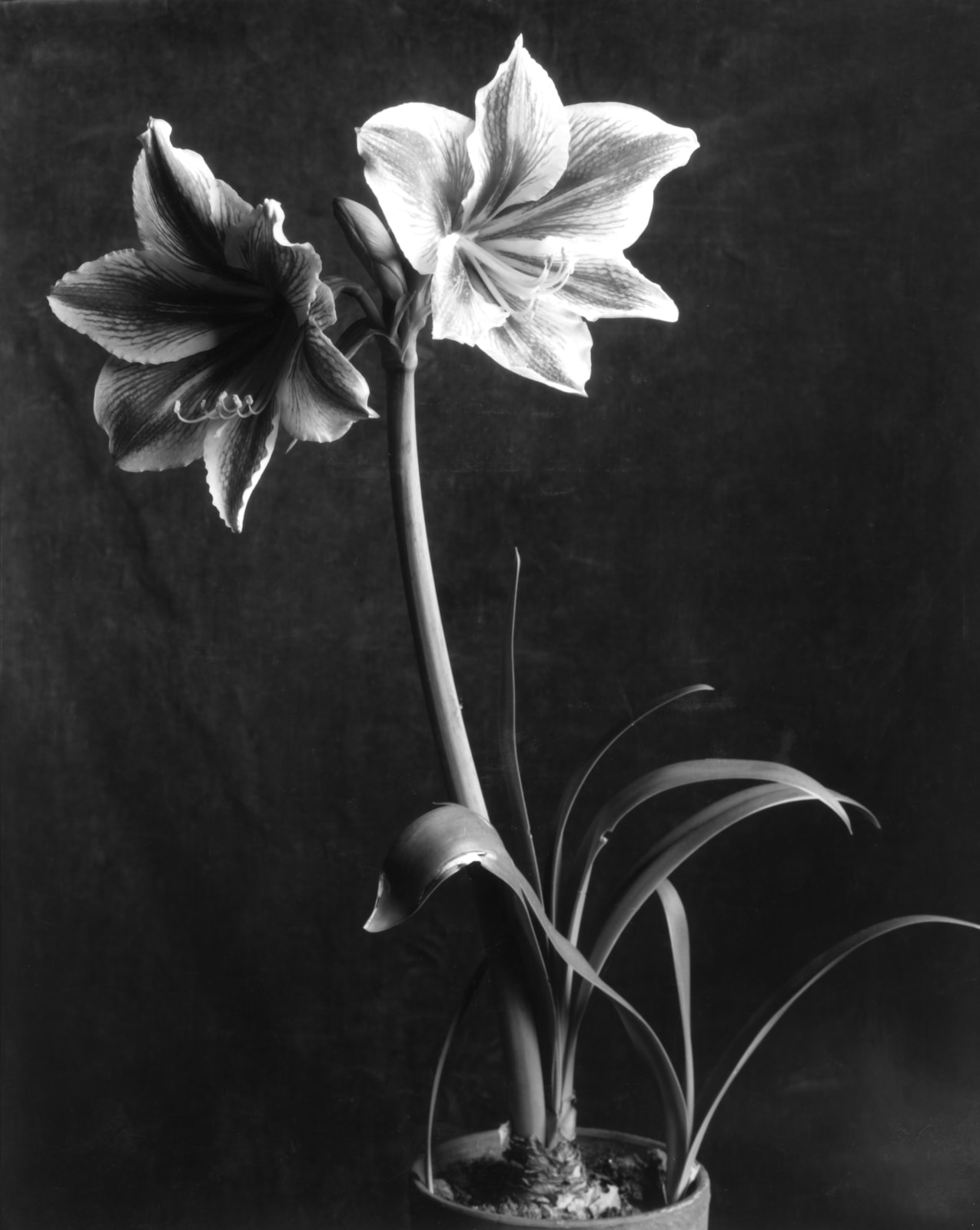
So here I am in the backyard, shooting flowers again, wondering where my creative life is going. It might look like I’ve come full circle, but, when I look closer, my loop has the twists of a Möbius band.

Fifteen years ago, wanting a creative career, I ran a wedding photography business. I sucked at up-selling, so I also delivered papers and did a little freelance programming, all the while looking for that ‘real’ job.  We went to the local art museums on their free family days, but for the most past, art was relegated to the back seat, and the back seat was getting pretty cluttered with empty newspaper boxes, bills and booster seats. 

I was still searching and scrambling when I bumped into a friend at potluck picnic. 

“How’s your photography going?” she asked.  

I had been hoping she wouldn’t ask.  An established documentary photographer, she had been encouraging when I’d first picked up a camera, and I was embarrassed that it had fallen by the wayside.

“I haven’t had time to do much,” I said as then two-year-old Thing2 hung on my arm.  I pulled out the one-handed point-and-shoot that I was using most of the time.  “I’ve been working a few jobs, but I just don’t have time to do anything except when the kids are in bed.  The only thing I do anymore is write and draw and shoot flowers.”  Then I joked, “Don’t they say your creative life is over when you start shooting flowers?”    

“Not so,” answered my friend, and she introduced me to Imogen Cunningham.

Born in 1883, Imogen Cunningham studied chemistry at the University of Washington, photographing plants for the botany department to finance her tuition.  She went to work for a portrait photographer after college and then traveled to Germany to study photographic processes. When she returned to the states., she set up her own studio.  Her portraits and other work had established her as an artist by the time she became a mother.

https://www.imogencunningham.com/

At that time, even in America, her quest for education, career and artistic fulfillment weren’t commonplace for most young women in that era, so I was surprised to learn that, after all that struggled, she followed the more traditional route of being what we now call a stay-at-home-mom.  I wondered if there was even a choice for her. 

But art was not a choice for her.

Responsible for three boys, Cunningham used her camera to focus her attention on her offspring as well as her garden.  Her botanical images from this period of her life won her lasting acclaim. Far from signaling the death of her artistic career, Imogen’s botanical photographs made in the throes of motherhood confirm that an artist can bloom in the face of responsibility.  It just required some really good naptime coordination. 

My boys are long past the nap time stage, but ‘real life’ and the creative life duel constantly. My unexpected, enforced sabbatical seemed like the perfect opportunity to breathe new my painting and writing life, but revivals can have unexpected results. When the intense intellectual and emotional challenges of working in Special Education receded, there was suddenly space to mediate. My writing life, more recently relegated to the sidelines, came roaring back, routing me from my bed early in the mornings. Painting moved to the back shelf, and a blog that was almost 100% illustrated or painted for over six years began relying on photographs to support the writing.

The painting will never disappear, but the need to write online and off and to produce images in minutes, rather than hours or days, hasn’t killed creativity. It’s re-opened an old, almost forgotten path to it.

So I come back to Imogen and her work. It continues to resonate with me because of its beauty but also because of what it embodies. She was a mother. She was a housewife, and she was still making a creative life for herself. And, sitting under the apple tree, my camera trained on a blossom until one of the swarming bees comes to kiss it awake, I know that photographing flowers is the opposite of a creative life ending. 

It’s just begun.

Where There Are Bees

it’s not a sign of spring. The leaves on the trees have mostly popped already anyway, but it was the ultimate sign of hope.

I went out to the garden to check the progress of the sun in an area I want to prep for later in the summer. The buzzing next to the garden Was so loud I wondered if flies might have been attracted to some poor chipmunk that had attempted to steal squash leaves in the presence of Princess Jane. As I walked toward the apple tree on the west side of the garden, however, I saw hundreds of tiny worker bees toiling among the apple blossoms.

i’ll go back to try to capture them with a better camera, but they were patient as I tried to snap a few pictures as long as I didn’t interrupt your work. I greeted and welcomed them, knowing the returning bees are more than just a sign of spring. They are a chorus of hope.

https://atomic-temporary-174491198.wpcomstaging.com/wp-content/uploads/2020/05/img_9003.mov

Poem: Murder Most Foul

I’m thinning basil seedlings.
Eggplant, you’re next.
I’ve killed dozens of pepper shoots,
mourning the products of
seeds that worked so hard,
tossing them out the door.
Only the very best survive.
The cat runs by with a chipmunk who may escape her maul
but will more likely end up in the middle of the yard,
his entrails split over the new-cut grass while she,
without a trace of blood on her mouth
or guilt on her head,
returns to perch on her chair,
and watch me commit murder most foul.