For my son, who turned 12 yesterday and who is one of the greatest joys of my life.
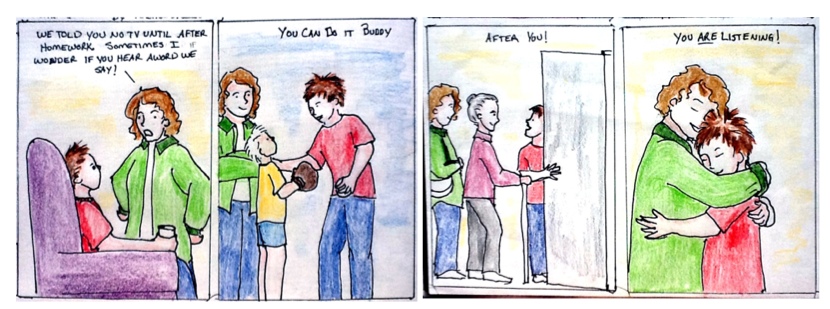
For my son, who turned 12 yesterday and who is one of the greatest joys of my life.

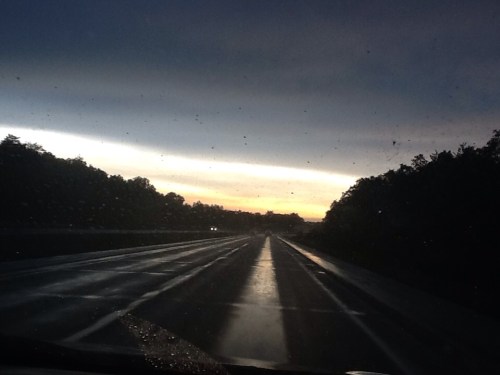
I am wimp. I can admit it. I don’t like it, but as we drove westward into a ferocious storm that we knew had spawned tornados to the west of us, I was clutching my weather map and scanning the Indiana horizon for any of the tell-tale signs of a funnel cloud forming. For thirty minutes lightening-filled minutes, my husband pressed on, both of us keeping a look out for an emergency place to pull over.
I should be used to this; for almost 20 years I lived in a tornado-prone area. I had even chased a tornado once, turning back only when I almost caught up to it and realized how stupid I was. But for some reason, my ability to see this storm philosophically – as most adults seem to see these types of trials – eluded me. I kept calm for the sake of the kids, but as we watched finger-like funnels trying to form behind us and lightening hitting the ground a few hundred feet from the highway, I was panicking inside.
What perplexes me each time these things happen is how I don’t get used to them. After the storm or a family-member’s week-long stint in the ICU, I feel the adrenalin and say to myself, “This, too, has passed.” But when it’s happening, I am a jelly fish.
And so, now we come through another storm, safe and sound – and I am left to wonder if I will ever face these a hurdle while it’s happening and be able to say, “This, too, SHALL pass,” even if I don’t know that it will.

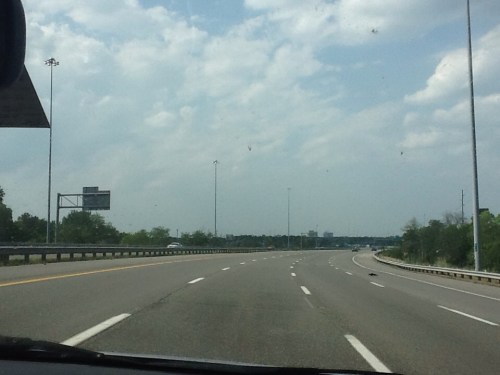
It was lunchtime, and we left the interstate looking for a place to sit and walk the dog. We didn’t mean to take a tour of the Erie region, but our search for a little local color in our food took us farther from the main road than we had been in some time.
We first took a few meandering detours through middle class suburban neighborhoods still populated with small, quaint brick homes that had somehow survived demolition by McMansion developers. The homes turned into businesses as we drove, and when we got to East 26th Street in Erie, PA, we took a left, hoping the congested traffic hinted at nearby restaurants.
Our search was just beginning, however. I continued to look for food, but I had navigated us to this road because I knew it was really US 20, which would meet up with the interstate again. My motives were pure – food and efficiency, but as we crawled down the congested old
road – The Post Road as we called in Boston – I felt as if my vacation had truly begun.
I love the Post Road. We’ve traveled bits and pieces of it in Massachusetts, New York, PA, and Ohio, and the recovering vagabond in me loves how each piece is an imperfect postcard memory of that spot. It’s still main street for a lot of towns, even though the nearby monolithic, monotonous interstate seems to have steered traffic and dollars away of them. We continued as far as Girard, and I couldn’t help but notice how many areas seemed to be forgotten. From the interstate, the people and places along Route 20 are invisible, and it’s too bad.
We finally found a quiet diner with friendly waitresses and homemade barbecue sauce for sale by the quart (we bought some). For me, it was worth the drive. It was only lunch, but I liked the local color. It sated my stomach, but it fed my soul a little and whetted my appetite for more. It’s an appetite I like to indulge.
“I’d love to drive this road from end to end,” I said to my husband as we inched back to the interstate.
“I think I’d go crazy if I had to drive this speed all the way to Oregon,” he replied without looking at me.
“But maybe someday,” I began as my marketing plan began to form. “Maybe if we had a long vacation and rented a convertible and made the drive the vacation.”
“Ugh, maybe,” he responded. I may need to convene a focus group to get this plan by the board, but something tells me it would be worth it for all of us.

Last Wednesday I traveled back in time.
It was another over-scheduled week, but in spite of my reluctance, my husband had insisted that we go to an anniversary party of a couple he had met in his community theatre travels. The party was to celebrate a 25th anniversary – not too common anymore, and I knew we should go. This couple, an unconventional directing and coreography team, decided to make their party even more uncommon by staging an outdoor production of Checkov’s “The Seagull” in different parts of their yard and home.
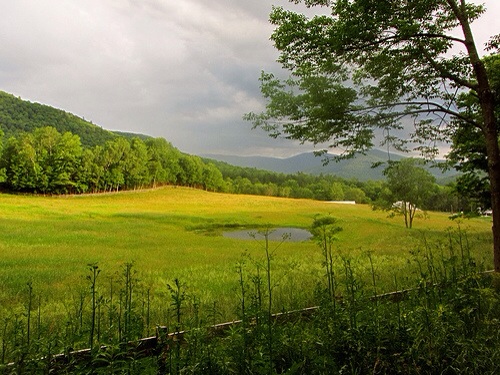
I love Checkov, not because of his sometimes morose take on life, but because his plays and stories provide a window into the lives of ordinary Russians at the end of the nineteenth century. We sat down in the makeshift theatre facing a stage consisting of a curtained canopy. Horse fields and the mountain beyond provided the backdrop. It was easy to imagine that we had been transported back a century or so, and my mood quickly brightened.
The play engrossed both of us. Each of the first two acts occurred in a different part of the yard, enhancing the story and the experience. However, it was when we migrated inside for the last half of the play that I felt our time travel experience morph into something more than merely visual.
Our hosts’ home is an old New England farmhouse, and they maintained the traditional ambience with care. Unadorned wood-paneling and wide-plank flooring that creaked enhanced the atmosphere, and the living room-turned-theatre was lit with candles completing the mood. And, when the first actors entered the room, I recalled that once, before television and radio, before texting and telephone, was how most people experienced theatre, music and each other.
It was low-tech. By today’s standards, It was low-budget. and this play performed with and in the company of friends offered an intimacy – with the actors and the work itself – that no blockbuster-3D-special-effects display could ever match.
We got home and I brushed by the dust-covered piano in the living room to find one child passed out on the babysitter’s lap in front of the glowing TV in the den. Our other child was hypnotizing himself with the latest video game obsession. And, as I popped and ushered children into bed, I found myself wishing for just one brief black-out.
We both sat down, too tired and not in the mood for TV. The night was cool, and we threw open the windows. We sat on the couch for a while listening to the trees and the windchimes. We said nothing, and didn’t need to because, for that brief hour, we quietly, mutually decided to stay disconnected from the world -and connected to each other.

I don’t know why I named her Grendel. She was a goose, not a gander, and she was certainly no monster, but the name suited her.
We acquired her and her mate, Gustav, from a couple who had bought my husband’s family’s house in New Hampshire. The decision to adopt the geese was made almost on a whim, but the house was located next to a rushing river, and Grendel had almost been lost twice trying to swim on it. Our own house, while it lacked a pond, was in the middle of nowhere, and was a perfect place for the geese to live.
Grendel and Gustav were over 20 and, somehow, had never produced a flock of their own, and we scratched our heads for a while trying to figure out why anyone would keep a goose for more than one Christmas dinner season. But they were cute, and so we borrowed a pair of burlap sacks to carry them home in the family wagon.
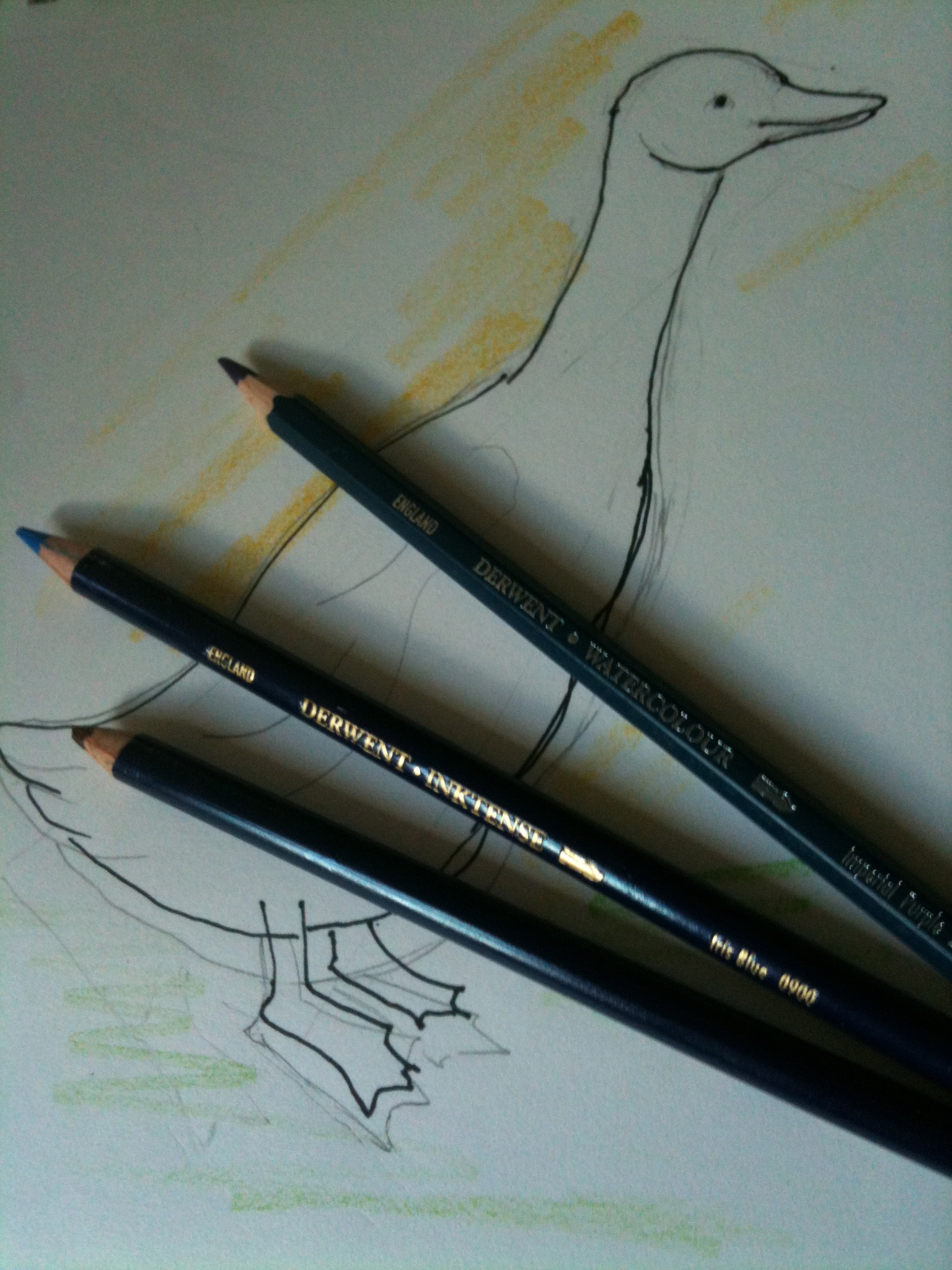
Duck, Duck, GOOSE!
Gustav loudly registered his displeasure at the indignities we were inflicting on him, but Grendel was busy working her head through a hole in her sack. About 20 minutes into a 2 hour drive, we suddenly noticed a goose head in the rear-view mirror. Most of her was still stuck in the bag, but a goose neck looks incredibly long when it’s snaking down over a car seat to examine your two-year-old.
Our then-two-year-old was enchanted. He ignored our pleas to keep his hands down and away from her mouth – we had heard of goose bites breaking fingers – and he reached his arm up to try to pet her. Before I could get out of my seatbelt and intervene, she had evaded his hand and settled her head on the other end of the seat back. We rode the rest of the way with me watching her and her watching the boy – sometimes glancing toward me.
We got them settled, and once they found their swimming area, they quickly established themselves as the rulers of our yard. They honked at us, but it was usually harmless, and Grendel seemed to understand that I, as the mother of the odd-shaped gosling, would not tolerate any honks at my flock.
Much to our surprise, geese can serve useful purposes besides decorating a dinner table. We had installed their little house in the middle of our garden, and Grendel quickly took it upon herself to attack the weeds – don’t ask me how she distinguished them, but she earned her keep very well. Gustav, as the man of the hut, ventured beyond the garden and did an admirable job keeping huge patches of the lawn short. But it was not until Grendel became more adventurous that I found I had adopted an ally.
Our house sat next to a dirt road, and we hardly got any traffic. When we did, however, it was often in the form of a speeding ATV. As my toddler became more adventurous himself, I started trying to block off any access from the yard to our short driveway. My protectiveness was always trumped by his curiosity, however, and I knew it was only a matter of time before he found a way out of my homemade gates.
He chose his moment well. He had joined me in the garden at first one day, but the moment my head was bowed over a group of weeds, he wandered out of that fence and made his way across the lawn to the gate that had most recently piqued his interest. He crawled and toddled, and when I heard a soft laugh, I realized I’d been deserted. I looked up and saw that he had breached the perimeter and was making his way down the gentle slope to the driveway.
Out of nowhere, Grendel appeared in front of him, honking with all her might. She had launched herself over the other gate and circled around to meet him. My son plopped down on his diapered butt, his mouth wide as a silent scream formed. Then came the real cry of fear, and Grendel-the-momentary-monster backed off. I had lept over the gate by now, and was at his side comforting and scolding him. Grendel gave one more soft honk and went back to the yard the way she had come.
On that day, the timid truce that had existed evolved into something more, and so did my understanding that not every useful purpose can be measured in bushels or greenbacks.
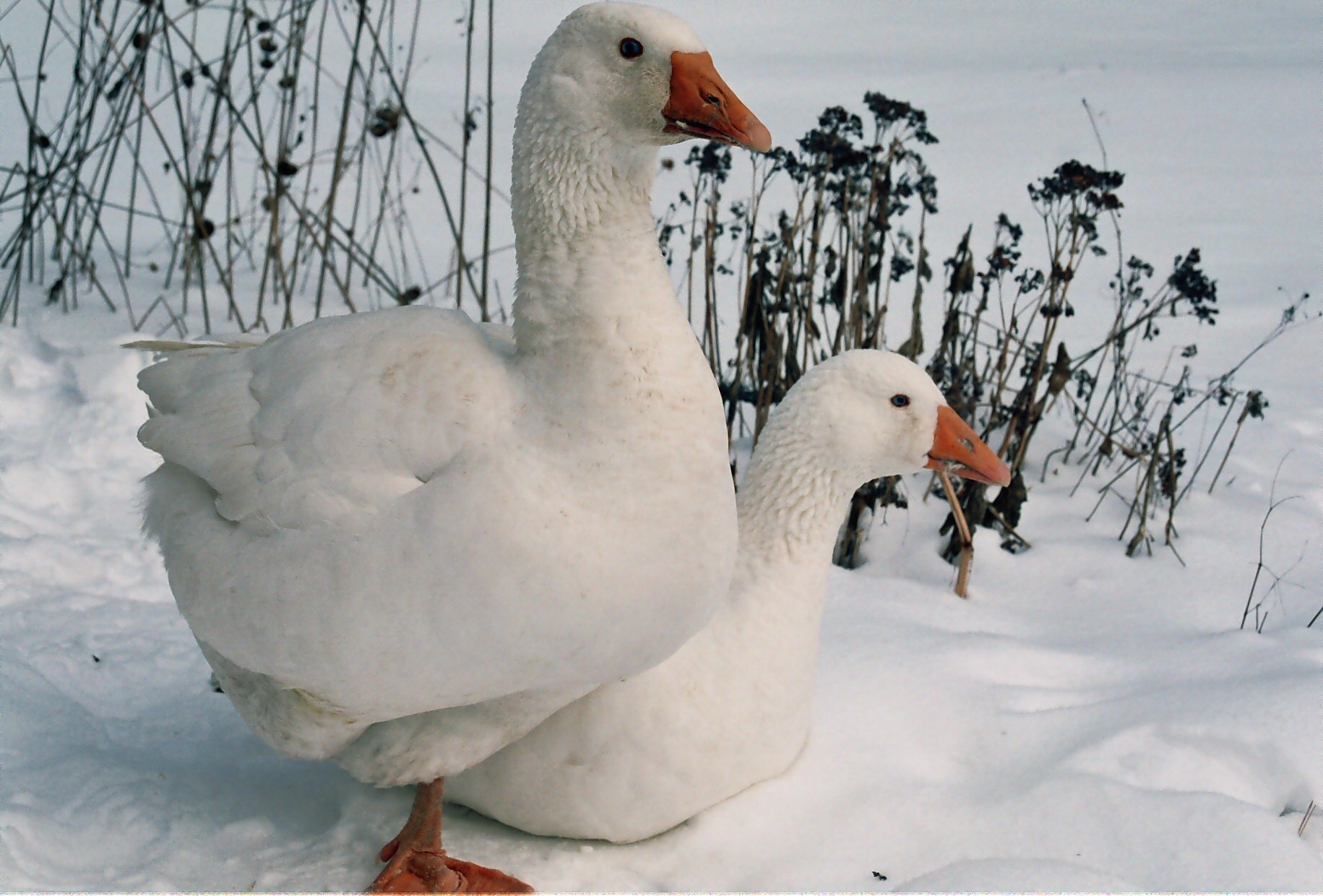
Gustav and Grendel

Now, I will be the first to admit that I’ve been more than willing to overload my plate in the past, but my desire to drop the wannabe from my writer moniker has helped me clear some space lately. After all, to call myself a writer, I actually have to sit down and bang out something on the keyboard.
So the only explanation for my sudden urge to add a little mutton to the mix the other day had to be that the slow leak in my head had grown large enough to let the rain in. Did I mention we were standing in the rain? We’d gone to a potluck where, naturally, the kids had decided that the only way to get truly wet enough was to swim in the river in the rain.
Between rounds of ‘bumper cars with boats’ and ‘try the mud muffins, they’re great’ the kids took turns visiting the 13-year-old hostesses’s sheep. The particular farm we were visiting a perfect piece of pastoral bliss, and the sheep made me feel like I was standing in a nineteenth-century British watercolor, so I was prepared when my kids expressed a renewed interest in acquiring sheep of their own (and because one of them is now a Jon Katz reader this revived want also meant acquiring a border collie to herd them).
I’m now a champion at ignoring the regular requests for more animals. However, as I listened to the mother of the shepherdess talk about all the things her kids (and the other kids in 4H) were learning, I started to think about those benefits. We’ve recently bumped into a number of friends who are exposing their kids to the pleasures and – often heartbreaking – pitfalls of animal husbandry. And, as much as I need a bigger to-do list like I need to gain another 5 pounds, I privately had to admit that the responsibility, the understanding of where food comes from, and the comfort with animals of all shapes and sizes are incredible gifts for these kids, regardless of the path they choose later in life.
I could spin my own yarn, I thought. My husband must have sensed the slow leak growing because as we drove away he mentioned his own sheep conversation.
“I was talking with our host about the 4H project in the field over there,” he said.
“Oh yeah?”
“Yeah, he said they were mostly just cute pets.” Thank goodness Dad still heard the voice of reason. But then he added, “But the kids are really getting a lot out of it.”
Maybe not.
“He also said he dreams about having them with mint jelly.” Sarcasm – always a sign one of us was keeping our wits about us.
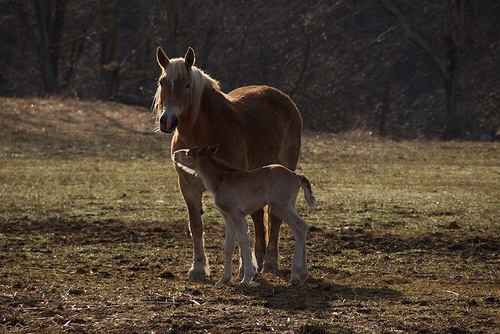
We were both quiet for a bit, and I can’t remember who brought up the field just past the forest the forms the border of our property. Both of us covet our neighbor’s field, and we each envision multiple overlapping purposes for it (assuming we win the lottery someday). But as we drove home we began thinking about the animals we might raise there.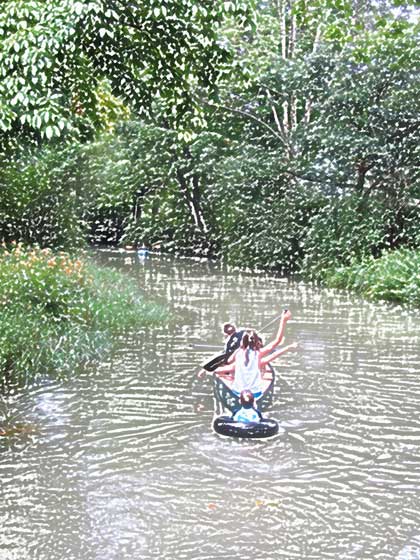
It wasn’t the first time we’d contemplated horses; that was the reason we picked a place in the country. But for so many years, schedules and common sense (and finances) overruled that desire. Now, however, as we thought about the memories and skills these parents were building for their kids, the idea of a few farm animals seemed less insane.
We indulged in the ‘what-if’ game for a few miles, and, as we crossed the border back into to Vermont, we both looked at the road ahead of us and said, “What if we fixed the chicken coop?”

Right about this time 12 years ago, my feet were really beginning to swell. I was spending the hottest summer on record in Germany – a country that had just begun to discover the need for central air-conditioning – and I had been sentenced to bed rest.
Right about this time 11 years, 364 days ago, I was lying looking at the latest ultrasound of a fetus that was already late emigrating from my womb. “He's all leg's,” the doctor would exclaim in thickly-accented English – it was the only English she had used with me in almost 3 months.
Right about this time 11 years, 363 days ago, I was trying to quell the urge for more blueberry pastry as I worried I would give birth to a bouncing baby blueberry in a few days.
Right about this time 11 years, 362 days ago, I was just beginning to huff and puff and waddle back and forth between tub and bed as I impatiently waited to join the oldest club in the history of womanhood.
Right about this time 11 years, 361 days ago, the doctor told me we weren't doing well, and we would need to complete this process surgically. I was scared and exhausted and wanted nothing more than to be holding a baby, and my husband and I gave our consent.
But right about this time 11 years, 361 days and 5 hours ago, two new people were born. The first came out of a womb and, in doing so, he created a new person – he created me. He created a person who started to learn the true meaning of patience. He replaced a person who had failed almost every test in life with someone who was willing to persevere indefinitely for someone's sake other than her own. He created a person who suddenly, blissfully belonged completely to someone else. And, as he began to challenge me with unprecedented exhaustion and unanticipated hurdles, 11 years, 361 days, and 4 hours ago, he helped me start the most important journey of my life. And, almost twelve years later to the day, I still give thanks everday for the gift of having him in my life.

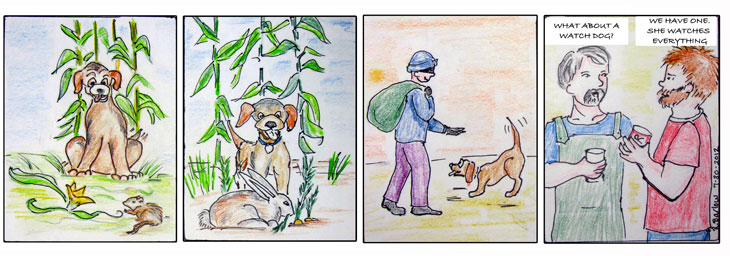

Katie isn’t much of a watch dog. She isn’t much of a guard dog, and she’s a complete washout as a huntress. But I still call her the wonder dog, not because she seems struck with wonder every she watches the chipmunks munch my zucchini blossoms, but because when it counts – when I’m about to have a close encounter with a bear, for example – she can demonstrate incredible bravery (it could be stupidity, but I’m giving her the benefit here).
But for all her bravery, this little hound-mix gets no respect from the feline members of our family. They eat out of her bowl – sometimes elbowing her out of the way to get the first taste. They often torment her for sport. In short, they seem to regard her as a lovable, but moronic, escaped mental patient, and most of the time she seems to be okay with this.
But yesterday her laid back nature had an unexpected consequence.
Katie is the proverbial kid who will get in a stranger’s car for the promise of a little ice cream, only she doesn’t need the ice cream, just the car – any car – and a pat on the head. She loves people. And two days ago, after breaking out of the prison that is our house, she decided that a ride in a car was the perfect way to cap off a swim at the river.
When she got back from our neighbor’s house the next morning, she was very happy to see us again, but I was still a little strung out from worry. I ushered her in the door and ordered her to go lie down. Her tail literally between her legs, she slunk to her cushion.
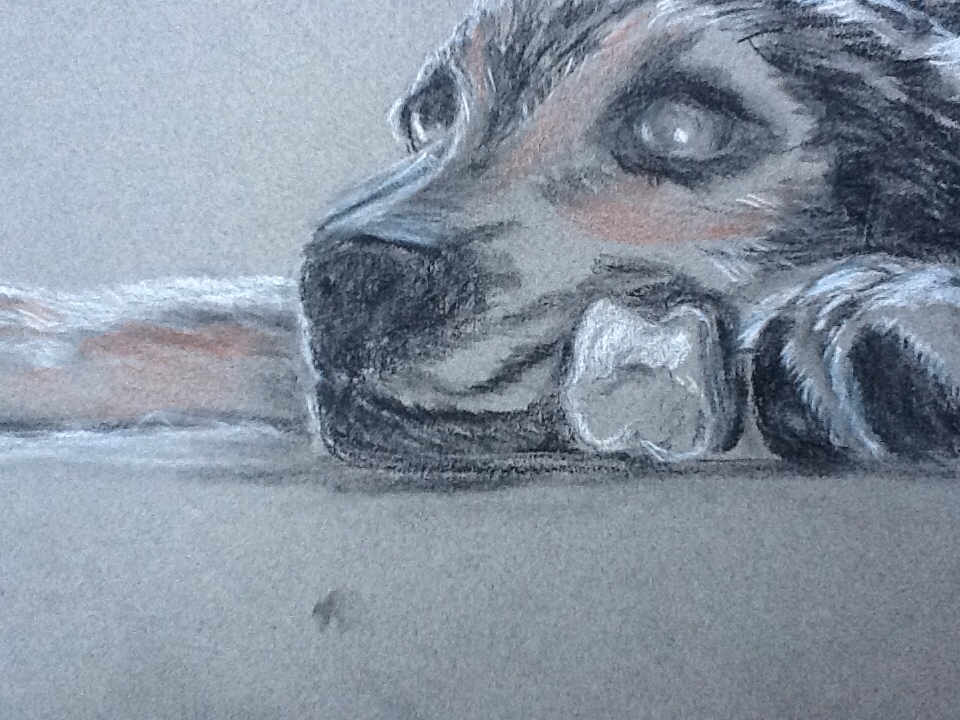
Much to her consternation Chuck, the leaner, meaner of our two cats (as far as Katie is concerned), was already lying in the only spot in the house that she calls her own. She looked at me, nervously wagging her tail and then sniffed at Chuck. Completely unconcerned and unsympathetic, he lazily rolled onto his back, maintaining eye contact with her at all times. She whimpered and sidled up to me.
My sympathies were stirring, and I got up to referee, but Chuck just glanced at me before curling up in a ball and closing his eyes. Katie hung her head and walked under the kitchen table, nervously settling herself under my chair. She’s a great foot-warmer, but it was 85 degrees out so instead of resuming my spot at the table, I went over to Chuck and started petting him. He responded as any king would to a slave, angling his head and body to enhance the pleasure of being served, but I surprised him by scooping him up for a minute of what I like to call Kiddie-Kitten-cuddle (taught to me by my then-two-year-old, it involves hugging the stuffing out of an ordinarily dignified cat). I put him back down on the cushion. Clearly offended, he glared at me and sauntered to the couch for a quick claw and then found a new perch.
My meek little puppy instantly sensed what had happened and excitedly got up and went over to lick Chuck on the couch, then came back to lick my hand in homage. Then, tail wagging furiously, she scuttled to her cushion, turned thrice, and plopped down. She made a few short muffled sounds to get my attention, thumped her tail a few times and then, training her eyes cautiously on Chuck, put her head down between her paws.
Sometimes picking the right ally is as important as picking the right battle and Katie had apparently learned how to do both.


“La la la la la”
The pint-sized passenger in the backseat caught my eye in the rear-view mirror and, detecting a hint of smile, decided that at least one more chorus was in order.
It didn’t take too many refrains, however, before the La-La’s turned to LA-LA’s, and I knew the less eye contact made, the sooner he would grow bored with this tune. I tried focusing on the road and the farms we were passing, but what he lacked in pitch, he made up for in volume, and my head was beginning to spin.
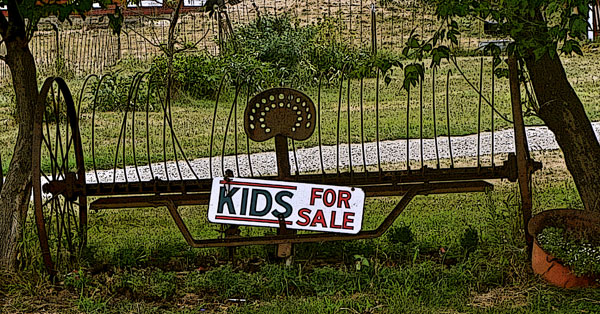
So when we rounded a curve and I noticed a sign on the left. I began to wonder if I had left my sanity by the road a few miles back. Balanced on the rusting seat of an ancient horse-powered plow was a sign that said ‘Kids for Sale’. My foot left the accelerator, and the caterwauling behind me diminished slightly. I scratched my head. All I could think of was that scene in Oliver Twist with the guy singing, “Boy for sale!” A laugh stuck in my throat as I pondered who had put up the sign. Suddenly I remembered we had passed this farm on the way to the market, and I recalled seeing the livestock in the pasture behind the house.
“Oh,” I exclaimed, “They’re selling baby goats!”
The singing in the back was singing again, and my five-year-old didn’t miss a beat as he belted out a new song: “Let’s get a kid. Let’s get a kid.”
 I stifled a smile and, hoping my sanity had caught up to us, stomped on the accelerator.

We spread out our blanket and our dinner, a picnic hastily harvested from the garden and the farmer’s market. We were facing west, but the sun had just dipped below the mountain at the end of the field, and a soft pink glow bathed the simple, temporary stage on the lawn before us.
It was a perfect swishing, summer night, for a quiet visit with friends before the play began, but the excitement of an evening out had already infected Thing2, our five-year-old, and threatened to spread to Thing1. We had danced/dragged him from the car to the lawn by the old church, and he was still dancing and singing as we started popping open tupperware. I gently reprimanded him only to be met with more singing. Daddy reprimanded him more forcefully, but even his baritone couldn’t dampen the sing-song cheerfulness.
The chirping diminished only slightly when we pointed out the food, and we noted with relief that a few other children were responding to the atmosphere. Still, I began to worry that one of us would be taking Thing2 home early – even outdoor theatre needs quiet to be enjoyed – but before I could execute a retreat with him, the Master of Ceremony trod out to the center of the amphitheater that had been formed by the gathered families and friends.
In a strong, deep voice he introduced the play and its history. Then he exhorted the assembled audience to put away their video cameras and cell phones and to unplug ourselves for the moment.
Thing2 instantly interpreted this last entreaty in his own way, and unplugged himself from the seemingly-cosmic source of energy that had buoyed his antics until this very moment. He grabbed his drink and a piece of tomato and wiggled onto my lap, wrapping my jacket and arms around him. The command seemed to have the same effect on the other small children, and, as the darkness grew and the play began they too snuggled into the closest parent.
We heard a few beeps of phones being powered-down, and then the hum of chatter ceased. The only sound was the rustle of the trees as a few gentle gusts of wind swirled through the valley to the mountain.
And, once they were satisfied that we had truly unplugged ourselves from our gadgets and our busy lives, the company of players sounded a soft drum beat to herald the play and, with it, utter peace.

 Picking My Battles