Katie’s Chicks

Katie settles in from a comfortable distance to watch the chicks. She makes a practice of checking on them whenever they move from their indoor house to the outdoor home. She lolls in the grass as Jim tries and talk the chickens into squeezing through the holes in the wire.

The chicks love to visit with Jim, chirping that they’d be only too happy to show him their feathers up close if only they could get through. Visibly cursing the physics of chicken wire, Jim pretends to be distracted by a chipmunk under the car and left.

Jane watches for a while and then decides it’s time for the pro from Dover to put the fear of the Warrior Princess into the chicks. This is when, Katie, recognizing a true huntress, gets to her feet, shadowing her Royal Highness before she gets within 6 feet of the coop.

Karie takes a fair amount of teasing for being a bit of a wimp. It’s safe to say chicks are usually less afraid of the cats than the she is. Ultimately, though, she lives by one overriding philosophy of ”Don’t mess with my chicks.”

I can sympathize.

Score One for Straw Bale

One of the quirks of Strawbale gardening is that, even though you don’t have to contend with perennial weeds that are real PIA to pull, conditioning bales of straw (made from cut grass) will generate weeds in your planting medium. You can smother it before it starts, but you will have to do some pulling as I did yesterday.

I’m trying to mulch as I pull so that it’s a one time deal, but since I’ve been sick most of the spring, bending at the waist to pull even a few blades of grass was mindbending I’m not in a good way. That’s how I discovered one of the other more beneficial quirks of this gardening method.

The basic steps of a straw bale garden our place, condition, and plant the bales. Some types of plants need soil on top of the bale before planting; others can go right into the conditioned straw. This year I had the kids do most of the placing – bales can be at least 35 or 40 pounds stone dry, but weeding is less glamorous. I made it even less so yesterday by having Thing1 bring a chair up to the garden after the weeding first bale literally benched me.

After stooping over gardens for the last two decades, sitting in a chair, weeding and mulching the second onion bed that was just the right size and height was not only not strenuous, it was downright enjoyable. Sitting, you get to talk with the cats and dog about what you’re doing (the cats still think you’re nuts), you get to take a look at what’s almost ready to be picked, and you even get to do a little meditating. Sure you get to meditate doing it the old-fashioned way, but being able to sit and do it it’s a big checkmark in the win column for Strawbale gardening this year.

P. S. I still highly recommend a nap when you’re done.

Tree Noise

We may be the only house in Vermont where you can’t actually see a mountain. We carved our plot out of the middle of a hill, leaving as many trees as possible. The result is that we can see outlines of mountains through the branches in the winter, but most of our view is defined by the vertical lines of the tree trunks and the blur of green that covers them in the summer. It’s not a vista or a monument. It’s not white noise, it’s visual tree noise. 

I’ve always been grateful for that tree noise. After a stressful day, it brings me back to earth. It soothes and then inspires. Even when I was working at home, however, I didn’t understand its full potential. 

Normally, just a few days of being home gives me a co-morbid case of cabin fever and wanderlust. Pneumonia initiated my quarantine back in March, well ahead of the state lockdown. It’s still kicks my butt each day, but yesterday I realized that illness is not the only thing that, for the first time in my life, has turned me into a happier homebody.

Thing1 wanted to test drive his car after replacing the cooling system and invited the Big Guy and Thing2 along for a joyride. It was a perfect spring day in the Green Mountain state, so, of course, they said yes. Wiped out from sitting in the garden and mulching the onions (thank you Strawbale Gardening), I opted for a nap in the lawn chair.

The seasonal streams and wind sang through the trees, supported by their supporting chorus of songbirds and crows. I opened my eyes every so often to absorb the visual tree noise. Recently turned green after a last blast of snow, it took center stage again.

I’ve viewed most of our world lately from my fuzzy blue office chair. The tree noise has consisted mostly of branches and mud and snow, but whether highlighted by puffy clouds and a crystal sky or muted against a backdrop of purple and mud, the effect has been the same.  

The patterns and colors wipe away concerns and replace them with ideas and creativity. “Do I have the right shoes for that?” and “What’s my next career move?” become an hour of writing and reading. Paintings conceived replace wish lists made up of things that create happiness for the few minutes after they’re bought.

As those wish lists disappear, so does the cabin fever. We still order the things we need — groceries, essentials. I think, however, my days of trying to wander away from my worries or to purchase happiness and serenity may be over.

Lawnchair Psychology

The weather experts kept pushing back the storms’ arrival time yesterday, so we decided to get the chicks out of their indoor enclosure and into the outdoor tractor for a little playtime.  We still get some cold nights, and they’ll go outside full-time when we hear more clucking than peeping. That can’t happen soon enough for all of us because the difference in environment between even a lovingly maintained indoor enclosure and fresh green grass is stark. 

We’ve paired down our flock to a manageable seven. The Big Guy cleans the tank out every other day, and they have room to do gymnastics in there, but, in the tractor, they can actually fly a little. In the tank, they eat their medicated baby food — they’ll go to plain old cracked corn not too long from now. In the tractor but they’ve discovered the joy of chasing and chomping bugs. They get to play “who wants to tease the cat?” When they get tired, they find a sunny spot for a little meditation.

From past experience, we know all this roaming and bug eating makes delicious eggs with rich yolks. And, even though I don’t claim to be a chicken psychologist, from my lawnchair, the outdoor chickens, much like outdoor kids or cats or dogs, just seem happier. 

Fathers and Sons

It’s interesting watching fathers and sons connect. It happens in the very beginning, but it seems as if, during those early teen years, a chasm sometimes appears. 

When Thing1 was eight or nine, he and the Big Guy bonded as father taught son and then sons the fine art of burping on command and then advanced topics like the alphabet.  Thing1 got into computers a few years later and entered his own little world — a world he’s making his own now. The Big Guy isn’t anti-computer, but, for him, they’re tools. He doesn’t love to get under the hoods.

While Thing1 was focused on computer camp and making mods on programs, the Big Guy, an engineer at heart, focused on his interests. He still supported Thing1 through school and healthcare troubles every step of the way, but they didn’t commune over common interests until Thing1 got interested in driving. 

Thing1, always interested in how things work, got into cars in a big way. He test drove as many cars as dealers would let him. He researched the workings under the hood. He even started a car blog for a very short time. He helped the Big Guy with a few jobs on his ancient Mercedes. Then, as he prepared to take custody of the keys to our 20 year old Volvo, he and the Big Guy had the ultimate bonding experience as they replaced the radiator together, the Big Guy teaching Thing1 new vocabulary every step of the way.

Thing1 finished his online classes last week and, with no way to work for a while, decided to work on the car that he bought last year. He turned on the hard rock station and took his car apart, demonstrating his command of the colorful vocabulary he’d learned in Home Mechanics 101 a few years earlier. And, every so often he’d call the Big Guy over for a bit of advice but also a bit of bonding over their common ground.

By the second afternoon, his car was mostly back together, and the two of them were sharing car repair war stories. Maybe the sun was in my eyes as I was watching them, and, definitely, the love was always there, but watching the ‘like’ grow was something special too.

Everybody’s All Americauna

The chicks are really starting to feather out, but there’s still enough fluff that we only let them outside when the sun is strong enough to counteract any cold.  Yesterday, we let them play outside while their enclosure was cleaned, and they cavorted and experimented with running up the gangway and then jumping off. Katie sat nearby, whimpering when she thought they were going too high. I was sitting by them most of the time, but they were far more interested Katie and even the cats.

There don’t seem to be any mean girls in the group, and I wondered if they just get along because they don’t know any other clique.

We started with a dozen and then, knowing our coop isn’t big enough for all of them, the Big Guy took a few over to a neighbor in exchange for some eggs from her grown birds.  The neighbor was happy to have the new little ones and assured the Big Guy they would fit right in. At first I was thinking she must not have any mean girls either, but then I remember the one thing I’ve always loved about chickens.

It’s that, for the ladies anyway (not so much for the roosters), it doesn’t matter if you’re a Rhode Island Red, a Barred Rock, an Americauna, a newcomer or hatched in the same bath, or even an over-protective dog. If you’re willing to hang out for a game of ‘how high can you fly,’  you’re part of their flock.

Journey of a Thousand Miles

Yesterday I went to the hospital for more bloodwork, including a coronavirus antibody test. Pain in my chest and lungs still keeps me mostly sedentary, with the exception of our daily walk. Even though I walk only a few additional feet traveling between my bedroom, study and living room, but it feels as if those minimal footsteps have, over the last month and a half, added up to a journey far longer than a thousand miles. 

Not long after I started this blog as part of a writing workshop, I began feeling, more than ever, as if I had missed my calling. I had tried to quell my financially unviable passion many times over the years, but, reviving another creative passion for drawing, more than ever, made my day job feel more like just a paycheck than the career I should have made for myself.

I searched for jobs that allowed more time for creativity, and, with teaching, that may come partially true in the summers (the teaching workday does not end when the kids go home). Guiltily, a part of me still hoped for finances and time to align long enough to devote most of the day to writing and art.

This disease enforced isolation is no vacation, but I have tried to use it as a sabbatical —  a time to ask, if time allowed, what I would really want to do with my life. 

I did write on my blog more frequently at first. Daily monotony threatened to flatten inspiration, but I knew a writing life is about showing up.

My chest and lungs make painting painful, so I signed up for an online drawing class. Wanting some structure and to develop my written craft, I signed up for an online fiction workshop. It’s impossible to serve two masters equally, and this was a chance to hone skills and discover which passion burned brightest.

Psychologists are saying now isn’t the time to worry about learning new skills. Civilization is experiencing massive trauma as hundreds of thousands die and millions lose their livelihoods. Working with children recovering from trauma, I have seen how trauma — even more than poverty – causes catastrophic disruptions to learning. Even thirteen-year-old Thing2, mostly estranged from any trauma in his short life, is withdrawn and, for the first time ever, unenthusiastic about school and learning.  

Drawing class was everything I hoped art school might have been. Deliberate drawing practice. Assignments I knew would improve my painting when the f-ing pneumonia (that is officially the new technical term for it) recedes. 

The fiction class was more difficult to dig into. I read the bios of the other students and took 2 days to write mine. There were Ph.D.s and young, bold recent college grads with  much better handles on the craft of fiction.

Then I opened the first lecture. Much of the it was a review of the elements of fiction I teach in school. Then I saw the first assignment – spin a story out of a snippet of conversation from the last week. 

Okay. 

I mean, the only conversations I’d had were, “Hey,” with the kids when they woke up and “What should we do for dinner?”  I can make a silly post out of those, but a story?  And, did I mention, I suck at plotting? Could we start with something easier? 

I was scratching my unwashed head when I heard gunshots from the other side of the mountain. It turned out to be a neighbor scaring off a coyote. It was also the most original conversation I’d heard all week.  I wrote my story in less than an hour and received enthusiastic feedback from the instructor. 

I stopped worrying about the better writers in the class and focused on craft. It wasn’t an entirely new body of knowledge, it was a different way of approaching it, and the approach recharged my writing life. Every day since, I’ve dashed off a blog post, read and then written a short story, many of which, I hope, won’t end up in a drawer. I’ve even returned to old duds to give them better lives. The work and time have become my sabbatical and, though I doubt I’ll ever stop painting, helped me focus on my true passion. 

My lungs will improve, and either from home or at a school, I will be teaching again in the near future. I have, however, already begun planning how to fit making a livelihood into a life’s work and not the other way around again. Some people may, psychically, be in a place to invest in new learning, and I take my hat off to them. For me, however, using this time to examine which parts of “normal” I want to restore has been just as valuable.

Snow Days

if you would asked me in February what Mother’s Day would look like, I would’ve told you we would be expecting to see Thing1, having finished his freshman year, coming home from school, And the four of us loading into the car for Mother’s Day brunch before I got started grading papers. I’ll probably write an IEP this afternoon before dinner, but that’s the only part of the plan still in place.

Thing1 is still upstairs sleeping off the tension from his last online exam. The Big Guy made me and Thing2 breakfast, and except for a brief trip to the garden, I’m spending the day writing in my study surrounded by my for babies. Will have dinner as a family later, and that, along with our daily walk through the melting snow will make it as perfect Mother’s Day is anyone could ask for, but my garden trip was a little gift too.

Traditional wisdom in Vermont put June 1 is the day to set up most siblings, but changing weather patterns have emboldened many of us. Mother Nature noticed, and sent us about 6 inches of wet snow Friday night, burying my recently planted greens.

I thought she might be trying to teach me a lesson that June 1 is planting day, but when I walked out to the garden I found another remind her in place. The spinach and kale practically smiled at the camera, and even the carrots couldn’t be prevented from peeking out through the snow. Frost and snow can slow growth, but it can’t stop it, not forever.

Restless Warrior

The day before Mother’s Day, and it wouldn’t be Vermont if there weren’t five or 6 inches of fast melting snow on the ground and trees.

The other animals staked out their pillows and poofs for the day as soon as they glanced out the window, but the warrior princess, Jane, was in and out of the house twice before 8 a.m. just to reassure herself that no chipmunk mistook this quiet, snowy

day for any kind of holiday.

Speaking of Organic

When we first moved to southern Vermont, we noticed official-looking helicopters frequently flying over our town of 300 at certain times of the year. Wondering what, in the middle of nowhere, could be of interest to any officials, we asked around and learned that at least one property owner was farming 100% organic Mary Jane.

Acres of it.

I get a little giggle every time my grow lights go on, wondering if, once upon a time, the glow from my window that’s keeping my tomatoes and squash happy might have caused a helicopter to hover a little longer. If they did now, they’d discover the two masters of the house chilling in the purple glow, dreaming of the organically grown chipmunks that will soon be trying to munch my squash plants.

I Wonder What Would Happen

The great thing about having raised teenagers is that, when your perpetually adolescent cat puts his front paws up on your plant shelf and starts sniffing the various items that are ‘in his spot’, you know exactly what he’s thinking.

There’s a plum tree right outside my window, and the late spring has produced an explosion of blossoms (and hopefully plums) along with a squad of visiting chickadees. A chickadee chirp woke Jim up. He drew himself up into pounce position, turning his head this way and that as the chickadee hopped from branch to branch. Every few minutes he tried the cat equivalent of bunting — pretending to jump at his prey but not really doing anything.

Then the chickadee made a truly bold move, moving to a lower branch with a particularly lovely lunch of blossoms, and Jim had to make a move. I though he might forget that a window lay between them as he launched his front paws on to the plant shelf.

Instead he paused.

I let him sniff for a few minutes and could almost see the thought bubble above his head asking the classic question,

“I wonder what would happen if….”

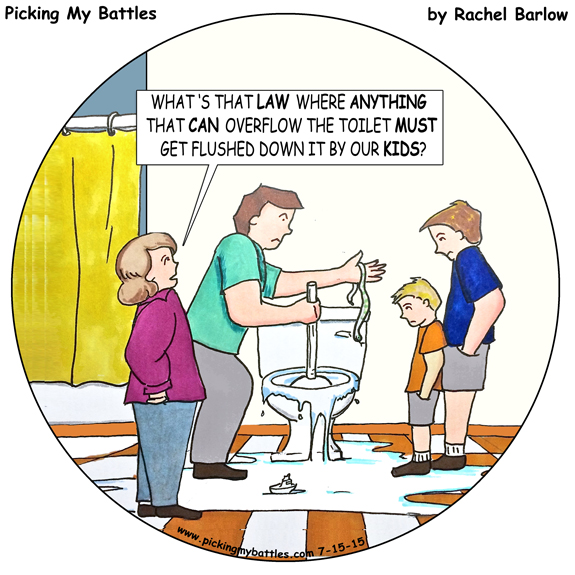
In this case, ‘if’ was a temporarily forgotten chickadee as Jim tried simultaneously to move a hind leg onto the shelf so he could what would happen if he pushed the squash plant in front off the shelf. But, having watched Thing1 and Thing2 ask (and test) this question at various times about anything that could be climbed, blended, eaten, or flushed, I know when to let the experiment play out and when science is about to run amok.

I clapped my hands once . Jim’s hind foot returned to the poof and his gaze to the chickadee. The bird heard my clap, fluttered across the yard, and, for the greater good, scientific investigation was stymied.

Organically Grown

Somedays the wind is howling around the mountains. Other days, the sun is pointing out every new bud in the forest. Even when it’s grey and the back section of our trail is more pond than path, though, at four o’ clock, at least one kid and one adult will ask if we’re all ready to walk. Our walks have attained the ritual sacredness of communion, and, even though they are peppered with swear words when the boys argue about whose turn it is to chase the frisbee into the increasingly green rosy-bush, there is serious communing going on.

The walk around the house is about a tenth of a mile. Thing1 has a goal of getting his parents to do 30 laps walking and then running. I’m treating it as physical therapy for my ankle and, on days when my lungs allow it, have managed 10 laps with a few passes through the garden to talk to the peas and carrots. The Big Guy, waiting for a knee replacement, is less focused on the number of laps than on just walking with the boys. 

The kids will do two laps for each of ours, deliberately tossing the frisbee into the woods or at each other’s heads. Thing1 and the Big Guy will talk car repairs. Thing2 will talk music and life.

We don’t see each other for most of the rest of the day. Thing1 is finishing up classes from college online until late at night. Thing2 has class in the morning and then has creative projects. I write and study, and the Big Guy reads. There’s an implicit understanding that, while we are locking down, we need to have our physical and mental separate corners.

Vermont’s governor is slowly relaxing restrictions that have helped keep our infection rate down, but, with high-risk people in the home, our family won’t relax the current routine until we see evidence of a prolonged absence of a second or third wave of infections. As the rest of the state returns to normal, I’m grateful for these organically grown rituals that keep us close but not constricted, knowing they’re about to become even more important.