This time last year, I would have regarded this fluffy clump as a sign that summer was officially here. This year, I’m thanking it for the hard work it’s done helping our bee population.
I think we have the dandelions to thank for it.
We’ve had apple trees since we moved here. Our plum and pear trees are old enough to flower each year, and the flowering bushes are not new. What is new this year is the profuse flowers that have appeared on every plant, attracting symphonies of laboring bees.
The dandelions seemed to arrive first in all of this miracle. I’m not sure if they brought the bees who brought the flowers or if the late snows brought the flowers who brought the bees, but the dandelions were there first.
The green in our yard can hardly be called a lawn. It gets cut once a week, but we let Mother Nature do the watering and fertilizing, so, to thank these puffs for their contribution, I decided to let them be until they’re ready to fly around the yard, setting us up for another year of miracles.
Well it was bound to happen sooner or later. Apparently you can’t assemble more than three chickens without a clique starting to click because that’s what our Rhode Island Reds have started to do.
There are four Reds and three Americaunas. The chicks are very sweet to us, but they’ve discovered that the tiny white flowers that are growing outside (and inside) the chicken tractor are infinitely more delicious when they are fed to you by humans on their knees (I think the Jim-Bob may have been reading to them from his soon to be published How to Have Your Human Serve You). The Americauna’s take turns yanking the flowers from our hands, but three of the Red’s, whom I am now calling the Plastics, butt in front of their smallest sister every single time.
The boys came up with a strategy of distracting the Plastics with the fluffy flowers on one side of the tractor while I feed Baby Sister her share from the other. It’s worked once or twice, but the Plastics are not your average bird brains. They seem to be catching on, and we’re scratching new ground as we start our field research into Social Emotional Learning for Chickens so our ladies can keep the peace.
When we moved to Vermont, our ZIP Code sat in a solid zone four. Now it is comfortably into zone five, and we set out seedlings a week earlier on Memorial Day weekend. Our day and nighttime temps can still be a bit bipolar, so when it looks like the nighttime lows will be below 40, I cover the tender annuals. Yesterday morning, however, I learned that, with straw bale gardening, less protection can be more.
The straw bale method involves conditioning the bales with plant food and water almost two weeks ahead of planting. This causes the straw to break down, and you are, essentially, planting your veggies in a compost heap. Like most compost heaps, the decomposing bales Start to “cook”. This means if you cover your tender annuals, like I did with the cukes pictured below, you need to make sure that they are uncovered as soon as the sun hits your garden. As you can see, I slept in a bit yesterday, and at least one of my little cukes got fried.
It’s still early enough in the season and hot enough outside that I can direct seed it to replenish, but I hate to sacrifice a soldier that was trying to serve me well.
By contrast, I did not cover the summer and winter squash or the tomatoes. Those plants were slightly bigger, and I had only so much material for protection. It was down in the low 40s on Saturday night and Sunday night, and I knew I was gambling.
When I walked out to the garden in the morning, however, this was the sunshine that greeted me:
I took a little trip to the back of the garden to check on the tomatoes, and every single one of them was getting ready to salute the sun:
The tomatoes do have weed block around them, but the real heat is coming from the bales.
Later in the day I went back to visit the garden –– I visit to talk to the plants and the bees in the nearby apple trees a few times a day – and while I highly recommend talking to plants and bees regularly for your mental well-being, my straw bales blessed me at the end of the day with a little botanical happy pill in the form of newly sprouted bush beans that I had direct seeded less than 48 hours earlier.
If I were to do the straw bale garden over again, I might set some of the seedlings out earlier and cover them for the first couple of weeks. The one caveat I have for other would-be straw bale gardeners is that, while the claim that you can’t overwater them appears to be true, the reverse is also seems to hold. You do need to check the moisture around your plants as you do with any gardening method.
So far, however, my plants seem to be loving the heat and the decomposing bales, and, as mentioned previous post, you can still sit to do your gardening.
Thing2 has been experimenting with the digital projector I use for presentations at school. He’s been projecting video games and Avengers movies on the ceiling and underneath the TV. here’s an idea man, so it should’ve been too much of a surprise when the two of us looked at each other and said, “let’s have an outdoor movie night.“
The other family members were out of the house when the idea got started, and, by the time everyone else got back we had collected a makeshift screen and two plant hangers from which to hang a curtain rod.
Immediately we agreed that we should all watch the original Star Wars. The kids have never seen it on “the“ big screen, but I think this one will be just as good. We just have to rig up THX in the yard before we screen Empire.
When Thing1 was still a pea-picker, he hunched over his Matchbox cars for hours, watching their wheels and gears as he drove them around carpets and vitas he created and telling them their stories. I wish I had written them down because sometimes I think he needs proof as to just how creative he is. I think a lot of people do.
Thing1 is about to turn twenty. He knows how to fix cars and program computers. Anyone who watched him studying the movements of cars as a toddler would say it pretty accurately predicted his mechanical aptitude.
His love of discovering how things work, however, often translates him putting high value on common sense and things that can be proven. When I tell him of the spaceships he conceived and drew, of the stories he told, he answers, “I’m just not all that creative anymore, Mom.”
Yesterday proved him wrong, and this time I got the photos to prove it.
When Thing1’s college closed, his first action, over our strong objections, was to go job hunting. He received two offers as soon as the state closed down both businesses, but his employment history from the previous year earned him the ability to collect benefits during the pandemic (he wasn’t eligible for the stimulus because he’s too much of an adult and too much of a dependent to fall into any category the government considers visible). He’s saving some of that money but, still a teenager for another two months, money can burn a hole in his pocket.
Thursday he announced he was buying a hammock to use at school when it reopens. Then he announced he’d like to test drive at home. He asked the Big Guy and then me if we could think of any appropriately socially distant pairs of trees from which to hang it and, despite being surrounded by trees, we just scratched our heads.
Friday, Thing1 and Thing2 traced our normal route around the house, making incursions in to the forest when this or that pair of trees sparked their interest. They showed us a few ideas, but the Big Guy and I just couldn’t see the right trees for the forest.
Saturday, Thing1 disappeared again and then took his machete and power saw to the woods behind the house. We heard some hacking and then a familiar buzz. Thing1 came back to assure us that the tree he’d taken down had been punky and about to fall anyway and then to invite us to the clearing he’d made. The Big Guy and I started our usual afternoon route and went to where the boys were waiting, Thing2 dancing from foot to foot to show us Thing1’s work.
The boys had found a perfect opening into the forest and created a more defined path to a pair of trees that, somehow, the Big Guy and I had missed the day before. Thing1 had felled one tree and cleared some rosy bush between the two that would support his hammock. Then he indicated the tree-filled slope leading down to the river that will be the view for anyone sitting in the hammock.
Thing1 had pulled a paradise from the mass of trees and rosy bush. When the hammock arrives, he’ll assemble it and give credit for the completed project to his common sense. I’d like to think that it was actually good old fashioned common creativity that helped him identify the perfect spot to meditate on the question.
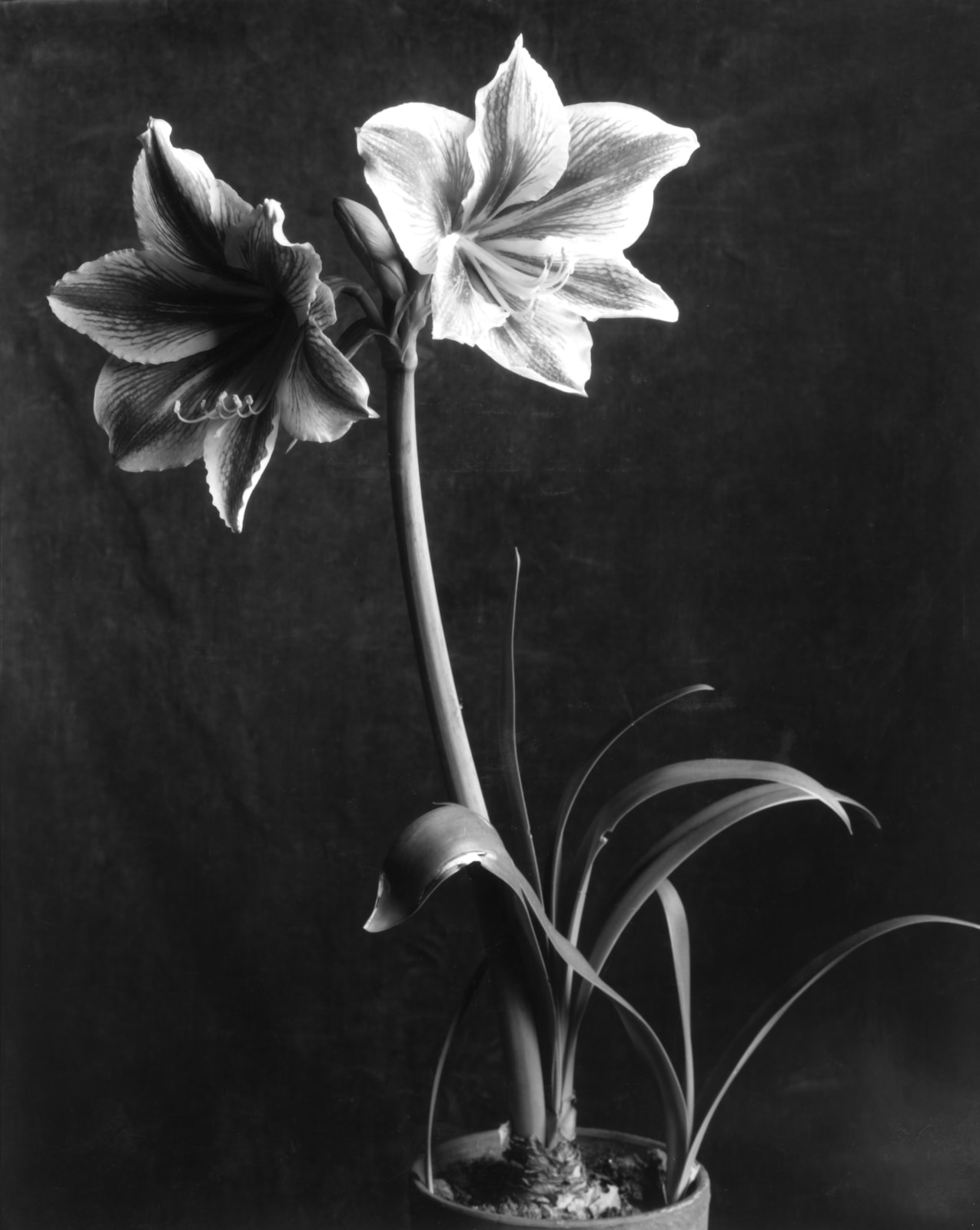
So here I am in the backyard, shooting flowers again, wondering where my creative life is going. It might look like I’ve come full circle, but, when I look closer, my loop has the twists of a Möbius band.
Fifteen years ago, wanting a creative career, I ran a wedding photography business. I sucked at up-selling, so I also delivered papers and did a little freelance programming, all the while looking for that ‘real’ job. We went to the local art museums on their free family days, but for the most past, art was relegated to the back seat, and the back seat was getting pretty cluttered with empty newspaper boxes, bills and booster seats.
I was still searching and scrambling when I bumped into a friend at potluck picnic.
“How’s your photography going?” she asked.
I had been hoping she wouldn’t ask. An established documentary photographer, she had been encouraging when I’d first picked up a camera, and I was embarrassed that it had fallen by the wayside.
“I haven’t had time to do much,” I said as then two-year-old Thing2 hung on my arm. I pulled out the one-handed point-and-shoot that I was using most of the time. “I’ve been working a few jobs, but I just don’t have time to do anything except when the kids are in bed. The only thing I do anymore is write and draw and shoot flowers.” Then I joked, “Don’t they say your creative life is over when you start shooting flowers?”
“Not so,” answered my friend, and she introduced me to Imogen Cunningham.
Born in 1883, Imogen Cunningham studied chemistry at the University of Washington, photographing plants for the botany department to finance her tuition. She went to work for a portrait photographer after college and then traveled to Germany to study photographic processes. When she returned to the states., she set up her own studio. Her portraits and other work had established her as an artist by the time she became a mother.
At that time, even in America, her quest for education, career and artistic fulfillment weren’t commonplace for most young women in that era, so I was surprised to learn that, after all that struggled, she followed the more traditional route of being what we now call a stay-at-home-mom. I wondered if there was even a choice for her.
But art was not a choice for her.
Responsible for three boys, Cunningham used her camera to focus her attention on her offspring as well as her garden. Her botanical images from this period of her life won her lasting acclaim. Far from signaling the death of her artistic career, Imogen’s botanical photographs made in the throes of motherhood confirm that an artist can bloom in the face of responsibility. It just required some really good naptime coordination.
My boys are long past the nap time stage, but ‘real life’ and the creative life duel constantly. My unexpected, enforced sabbatical seemed like the perfect opportunity to breathe new my painting and writing life, but revivals can have unexpected results. When the intense intellectual and emotional challenges of working in Special Education receded, there was suddenly space to mediate. My writing life, more recently relegated to the sidelines, came roaring back, routing me from my bed early in the mornings. Painting moved to the back shelf, and a blog that was almost 100% illustrated or painted for over six years began relying on photographs to support the writing.
The painting will never disappear, but the need to write online and off and to produce images in minutes, rather than hours or days, hasn’t killed creativity. It’s re-opened an old, almost forgotten path to it.
So I come back to Imogen and her work. It continues to resonate with me because of its beauty but also because of what it embodies. She was a mother. She was a housewife, and she was still making a creative life for herself. And, sitting under the apple tree, my camera trained on a blossom until one of the swarming bees comes to kiss it awake, I know that photographing flowers is the opposite of a creative life ending.
it’s not a sign of spring. The leaves on the trees have mostly popped already anyway, but it was the ultimate sign of hope.
I went out to the garden to check the progress of the sun in an area I want to prep for later in the summer. The buzzing next to the garden Was so loud I wondered if flies might have been attracted to some poor chipmunk that had attempted to steal squash leaves in the presence of Princess Jane. As I walked toward the apple tree on the west side of the garden, however, I saw hundreds of tiny worker bees toiling among the apple blossoms.
i’ll go back to try to capture them with a better camera, but they were patient as I tried to snap a few pictures as long as I didn’t interrupt your work. I greeted and welcomed them, knowing the returning bees are more than just a sign of spring. They are a chorus of hope.
Katie settles in from a comfortable distance to watch the chicks. She makes a practice of checking on them whenever they move from their indoor house to the outdoor home. She lolls in the grass as Jim tries and talk the chickens into squeezing through the holes in the wire.
The chicks love to visit with Jim, chirping that they’d be only too happy to show him their feathers up close if only they could get through. Visibly cursing the physics of chicken wire, Jim pretends to be distracted by a chipmunk under the car and left.
Jane watches for a while and then decides it’s time for the pro from Dover to put the fear of the Warrior Princess into the chicks. This is when, Katie, recognizing a true huntress, gets to her feet, shadowing her Royal Highness before she gets within 6 feet of the coop.
Karie takes a fair amount of teasing for being a bit of a wimp. It’s safe to say chicks are usually less afraid of the cats than the she is. Ultimately, though, she lives by one overriding philosophy of ”Don’t mess with my chicks.”
One of the quirks of Strawbale gardening is that, even though you don’t have to contend with perennial weeds that are real PIA to pull, conditioning bales of straw (made from cut grass) will generate weeds in your planting medium. You can smother it before it starts, but you will have to do some pulling as I did yesterday.
I’m trying to mulch as I pull so that it’s a one time deal, but since I’ve been sick most of the spring, bending at the waist to pull even a few blades of grass was mindbending I’m not in a good way. That’s how I discovered one of the other more beneficial quirks of this gardening method.
The basic steps of a straw bale garden our place, condition, and plant the bales. Some types of plants need soil on top of the bale before planting; others can go right into the conditioned straw. This year I had the kids do most of the placing – bales can be at least 35 or 40 pounds stone dry, but weeding is less glamorous. I made it even less so yesterday by having Thing1 bring a chair up to the garden after the weeding first bale literally benched me.
After stooping over gardens for the last two decades, sitting in a chair, weeding and mulching the second onion bed that was just the right size and height was not only not strenuous, it was downright enjoyable. Sitting, you get to talk with the cats and dog about what you’re doing (the cats still think you’re nuts), you get to take a look at what’s almost ready to be picked, and you even get to do a little meditating. Sure you get to meditate doing it the old-fashioned way, but being able to sit and do it it’s a big checkmark in the win column for Strawbale gardening this year.
P. S. I still highly recommend a nap when you’re done.
The chicks are really starting to feather out, but there’s still enough fluff that we only let them outside when the sun is strong enough to counteract any cold. Yesterday, we let them play outside while their enclosure was cleaned, and they cavorted and experimented with running up the gangway and then jumping off. Katie sat nearby, whimpering when she thought they were going too high. I was sitting by them most of the time, but they were far more interested Katie and even the cats.
There don’t seem to be any mean girls in the group, and I wondered if they just get along because they don’t know any other clique.
We started with a dozen and then, knowing our coop isn’t big enough for all of them, the Big Guy took a few over to a neighbor in exchange for some eggs from her grown birds. The neighbor was happy to have the new little ones and assured the Big Guy they would fit right in. At first I was thinking she must not have any mean girls either, but then I remember the one thing I’ve always loved about chickens.
It’s that, for the ladies anyway (not so much for the roosters), it doesn’t matter if you’re a Rhode Island Red, a Barred Rock, an Americauna, a newcomer or hatched in the same bath, or even an over-protective dog. If you’re willing to hang out for a game of ‘how high can you fly,’ you’re part of their flock.
if you would asked me in February what Mother’s Day would look like, I would’ve told you we would be expecting to see Thing1, having finished his freshman year, coming home from school, And the four of us loading into the car for Mother’s Day brunch before I got started grading papers. I’ll probably write an IEP this afternoon before dinner, but that’s the only part of the plan still in place.
Thing1 is still upstairs sleeping off the tension from his last online exam. The Big Guy made me and Thing2 breakfast, and except for a brief trip to the garden, I’m spending the day writing in my study surrounded by my for babies. Will have dinner as a family later, and that, along with our daily walk through the melting snow will make it as perfect Mother’s Day is anyone could ask for, but my garden trip was a little gift too.
Traditional wisdom in Vermont put June 1 is the day to set up most siblings, but changing weather patterns have emboldened many of us. Mother Nature noticed, and sent us about 6 inches of wet snow Friday night, burying my recently planted greens.
I thought she might be trying to teach me a lesson that June 1 is planting day, but when I walked out to the garden I found another remind her in place. The spinach and kale practically smiled at the camera, and even the carrots couldn’t be prevented from peeking out through the snow. Frost and snow can slow growth, but it can’t stop it, not forever.
When we first moved to southern Vermont, we noticed official-looking helicopters frequently flying over our town of 300 at certain times of the year. Wondering what, in the middle of nowhere, could be of interest to any officials, we asked around and learned that at least one property owner was farming 100% organic Mary Jane.
Acres of it.
I get a little giggle every time my grow lights go on, wondering if, once upon a time, the glow from my window that’s keeping my tomatoes and squash happy might have caused a helicopter to hover a little longer. If they did now, they’d discover the two masters of the house chilling in the purple glow, dreaming of the organically grown chipmunks that will soon be trying to munch my squash plants.




 Picking My Battles