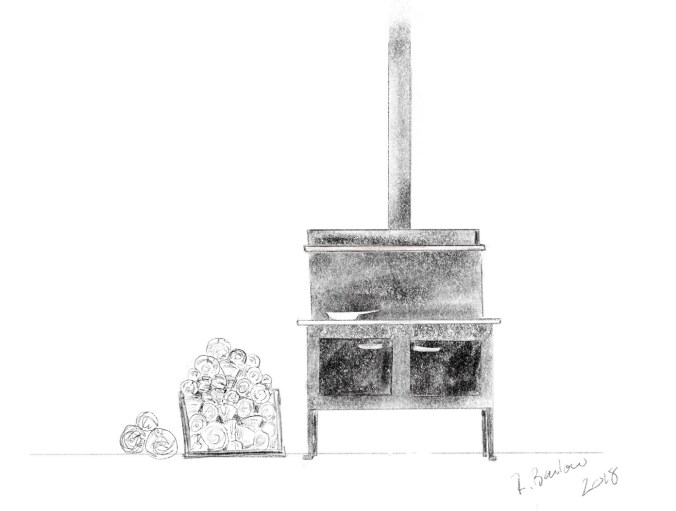
Everybody’s a Critic

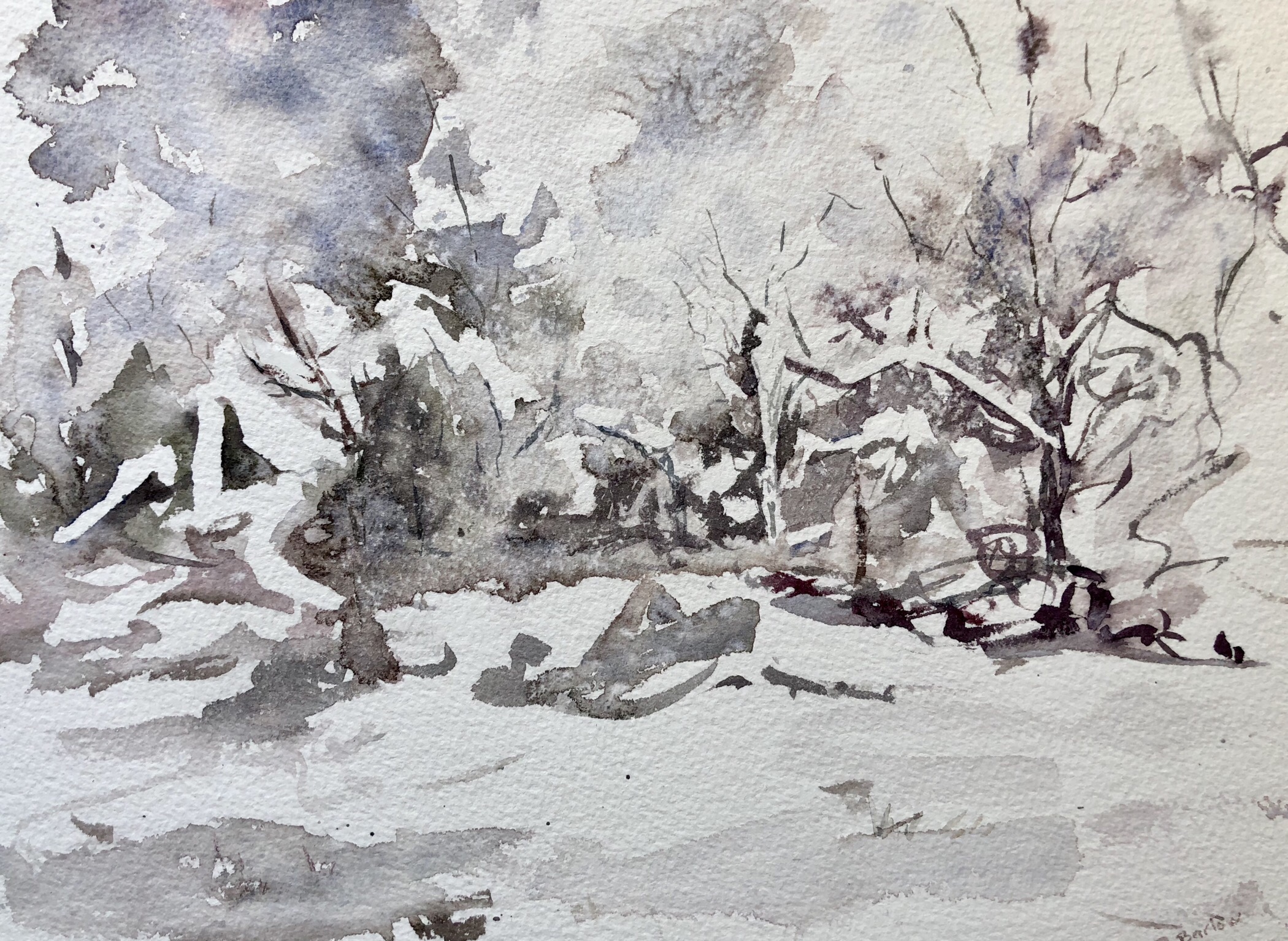
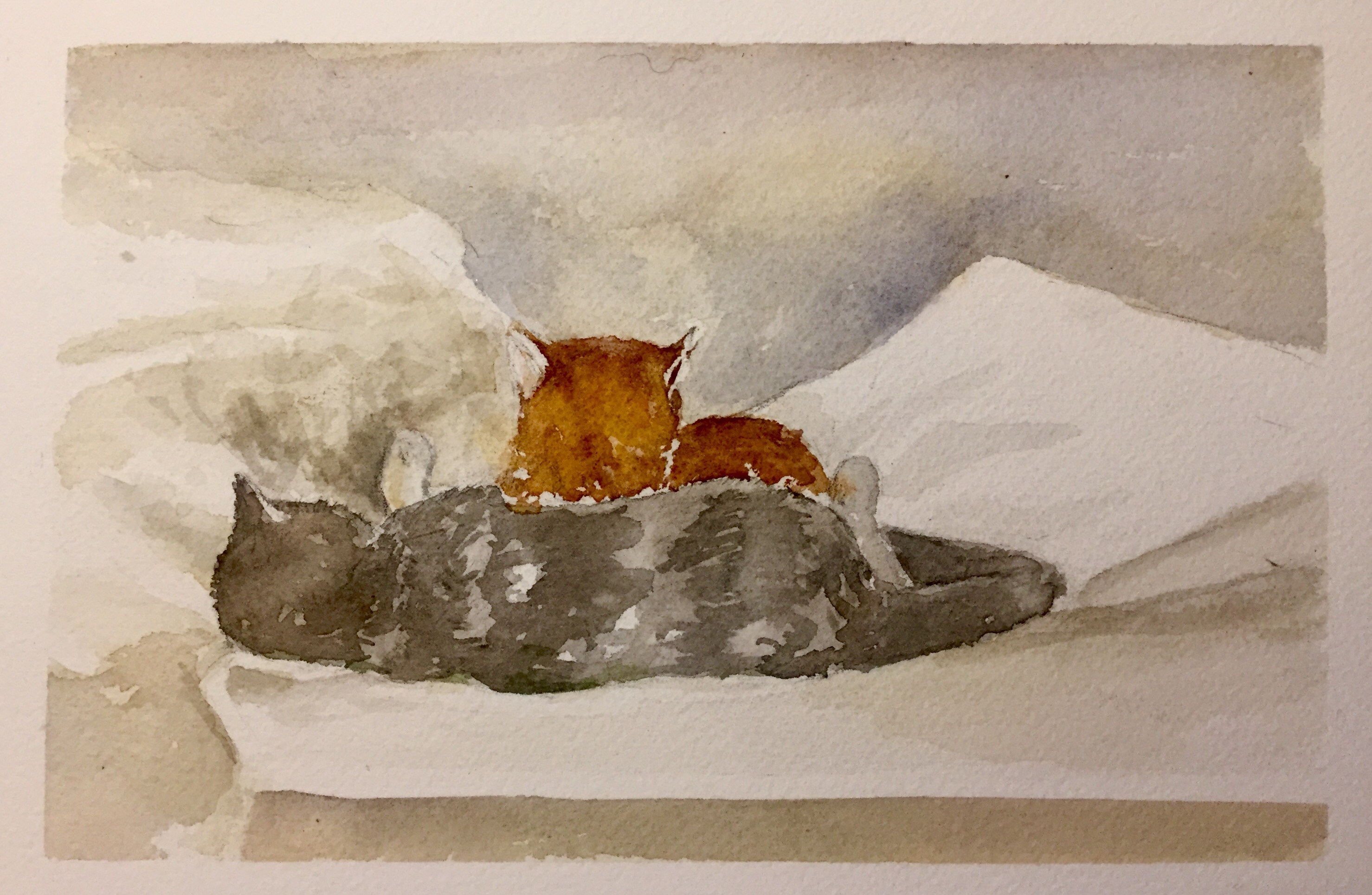
Paw Print at Dawn by Jim-Bob Barlow

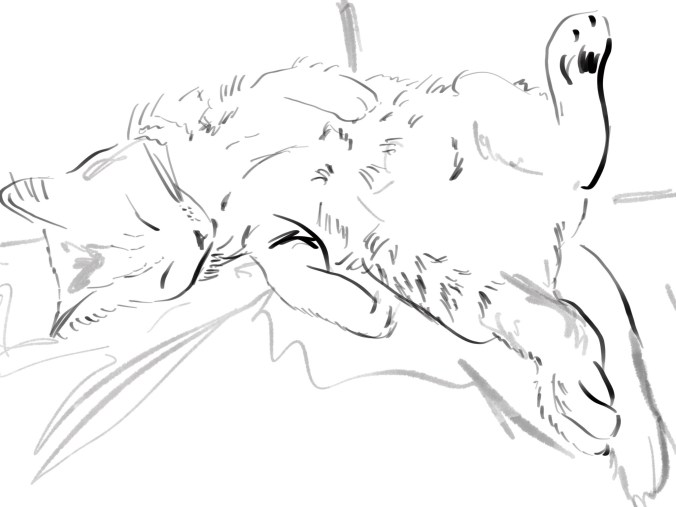
I was trying to paint last night but Jim-Bob, our orange tabby making a life as a reformed barn cat, decided my time could be better spent. He hopped up on my lap and then crawled up to my neck for insistent snuggle.

“No, kitty,” I said after giving a few scratches and setting them down on the floor.

“I have needs,“ he seemed to purr at me or as he jumped up between the brush bucket and the fish tank, worming his way back onto my lap. He put a paw on the painting table, and I set him down again.

 Katie-the-wonder-dog barked at the door to let me know she was ready to come in, and I pushed the table away from me and padded out to the mudroom to let her in. Jim-Bob, curiously, did not follow, and I should’ve known something was up.

When Katie and I got back to my studio/office, Bob trotted out past us with a swish of his tail, leaving behind only a paw print of disapproval on the still wet painting.

Thing2 has just fallen asleep in the room across the hall so I kept my curses quiet, swearing that was the last that cat would ever see of the inside of my studio. He knew better, however, waiting less than five minutes to nudge open the door with a butt of his head. And as a sucker with a severe case of Stockholm syndrome, when he threaded himself between my legs, I put down my brush and decided to tackle his boundary issues another night.

Some nights in the studio are as much about processing as they are about product.  

The Scattered States of Thing2

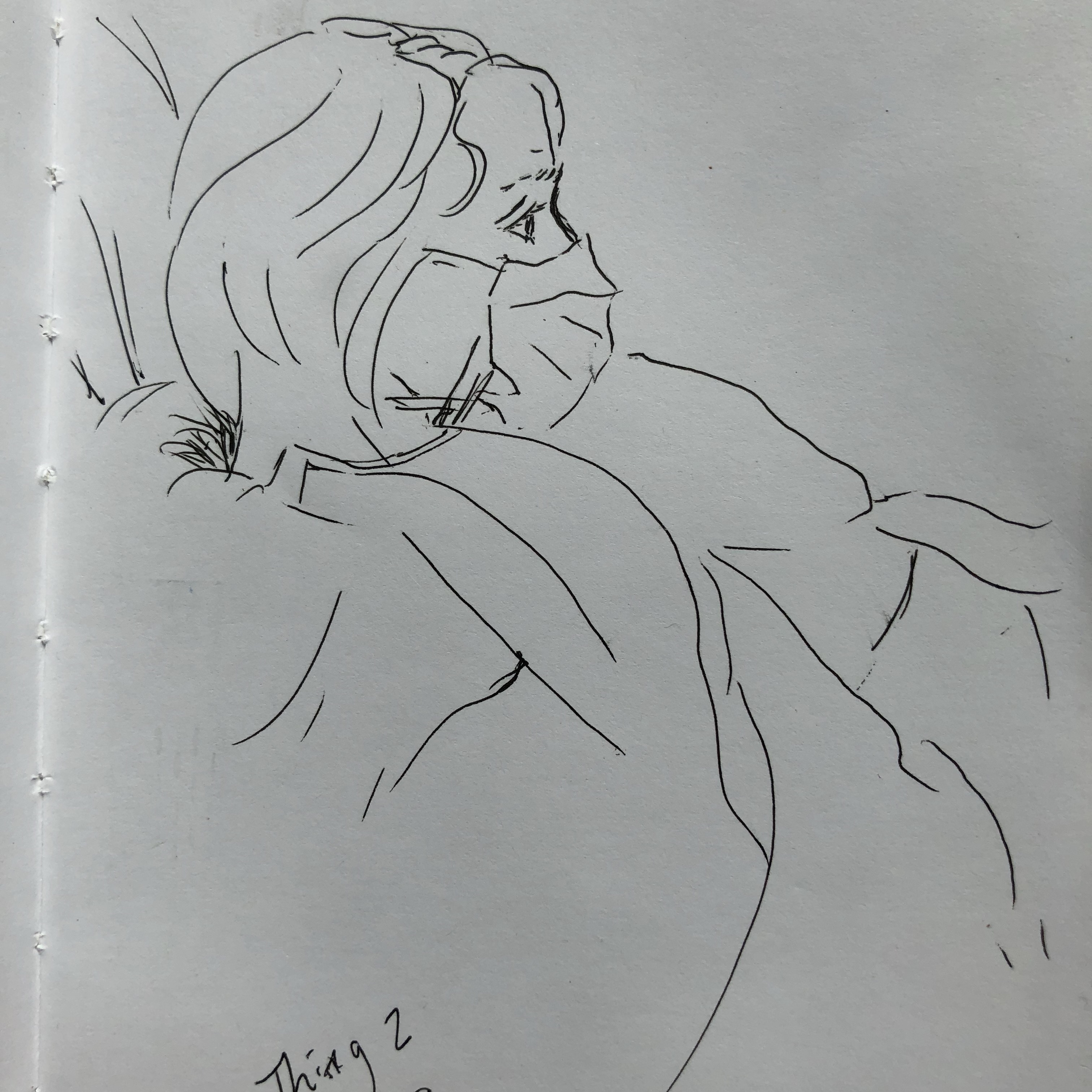
Thing2 at the ER

Thing1  was diagnosed with an autoimmune disorder almost 2 years ago now. We knew the diagnosis would come with big changes to his life, and this winter we really got to understand what it means to live with and care for someone with a chronic illness.

We were still somewhat prepared for it.

What we weren’t prepared for was going through very similar routine with Thing2. After several months of ER visits and tests and flu‘s, we now find ourselves between a number of diagnoses, including a possible tickborne illness.

 Thing2 has found himself and completely unfamiliar territory. My superhero whose used to jumping over tall rock piles in a single bound it’s only found himself with barely enough energy to walk from chair to bedroom.

Except during the worst of the pain, however, he still my superhero. I still see his enigmatic little smile, and he still finds ways to experiment, even if it’s only with making movies with special on the iPad (full disclosure: I could not do it) or testing theories about how your atoms are not really touching your brother that he heard on Cosmos (science hurts sometimes).

I would donate an organ if I could make him better tomorrow, by doing so, but, as Thing1 has Learned over last year, what doesn’t kill you doesn’t just make you stronger, it also makes you smarter.

Buried


“How are YOU doing,” they asked.

The right word escaped me then but has found me tonight as I listen to each inflection of Thing1’s fevered breath, afraid to sleep in case he spikes again, cataloging the drugs and doses he’s on incase we need to head to the hospital for the umpteenth time this snow-inundated winter, and feeling completely frustrated at not being able to do the one thing every mother is supposed to be able to do for her children — make them better. 
And, for the first time in weeks, mostly because I’m way beyond the “if i didn’t laugh I’d cry” stage of the winter and because I don’t have time to cry and can’t think to write or draw, I picked up a brush and started to paint, and the word found me.

Somehow we will dig out of this endless winter, but right now, I realized that the word I’d been looking for was “buried”, and it had nothing to do with the snow.

A Sensitive Subject

For some reason I can’t quite remember, I found an hour or two to myself on Christmas Eve of all days. Presents were wrapped, someone else was responsible for Christmas Eve dinner, the table was set, and the Sunday New York Times was sitting on the end table waiting to be read. it turned out, that that Sunday Times contained a little lump of coal in the form of an article about the advent of sensitivity readers at publishing houses. I shouldn’t be surprised that there are 1 million ways to offend potential readers or that publishers might want to keep one or two of those readers, but I was suddenly very grateful for all the classic works of literature that, having survived government censors, had the good sense to be written before sensitivity readers existed. 

Then I thought about my own kids’ book (and future book ideas) and all the ways it might possibly offend people. 

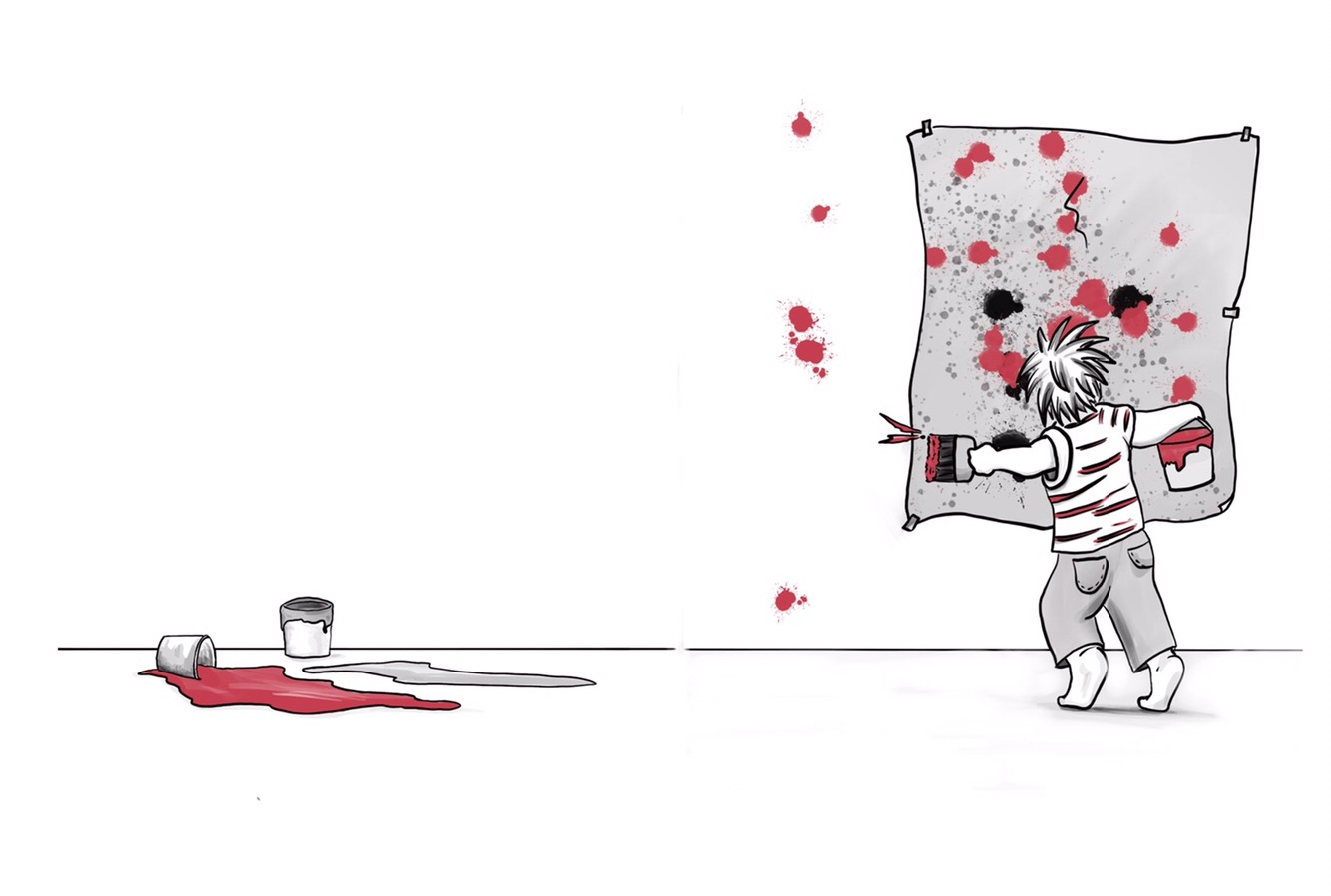
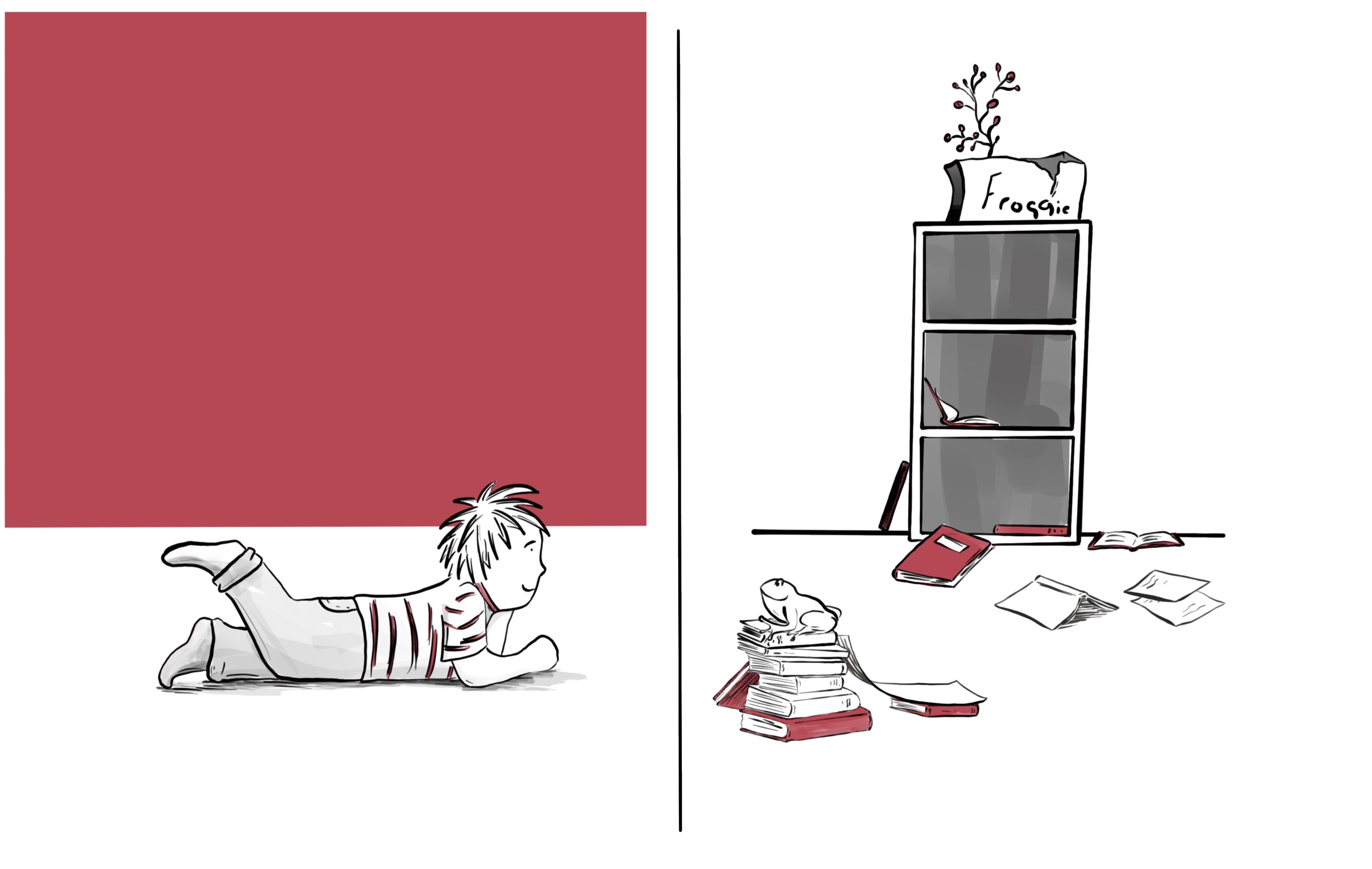
The pictures are black-and-white and red all over, so some people might get offended by the predominance of red or the fact that the starring role in the book is played by kid with really bad hair. Or some sensitivity reader might worry that I’m insinuating that mom is with bad hair can’t get their kids to clean their rooms. 

 But as I thought about the ending of my little book about a kid who has his own idea about the definition of a clean room, I realized the people with whom I’m really gonna be in dutch are the millions of moms who are also trying to get their kids to clean their rooms. OK, so maybe I’ll only be in dutch with the moms who still have kids under 12. And I can whittle down that number to the number of moms who read my blog who haven’t figured out the magic formula for getting their kids under the age of 12 to clean their room. So that’s like, five or ten moms at least.

I don’t want to scare you because the book does have a happy ending, if you’re the kid with the messy room, and I do want to go on record that I am not endorsing the non-cleaning of rooms. I do find myself in the controversial situation of being willing to support a flexible definition of the term “clean room“.

This last week, was winter break and, after ordering Thing2 to clean his room two days in a row before he was allowed to invite friends over for “get together’s“ (formerly known as “play-dates” which, out of sensitivity to our resident tween, has been dropped from the approved household lexicon), I realize I’ve been a bit insensitive to him on this sensitive and highly controversial subject. 

Thing2, now getting better at making the room look clean (at least to the casual observer), will stuff a few things end of the bed where they were less likely to show and spend the rest of his energy putting away all the shards of paper from his last homemade light saber, organizing his props for his next special effects project, and finding a place for all the disassembled electronics he rescues from the trash.

When he’s done, the room still looks like hazardous waste site, but in all fairness, the madness is the result of a creative but methodical and investigative spirit. What looks like a shambles to me is for him a laboratory of life.

I’m a huge believer in encouraging the creative spark in everyone, especially in my offspring. That laboratory is why he comes to me at the end of the day to show me the special effects space movie he’s just made or the book he’s just “published”. So even though even a domestic anti-goddesses such as myself sometimes has to draw a line between the dirty socks on the floor to establish benchmarks for distinguishing the a laboratory from a trashcan with a bunkbed in it, the laboratory is part of what makes Thing2 grow.  

It’s also why, at the end of a book about a little boy who has his own idea about how to clean room, I decided to let that idea win out.

Breathing Room

At the beginning of this year, Thing1’s autoimmune disorder hospitalized him with an intense flare up and, not to be left out of the fun, promptly Thing2 contracted Influenza-A that, along with a lymph node inflammation painful enough to prompt two separate diagnoses of appendicitis earned him an overnight ticket to the pediatric ward. As a result, almost every week of our 2018 calendar has been dotted with nights in the ER, overnights at the hospital and follow-ups at various doctor’s offices. Last Thursday marked my first day off in weeks that didn’t include a rush to the ER or a four hour round trip drive across the state to a specialist, and I didn’t know what to make of the unexpected breathing room.

For weeks, the voices in my head that run an internal dialogue about art and literature and school shootings and the homeless population and, you name it have been replaced with instructions. Log when you last gave Tylenol or ibuprofen. Call for the new prescriptions. Did T1 have 32 ounces of water or 16? When did T2 poop? Check his weight. Call the insurance company. Call the doctor. Call the insurance company. I wasn’t numb, but I was a robot. Calculating but not thinking, especially if it meant engaging in worry which is all too natural for me (it could be an Olympic sport).

The robot didn’t have much extra processing power for art or writing, and February was burning away without any pictures to show for it. Even a conversation with a fellow artist about drawing in the down times at waiting rooms didn’t get my pencil or brush moving.

There was breathing room, but for some reason, I was afraid to rake that first breath.

A few nights ago, I decided out the iPad to work on a page for Dweezil’s To-Dos, a book about a little boy with too many projects (don’t ask how I get my inspiration).

Inking and coloring over the scanned drawings is methodical. Robotic. It’s not particularly creative a lot of the time. It’s basically just drawing lines – filling in the space between points.

It’s not creative, but it is meditative.

In the meditation, however, the robot slowed down. I inked and colored page 6 six different ways, and the machine started to power down. My eyelids felt heavy, and the iPad fell from my hand. The thud of the Otterbox on the floor jolted me awake again, and, rebooting, I took in a gulp of air and opened a file to start page 7.

Scars

The picture on the 27” screen had just switched to views of the Oregon area as Kindergarten Cop went from a loud, violent sequence to a more lighthearted part of the movie. The room was dark and shots of green hills and blue sky made the console TV look like a window to better places in the world than this house where I knew I should not be. I was thinking about grabbing the purse I had just bought at the Indian artifacts store in the mall and leaving when the front door banged open.

Afternoon sun poured into the hallway next to the front room making the mustard and gold shag carpet look clean for just a moment before two stark shadows darkened it purple. The shadows moved barely 2 steps before morphing into two very young men pointing guns at the seven people in the room. To this day, I don’t know the types, but I can remember black cylinders pointed at us as we were told to give them our valuables.

I tried not to look at one of the thieves as I handed him my purse strap. He took a wallet from the man sitting next to me next. Another girl at the gathering asked if she could get something out of her purse first, and, I knew we were all going to die.

Only an hour before this nightmare began, she had pulled from it a handgun to boast of the recent gift from a boyfriend. I knew I should’ve walked out of the party immediately. Now I stared down at the beer-stained shag carpet, realizing it might be the last thing I saw because i’d lacked the fortitude to do the right thing at the right time.

The boys/men unwittingly spared all of us shouting “No” and grabbed her bag. It took less than two minutes for them to collect our valuables, and then they told us to lie down on the floor. There had been other robberies in the area in the last few weeks that had ended with fatalities, and I wondered if it would be better to be shot in the head and die instantly or in the back and be paralyzed.

The boys apparently having chosen their target because they knew the house’s tenant was also engaged in criminal activity (the full extent of which I later discovered) and would not be calling the police, left without firing a shot.

Two hours later locksmith had made a new key for our cars. Knowing our assailants had my license and apartment keys, I drove to a friends house, and hid in their basement TV room for a month. For years I told no one I loved what had happened since I knew I was to blame for having stayed in the wrong place with the wrong people.

That was over 25 years ago, but those two minutes changed the trajectory of my life. They changed forever the way I dealt with people, with crowds, even with jobs. I stopped trusting anyone, especially myself. For years, every decision was made out of fear that sometimes metastasized into hate for the world. The Big Guy and the arrival of Thing moved me in a more positive direction, but I lost a lot of years and productivity to fear and hate.

I think about that impact every time word of another school or church shooting comes across the news. The people on the receiving end of this horrific violence have all been in the right place. They’ve been at school opening their minds or in their places of worship opening their hearts when some hate-filled person decides to take revenge on the world around him. And, as we have seen on the news, everyone in the presence of that violence is touched by it. It doesn’t matter if the bullets actually hit them, they will be scarred by them.

Some survivors, such as Emily Gonzalez, an eloquent and passionate advocate for the right of her contemporaries to go to school in peace, take of their post-ordeal trajectories in ways that become beacons of hope. My guess, however, is that even those with the strength to channel their pain into something productive will carry the wounds on their psyches for the rest of their lives.

Some scars may fade into tiny lines, blending in with those normal lines we all acquire. The psychic wounds inflicted on the children in this country may be increasingly common, but they are not normal. There are kids in war-torn and impoverished parts of the world who are acquiring far worse and more frequent wounds to body and mind, but that should not be the benchmark.

As I write, I’m watching 11-year-old Thing2 take apart an electronic toy to build a lightsaber. He’s at the beginning of his Age of Discovery. I know this is when his spark will be fanned into a flame. I also know he will acquire a few mental and physical scars over the next few years. That’s part of growing up. But, every day now I think about all the ways to protect Thing1 and Thing2 from the scars that should not be part of any childhood.

I know I’m in good company as more than one conversation with other parents over the last few years has evinced a common fear that any morning school drop off could be the last. We laughed nervously at what statistics tell us is our paranoia. Then a day after Parkland we heard news of a narrowly averted but similar shooting at a school two towns away. The conversations have since turned in earnest to school security, regulating certain guns and would-be owners, and even leaving the schools for homeschooling.

As I’ve entertained homeschooling for T2 and online college for T2 I realized my experience is still exercising its impact, trying to straitjacket their potential. That the fear isn’t irrational doesn’t make it less damaging to their futures, but I genuinely don’t know how to keep them from experiencing that fear while our country seems willing to normalize schools, churches, malls and theaters as war zones.

My personal feeling is that this issue won’t be resolved with a single magic pill. I don’t believe better school security or improved mental health support or better background checks alone will fix this, I think the answer will involve a combination of many solutions, but none of them will happen until we decide that all our children’s futures are worth working together.
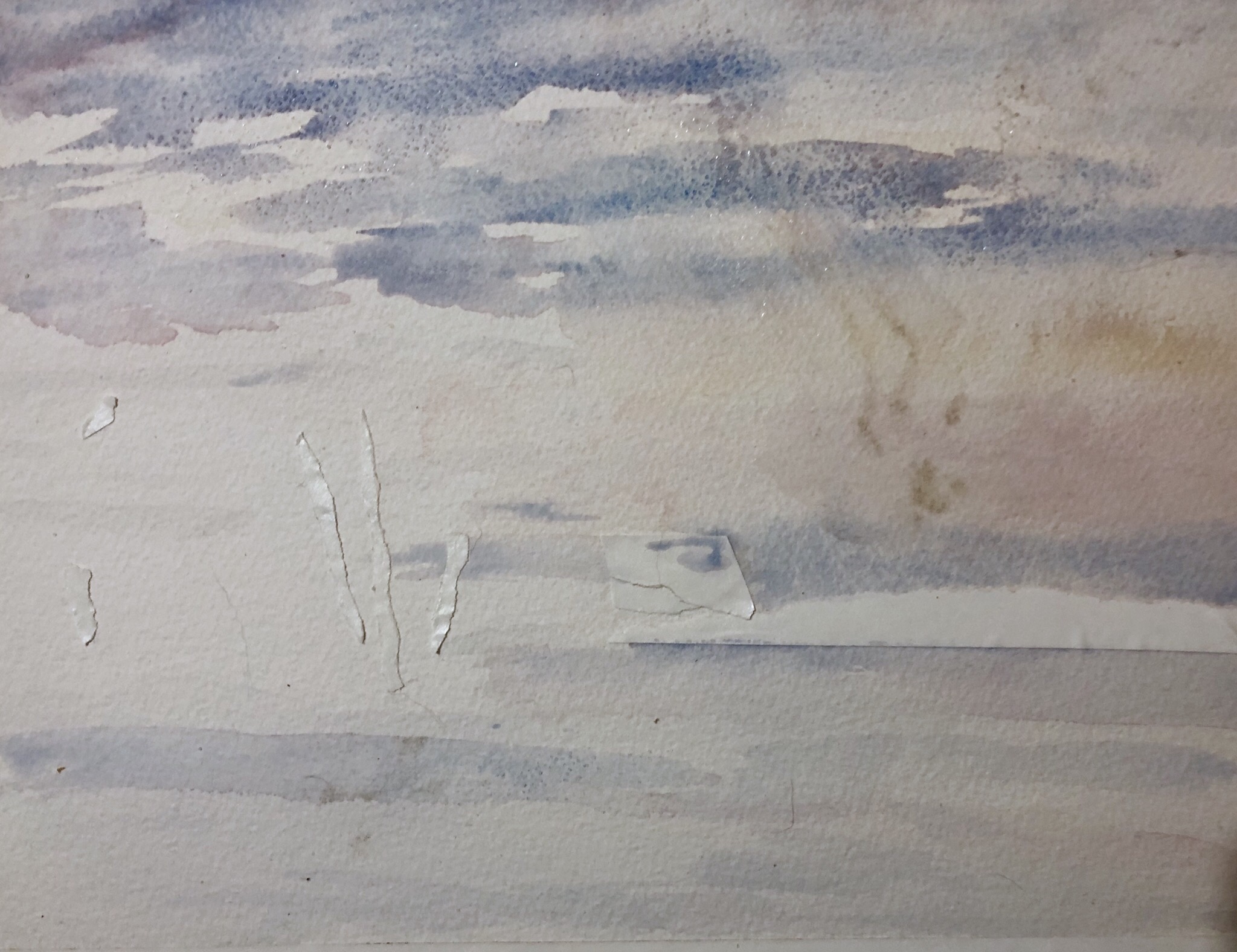
A Room with a View


Thing1 and I spent most of the day at Dartmouth- Hitchcock looking out the window of his room toward the great foggy north known as New Hampshire. The mountains disappeared and re-emerged from the clouds that has to around us all day, and they set the perfect view for our mood.
Thing1’s Ulcerative Colitis required him to be admitted to the hospital for treatment of a severe acute episode last night. The disease has escalated, and when we leave tomorrow, it will be with the knowledge that we need to decide between several long-term treatment options, each of which carry serious risks.

My gentle giant hasn’t shed any tears or wallowed in self-pity since his diagnosis a year and a half ago, but I could tell that the relapse and the treatment options presented had deflated his morale quite a bit. 

 Pep talks and platitudes are wasted on Thing1, so I steered the conversation back to his favorite topic – cars – until he was ready to talk about options. I worked my online day job while nurses came in and out with more medications and fluids, and the gray foggy day seemed to flow through the plate glass window.

Late in the day, the sound of a snow plow in the parking lot 5 floors below pulled our attention back to our view.

“The mountains are too populated,” said T1, “but they are beautiful.”

When the mountains disappeared into the night, I was able to do my own research into T1’s options. Number crunching and phone calls to experts made us more optimistic, and a chance conversation with a nurse with the same disease helped T1 marshal his morale.  

Tomorrow is supposed to be cold but sunny, and the view should get better as things become clearer.

A Straw to Grasp

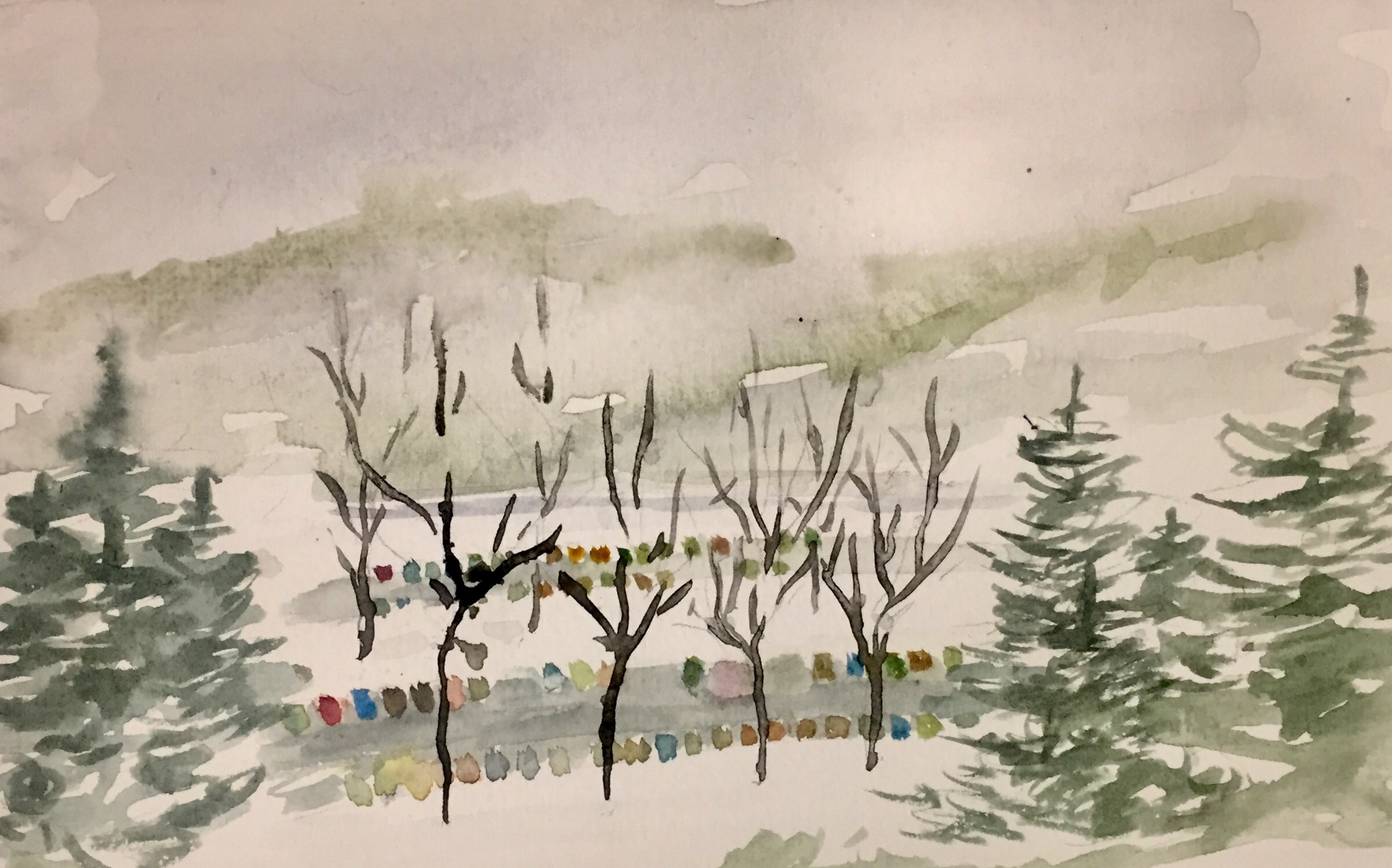
High Afternoon, 5×7, Watercolor

We had stayed over night near Dartmouth-Hitchcock hospital for medical and weather-related reasons, and the roads to the highway were still icey enough to keep me from enjoying the views, so Thing1 and I talked about his auto-immune disorder and how he will handle these emergencies next year when he’s on his own and about his upcoming college decisions.
I was about to take a slower road but Thing1 gave an annoyed snort.

“Can’t we take 91?  If we get back any later, I’ll  miss work, and I already missed my midterm.”

I was a bit surprised that he would want to work when I knew he was feeling shaky but decided we’d have that argument when we got home. He was not about to let it go, however, and, after expressing an unwillingness to ruin a perfect attendance record at work for weather or illness, he talked me into letting him go. 

 I got on the next ramp for 91 South. I was not sure that he had the energy, but still I told him, “I could not be prouder of you if you had gotten into Harvard.”

“I didn’t apply to Harvard, Mom.” 

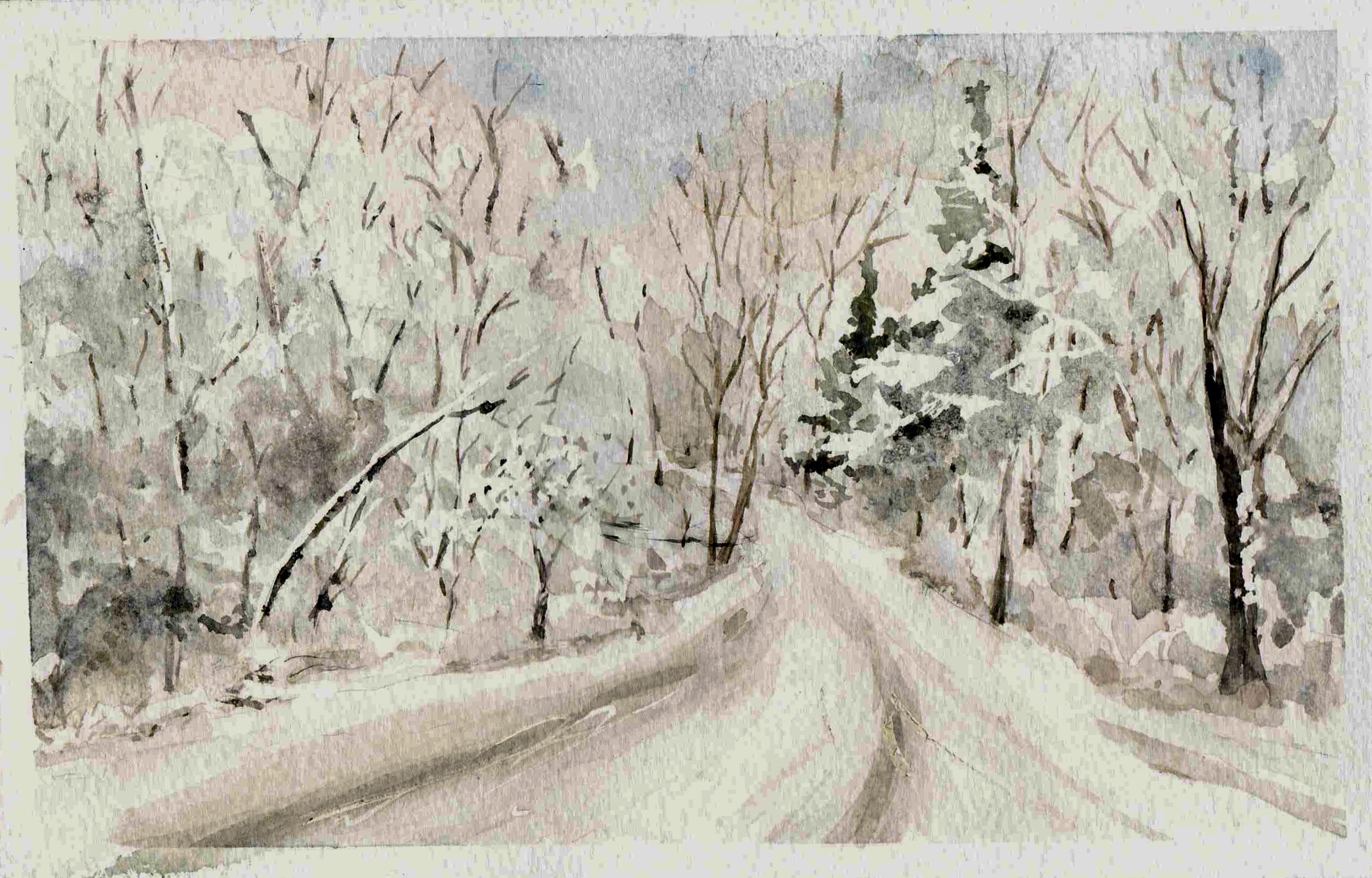
The  sardonic tone always gets my eyes to roll to the heavens which is how I was unexpectedly fully able to take in the winter fantasy that flanked us on both sides of the highway.  After the last week of worry, it was almost as lovely a happy straw to grasp as the realization that my sick boy still had enough energy and sense of humor to be a smart ass (I don’t know where he gets it).

Wednesday Storm

Wednesday Storm, Watercolor, 5×7

It’s been about two weeks since I made the decision to resurrect a creative routine. The decision was the result of a webinar hosted by a friend, but the fuel to keep it going beyond the first day or two came from an unwelcome source.

Saturday morning we rushed Thing1 to the emergency room because his chronic illness had generated an overnight weight loss of over 10 pounds. I knew he had not been feeling well for the last day or so, but most of his flareups have resolve themselves in a day or two. 

This one is still playing out, as we continue with fluid replacement and hospital visits. 

I’ve been trying to find a silver lining–acknowledging that the umpteen phone calls and emails and texts are signs that — unlike too many Americans — at least we have the resources to help him. Like any parent, however, my  focus has been on the cloud over the lining.

I worry how long he will have access to the care he desperately needs. I worry for all the parents of children with chronic illness who don’t have adequate health coverage and wonder how they handle that impact on their child’s health or life.  

And I paint. When I’m frustrated on T1’s behalf, I paint. When I get off the phone with the insurance company wondering if his treatment will be compromised by what they are willing to cover, I paint. The painted pages don’t express tears or shouting, they exist instead of those things.

Art has always been a therapy for me, channeling worry or depression into something productive. Inspiration is a dubious gift, however, and right now I am eagerly anticipating the moment that my new creative routine must be fueled by discipline instead.