Fingerprints – Parting Shot

  
Back in the 70s there was an oil spill spill in southwestern Lake Michigan. I don’t remember if it made the national news; I learned about it when I went down to the beach for the first time that summer and found black sticky sand everywhere. My grandmother explained to me what had happened, but the impact of what that meant didn’t hit me until a few years later when the Exxon Valdez ran aground, dumping enough oil into the Alaskan waterways to make the evening news for weeks and even months in an era long preceding the Internet and the 24/7 news cycle.

I remember watching the news of the Valdez spell and being horrified at the irreparable damage to wildlife and to the shores and then wondering what the oil spills in Michigan- there have been more since – were doing to the people.

My parents and grandparents being upset about the spell, but it seem to be anger at the spills’ impact on our enjoyment of the beaches. None of us considered what the tarry sand might be doing to the health of the people who lived along the shores year around. These bills were just the occasional price to pay for our collective way of life. 

I was thinking about the oil spills as I was looking for one more picture to paint for my fingerprints show. Most of my paintings of focused on places we’ve shaped and abandoned, or the more benign and picturesque fingerprints we have left, and I knew I wanted one more of Lake Michigan.

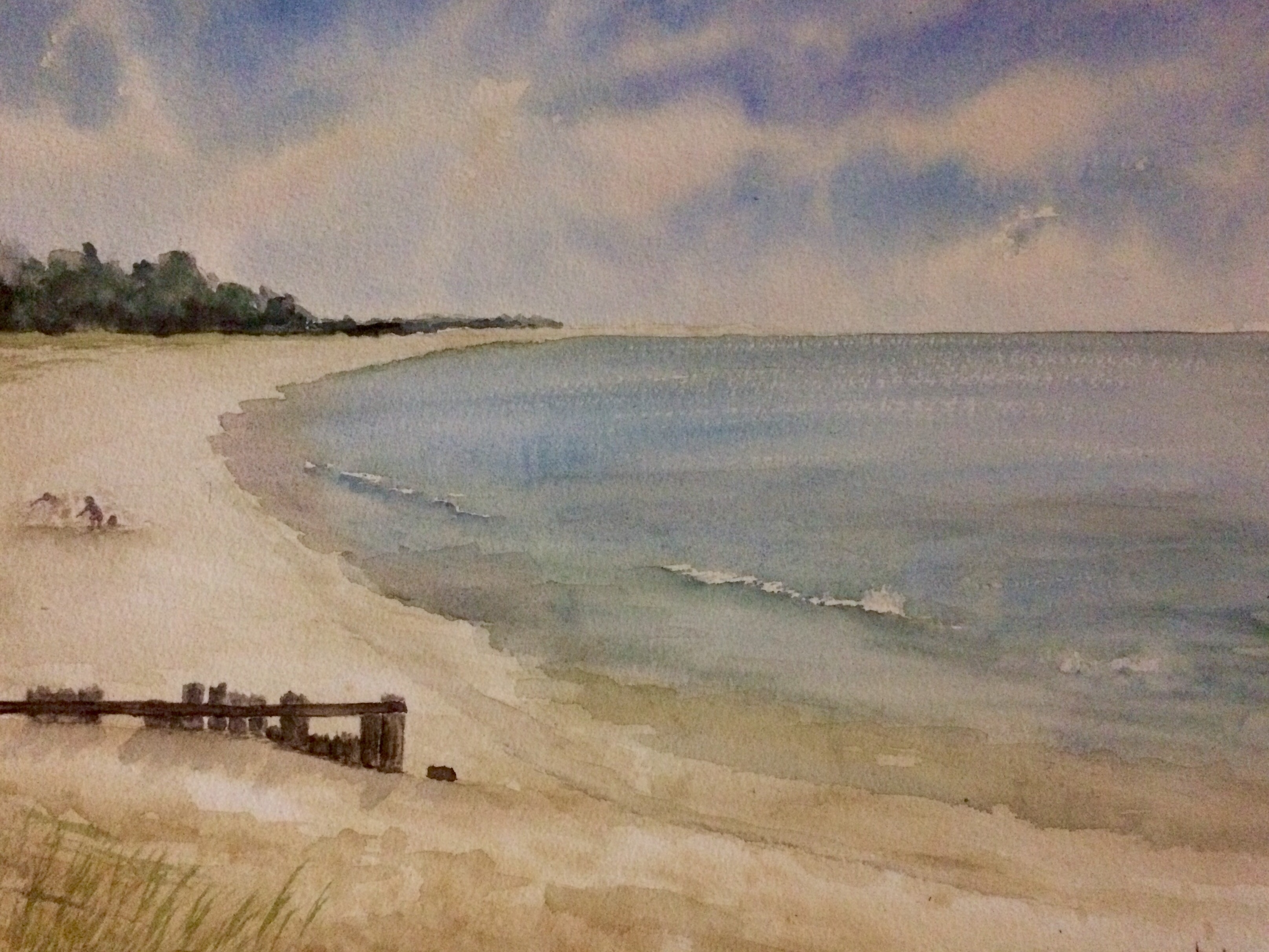
As I went through my pictures of the Lake, I found another image of decaying breakwaters and, for the first time in a long time, noticed black sand that, even 40 years later testifies to the long term, and sometimes, damaging fingerprints we can leave. 

What struck me most, was that in my search for a picture of Lake Michigan, the fingerprint that jumped out at me first was the breakwater. Over the last 40 years the tarry Blacksand have become so much a part of the landscape, that I had to remind myself that they weren’t always there. It was a stark reminder that easy it is to begin accepting The mantra that destruction is just the price we have to pay for our lifestyle.

The reality is that it’s not an occasional price. It’s one that people in Michigan are still paying and continue to pay over and over again. 

I don’t look at environmental issues like these hoping for easy answers,and, even though we do live in an earth-sheltered off-grid “cabin” in the woods, I appreciate and take advantage of many advances of the last century. I know we need to use energy to power them, but accepting that the wanton destruction of the environment that sustains us is the necessary price of progress is complacent. It is the opposite of progress.  And it makes me think much more carefully about the type of fingerprints I want to leave on the land and the future.

For the Birds

  
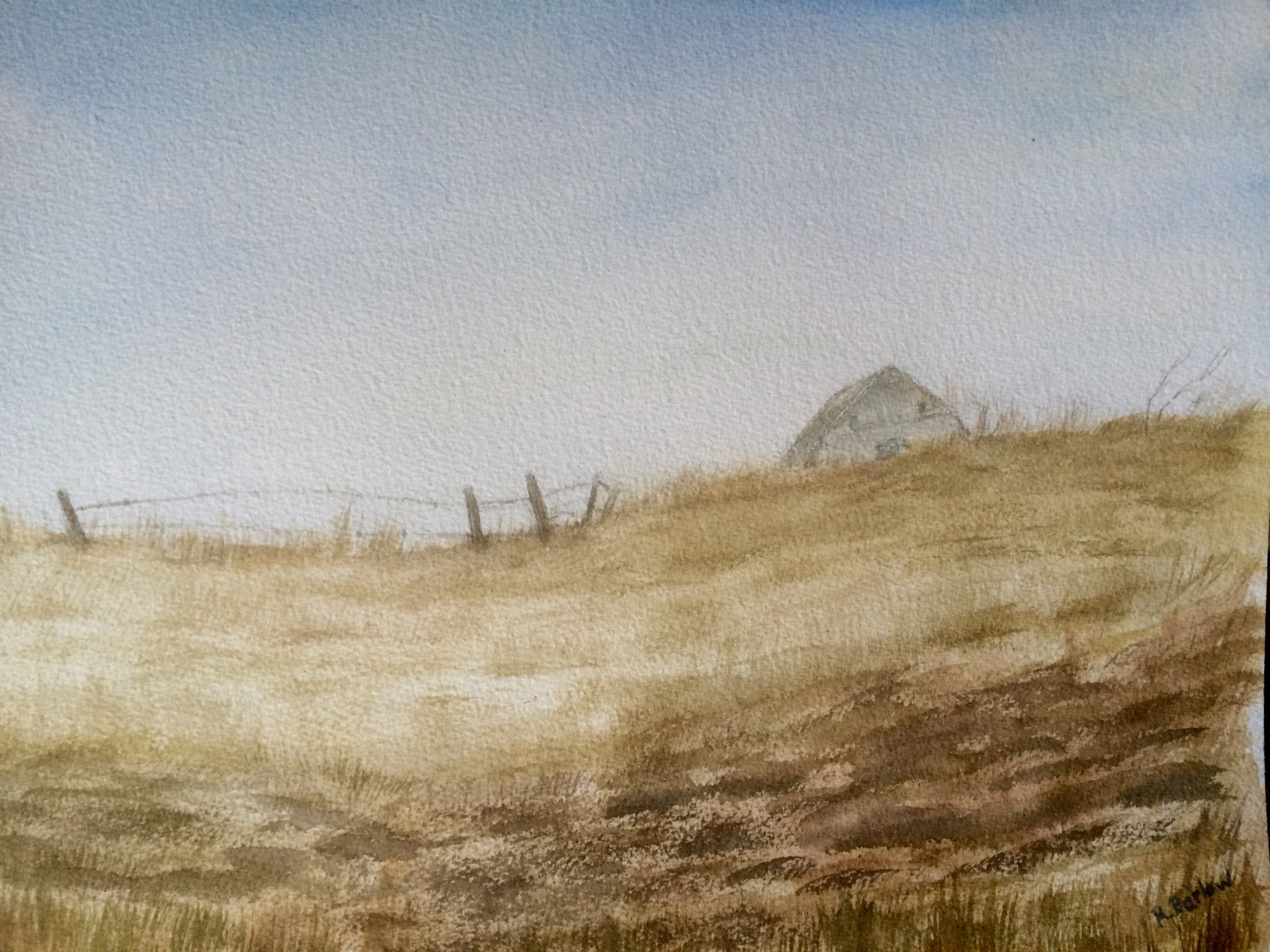
i’ve been swinging for the fences — and the birdhouses – – most of the day today, going through old photos favorite places around Bennington county in Vermont.

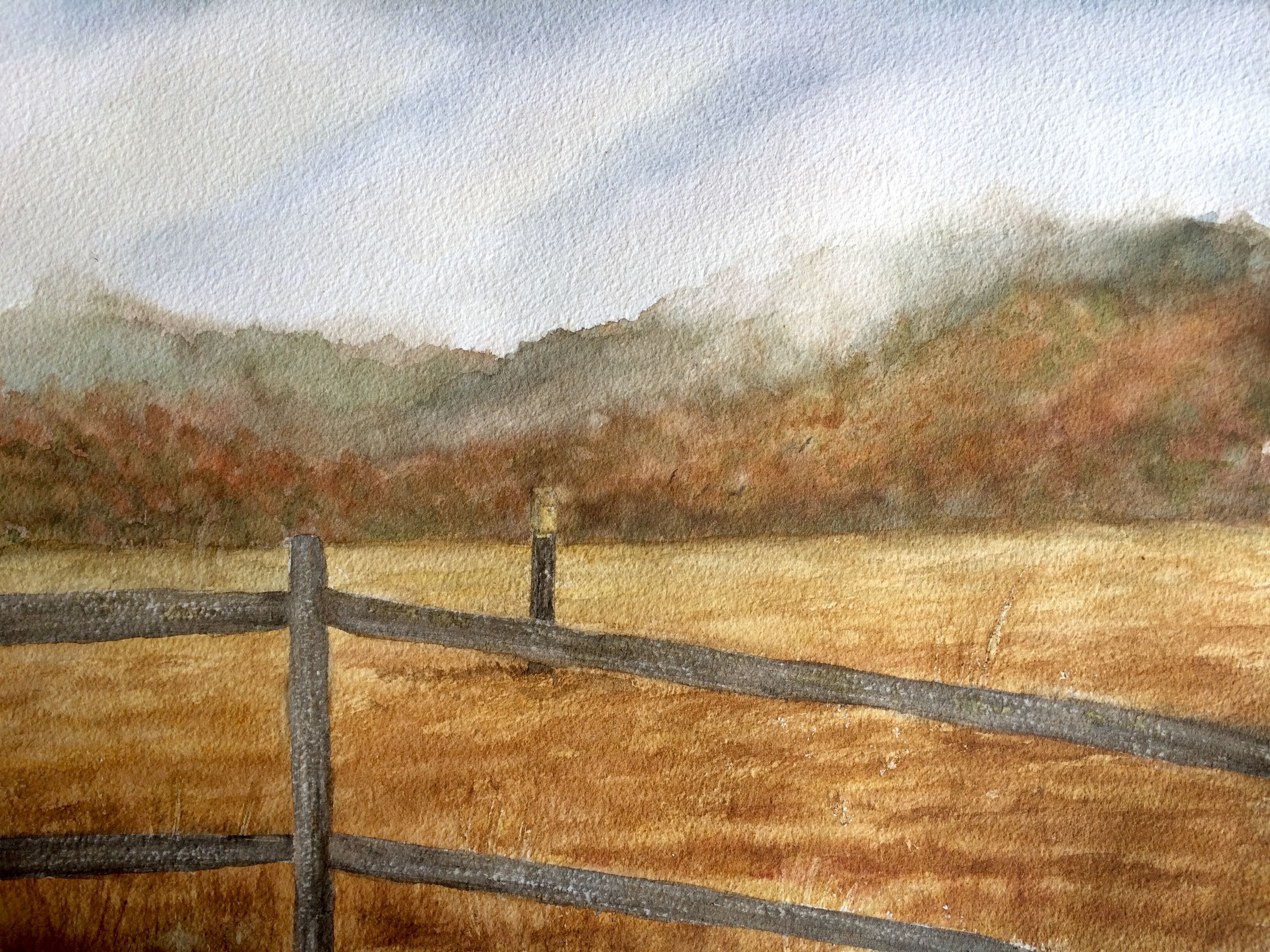
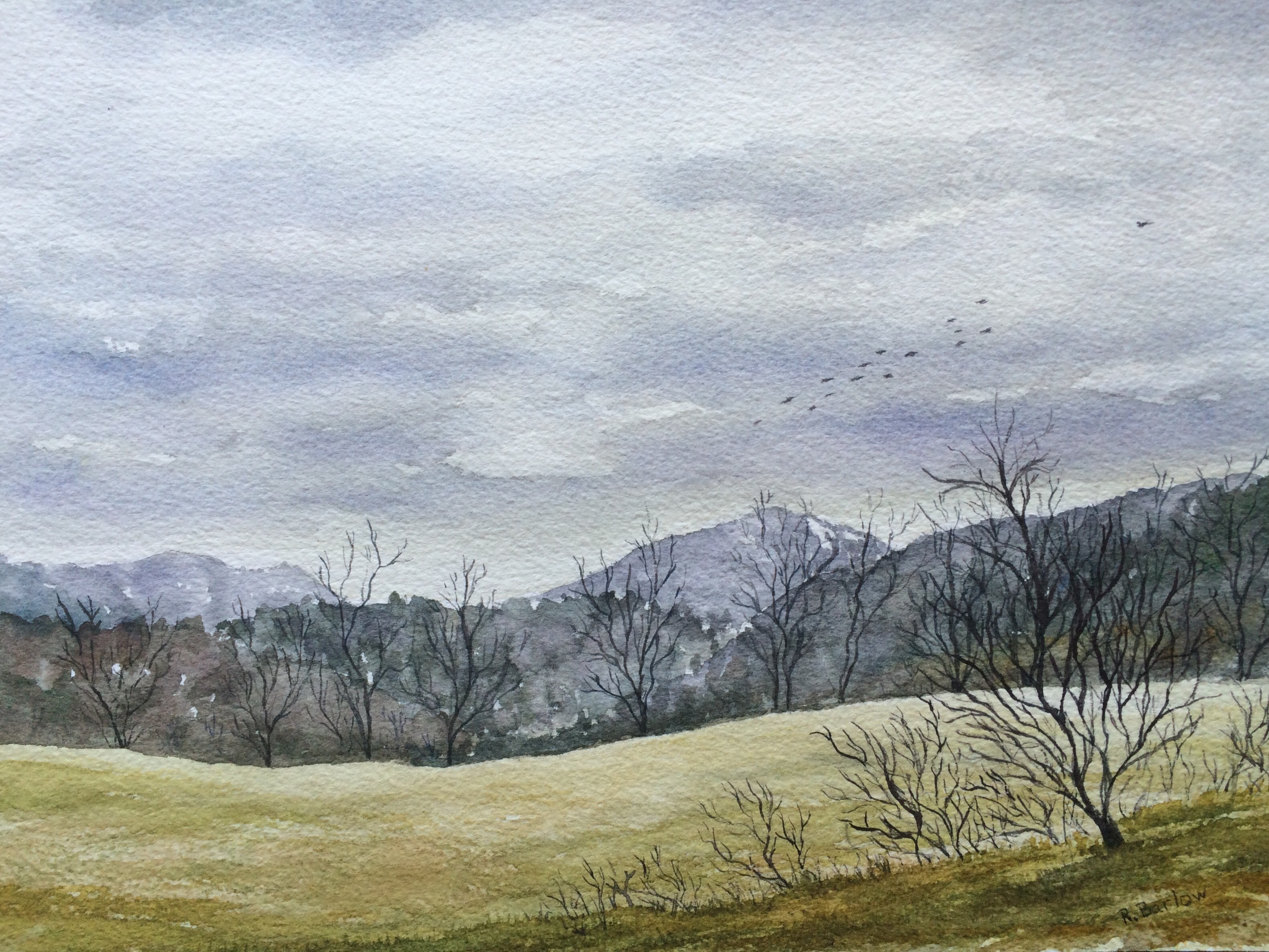
This is from a photo I took earlier this Spring before the manure wagons came by to plow and fertilize the field. I’m always amazed how, in the winter light, naked trees and Fields can glow with red and gold. I always slow down at this spot because I love the fence-which looks like it’s about to fall down even though it’s still very much in use — and the birdhouse inviting the birds to come on to sit a spell and enjoy the view.

A Joint Effort

  
there are still quite a few farms in Vermont, albeit smaller than the ones you may find out in the Midwest or western plains. A quick look at the census data shows that while farms are becoming more plentiful again in Vermont, they’re getting smaller as the next generation becomes more creative about keeping farming as a viable career choice.
Vermont’s history as a farming state has generated hundreds of miles of fences of all kinds, and even when land changes hands or purposes, the fences often remain as memorials to the The efforts of the farmers who have come and gone. The split rail fences are, for me, some of the most picturesque of these testaments. 

 The weatherworn, unpainted variety are my favorite. In the summer and fall, they complement the foliage perfectly. On rainy days in mud season, however, they and the stark lines of the still naked trees seem to combine perfectly the creative efforts of man and mother nature.

Old Things

  
 I started thinking about fingerprints A few months ago when we were in Washington state and marveling at the massive wheat fields. They are monuments to how humans have Learned to control the land, and yet, for all the bounty mother nature yields, she also seems a bit annoyed at us – sending wildfires to even her most fertile fields – for imposing our lines on her curves and, in some cases, for not picking up our stuff when we’re done.
No place inspires that supposition like Lake Michigan. our family has been congregating along southeastern Shores sense that early part of the last century, and even in my lifetime, mother nature has seen our family and neighbors devise ingenious and herculean devices and walls to slow down the erosion of the dunes and preserve our beaches. 

as you walk along the beach, you can see the relics of previous generations’ attempts to control her. There are massive concrete blocks almost buried by sand and, more frequently, decaying wooden breakwaters jutting out from the dunes to the beaches and occasionally to the water. some breakwater seem to be more successful than others, but, since we have not seen many new installations in the last two decades, it would appear that more people have decided to work with mother nature rather than against her.
About 20 years ago and our family and neighbors, taking a hint from mother nature, begin planting dune grass up-and-down the bluffs at the edge of the beach. We had seen dune grass control the erosion beautifully in other places, and over the years it is been infinitely more effective than any engineered solution we’ve tried.
I think mother nature likes it, and she has let the beaches recover. The breakwaters are still there in some places, leaving a human fingerprint that will last for some time, And, judging by the amount of sand that mother nature tries to dump on them, I think she’s trying to get us to pick up our stuff now that we’re done with it. 

A Beaten Path


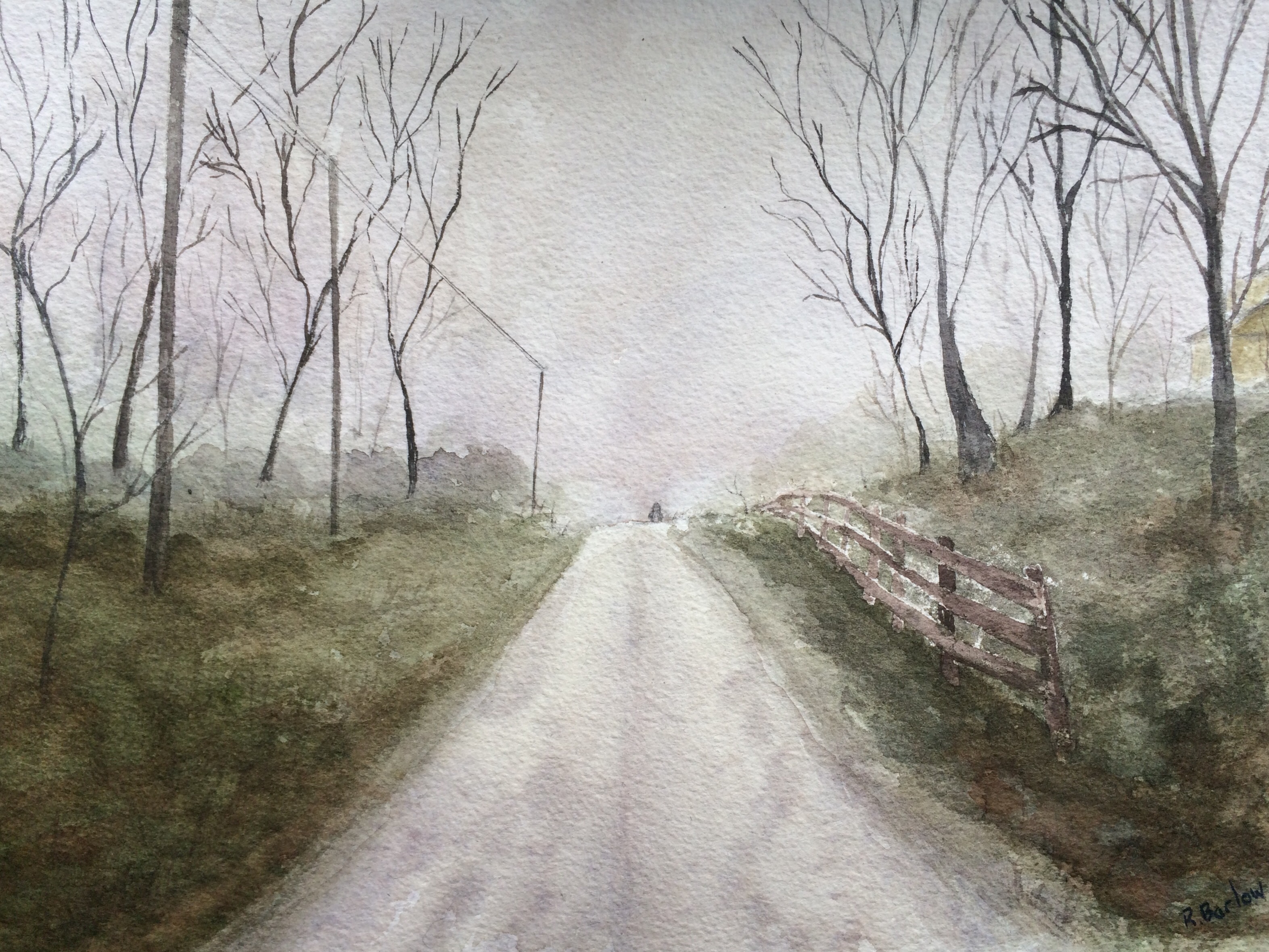
There are two ways to get to the top of Mount Equinox in Manchester Vermont. You can pay your money to take the Skyline drive to the summit, or you can find your way to the no-traffic light town of Sandgate and go up the back.

You can’t drive the whole way (Sandgate’s dirt road eventually turns into a wide leaf-covered path). Once on foot, you’ll eventually get to the gate of a monastery run by the Carthusian monks (who also, incidentally, govern access  to the skyline Drive). There’s a sign warning away trespassers, so we’ve never actually made it to the top of the Equinox without paying our money down, but along with that once-beaten path on the backside of the mountain, we’ve discovered something equally interesting.

When we first hiked that road, we wondered about its origins. There were easier ways to get to the monks and  the top of the Equinox, but it was clear the road had once been in use frequently enough to leave its mark on the mountain.  Shortly after the ‘real’ dirt road ended, we found our answer.

Thing1 was our distractor-in-chief at the time, occasionally luring us away from the path, and about a mile and a half past the end of the town road, he discovered an abandoned barn we HAD to see.

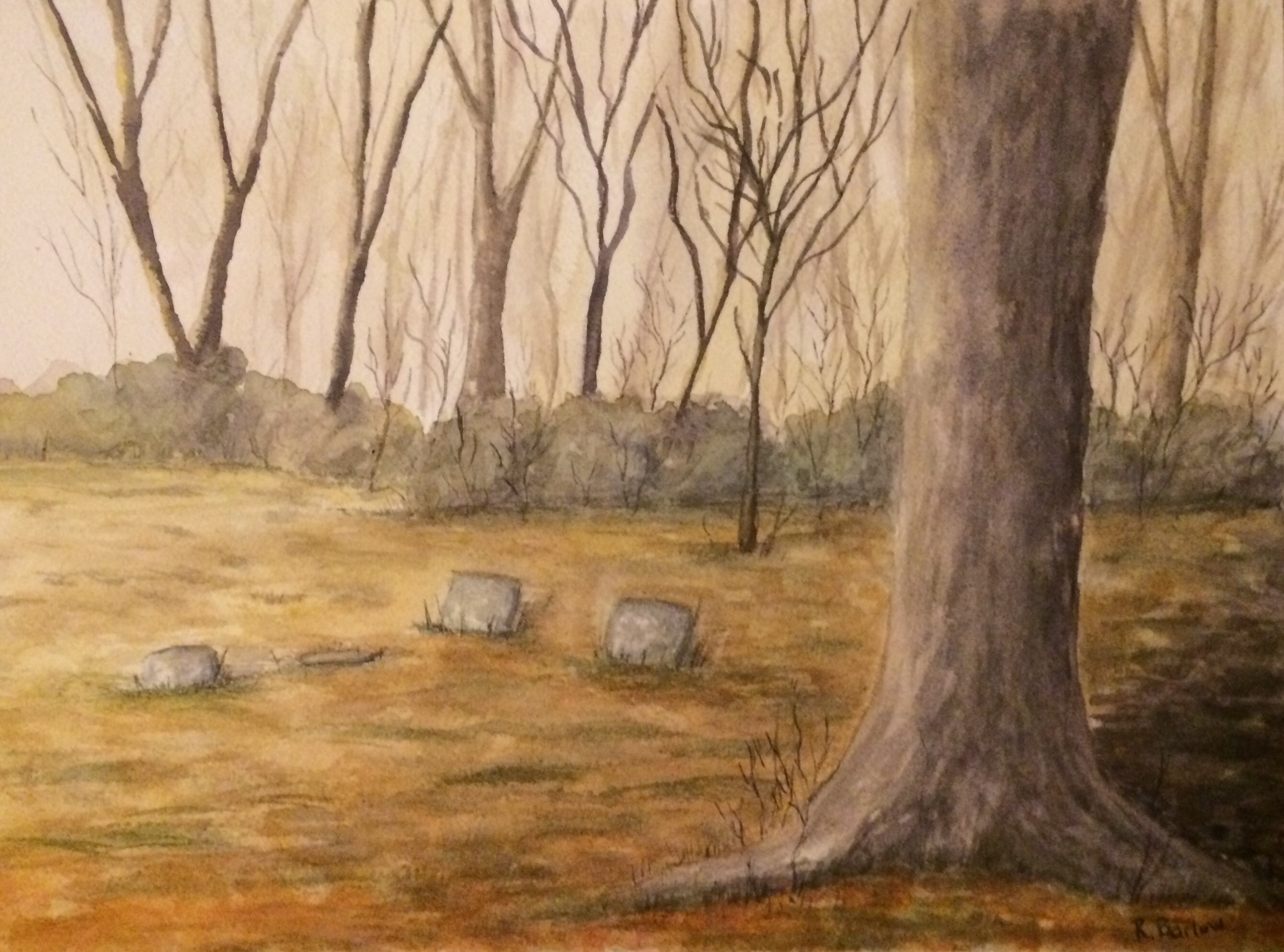
The barn roof was disintegrating, and we saw no other evidence (save for a few headstones that we almost tripped over) that a farm or homestead had ever existed. The carving on the headstones was so worn down we  couldn’t read the names on them.  As I was wondering what catastrophe that had driven surviving family members away from the farm, I realized this almost abandoned road had been made by and for hooves and feet, not rubber and steel.

At first I had thought these languishing headstones in this isolated part of the mountain were a sad statement about precarious nature of rural life (then and now).  However, as we walked to and from the monastery gate with its no trespassing sign, passing the old homestead again, the late afternoon sun dipped low enough to bathe the woods in gold. I remember the branches were naked on that hike, but the forest, guarding its little cemetery, was warm and absolutely peaceful in the sun.

Modern rural life can be very hard, and I don’t cling to any romantic notions that life on the back of a mountain in Vermont was any easier a 100 years ago, but this quiet resting place was a testament to more than just hardship. It reminded me that people still come to these hard-to-live-in places because a life away from the madding crowd brings with it freedom and (in spite of the long winters and minimal economic opportunities) peace.

Curves and Lines


You might think the white tracks of man-made snow at the top of Bromley Mountain are the fingerprints in this piece, but they’re not the only ones.

As I’ve been exploring abandoned places that still leave their marks and landscapes that are still undergoing change at the hands of humanity, a pattern has emerged in my mind. It’s a pattern of man asserting order over Mother Nature. Of straight lines being carved, sometimes permanently, over a body that is very curved.

Fields plowed by mechanized equipment leave rigid lines that can still be overgrown, but along the stone walls that created the borders of the ancient farms here in Vermont perfect lines of trees have grown up. Sometimes the fields have filled in with scraggly forest, but some fields are still use.  The lines of trees, however, are, for me, the most fascinating fingerprints.

Spring Fling Bling

  
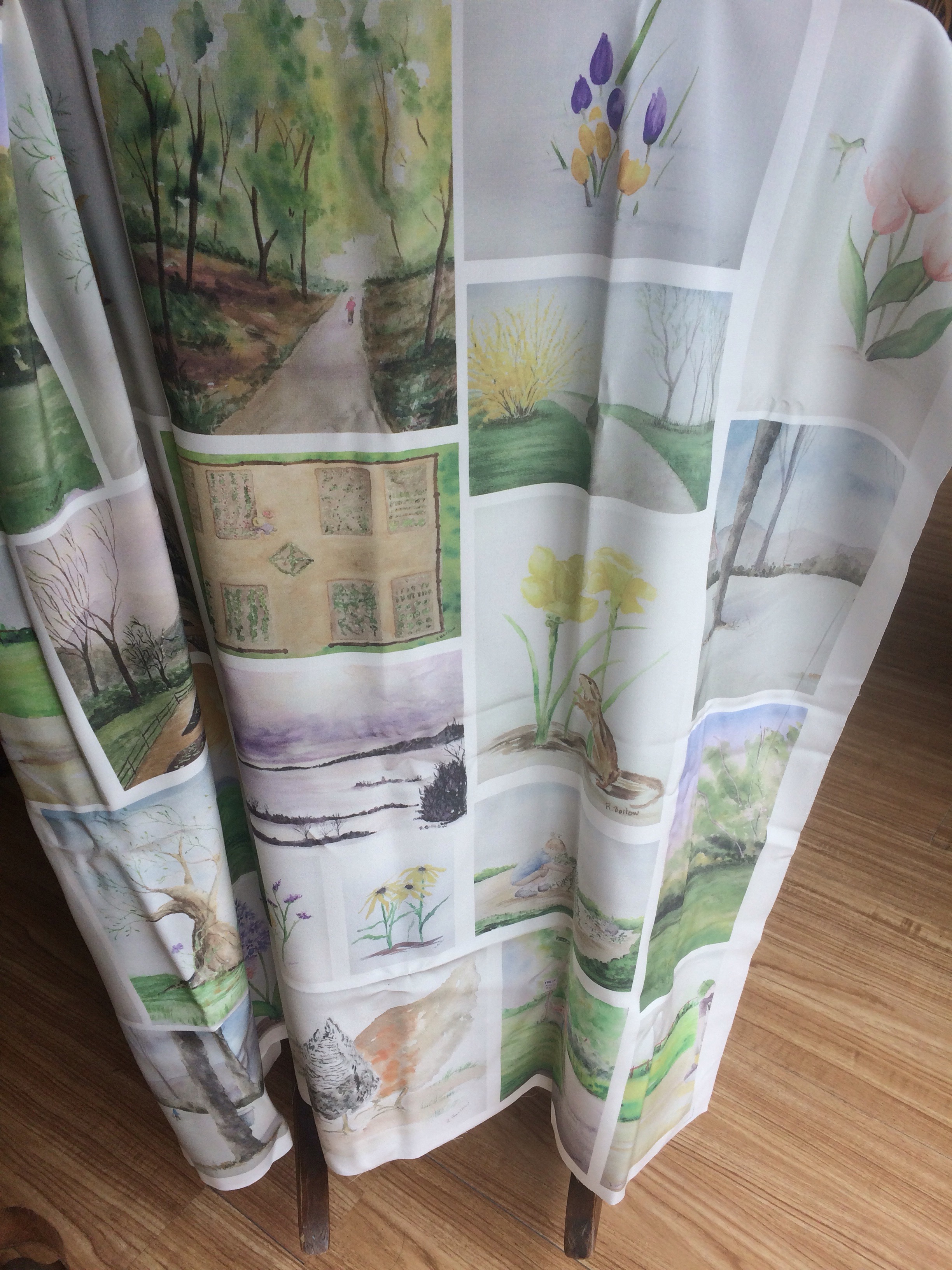
just for fun, I printed up the paintings from my spring fling show — still at the equinox gallery in Manchester — on silk and made a quickie scarf/stole for something fun to wear.
It was almost as big a hit is the actual paintings, so I decided to have someone print the pattern on silk. The fabric just arrived, and I think I have a date with my sewing machine this weekend. I’m on the fence about making them regular scarves or infinity scarves. 

A Small History

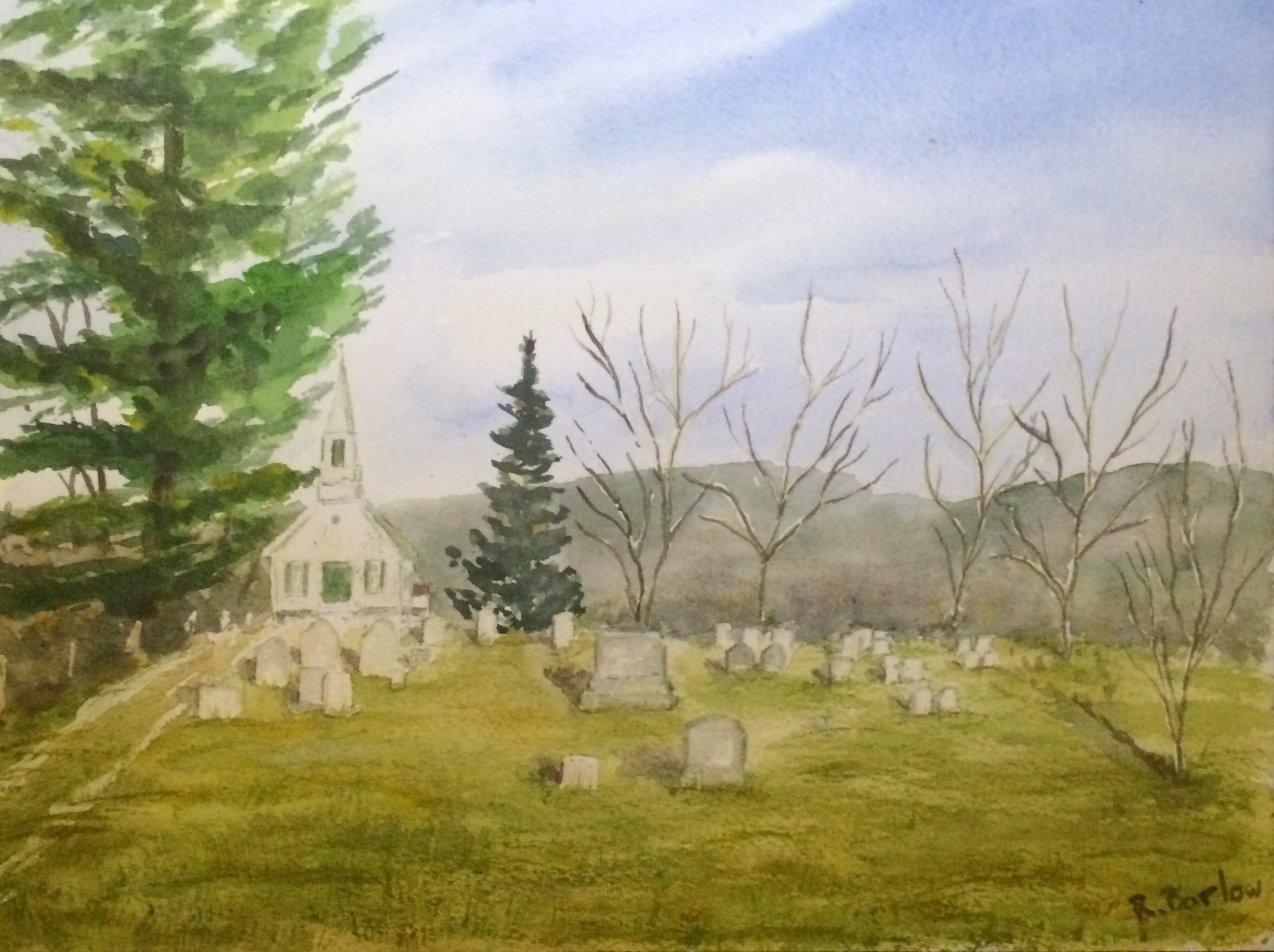
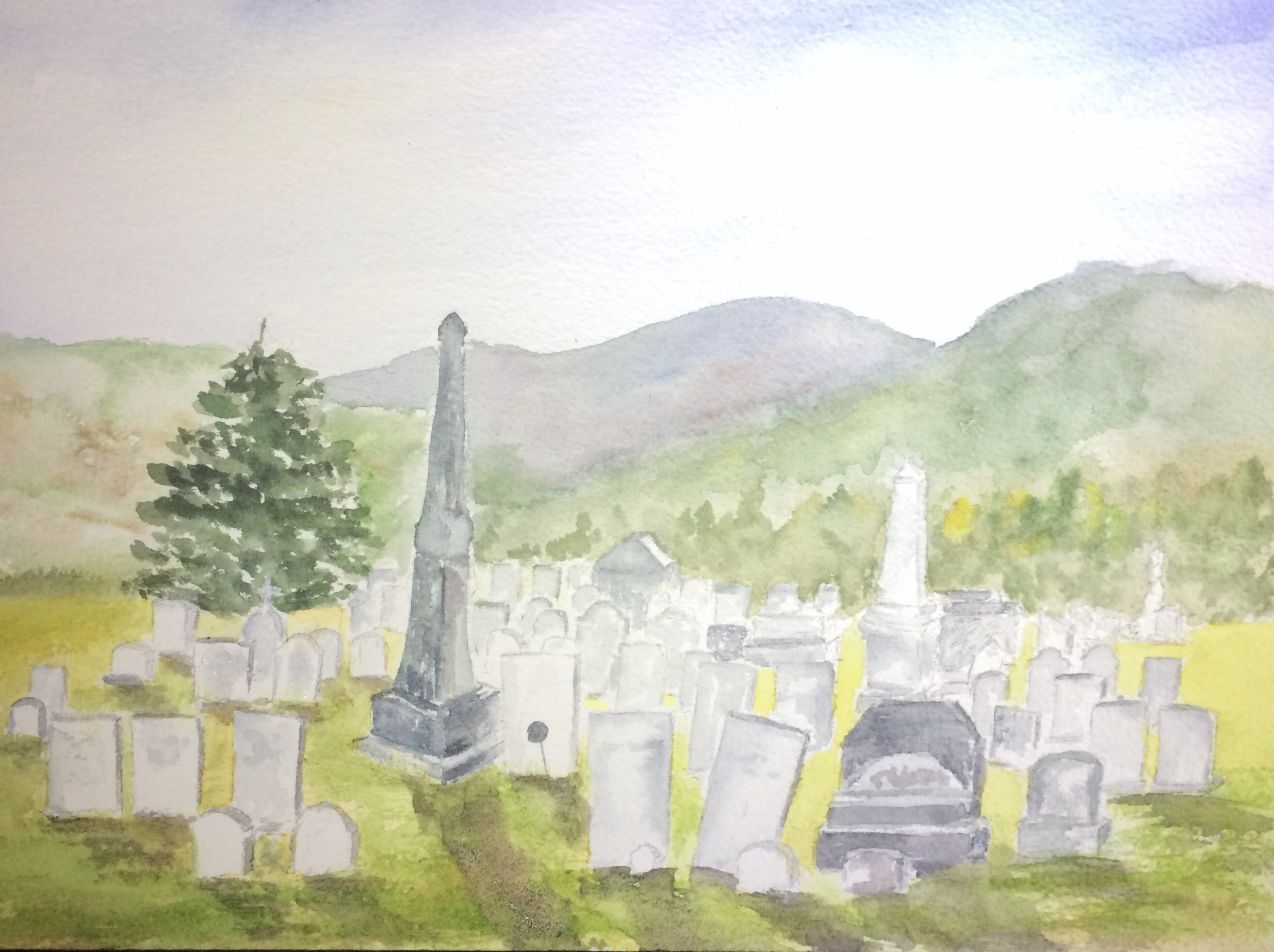
I find these tiny cemeteries picturesque and poignant at the same time. I was really unhappy with the first painting of this cemetery and decided to drive around to the other side to get a different view.
I think this is a better picture of the fingerprints that have been left here for the last 250 years.
Some places space is a premium but even cemeteries are permanent. In Vermont churches may be sold to new owners and converted to different purposes but the cemeteries seem to be largely untouched. when we hiked up the mountain behind our house, we’ve stumbled upon an ancient family burial plot here and there.
I don’t want to headstone or burial plot when I die, but I do love wandering the cemeteries, trying to glean something about the history of the people who once lived here.

Making our Marks


Usually I like to have people in my paintings. I spent a lot of stories in my head about places, and they all require people to make them interesting.

Lately, though, i’ve been painting places and the fingerprints that we leave. 

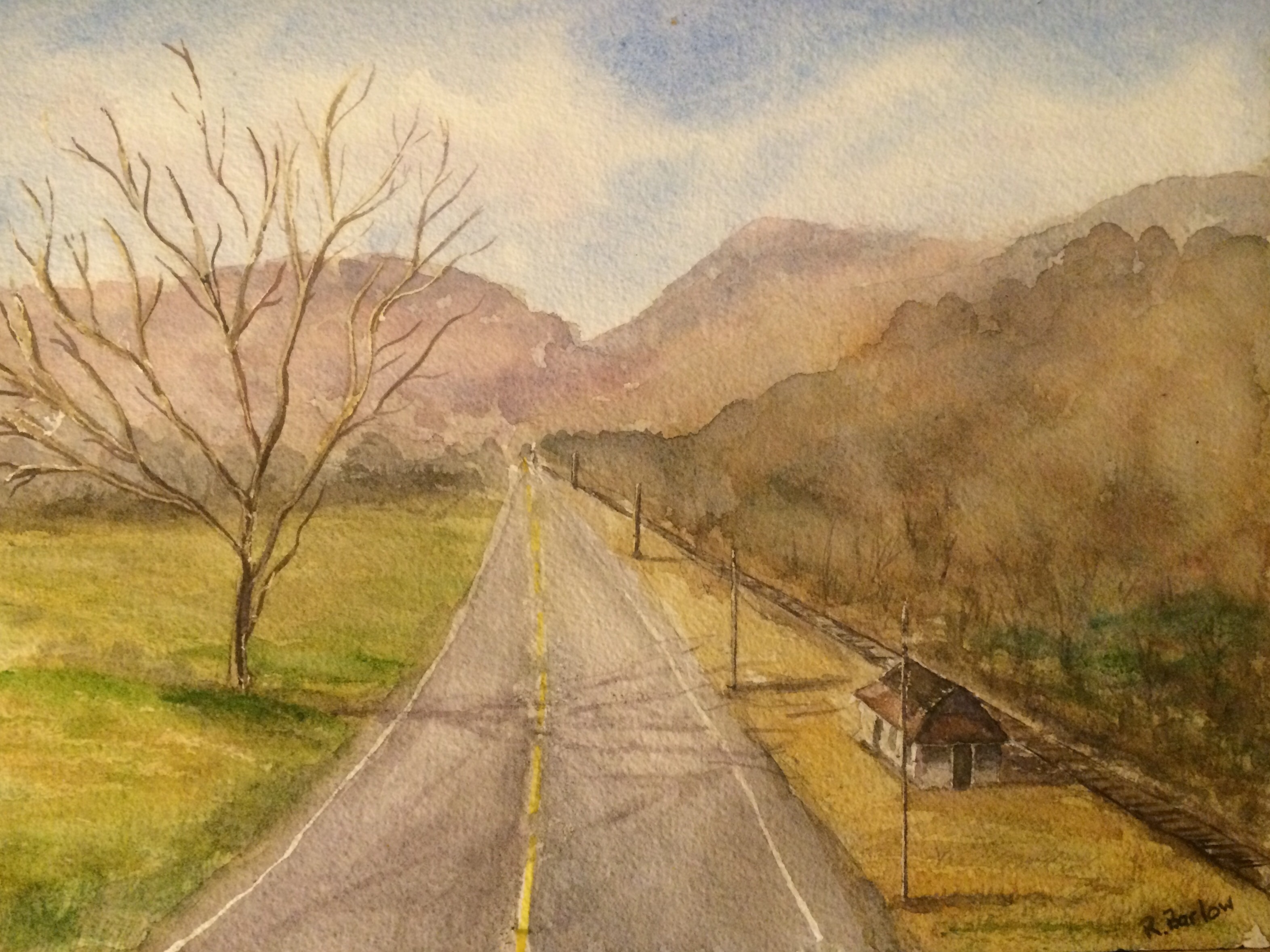
This little train depot north of Dorset VT is no longer in use. Cargo trains still go by, but the building is abandoned for the most part–used only as a place to post signs. The track is an indelible fingerprint, but the little depot still leaves it’s mark and inspires dozens of questions about stories that might’ve happened here.