Practice What You Teach

Unreal

Saturday morning I came across a Facebook post by a musician friend describing the “unifying breath” taken by a choir or orchestra before they begin to make something beautiful that brings them and their listeners together. It was still in my head later in the morning as Thing2 and I were driving to Home Depot and talking about his college plans.


Thing2 plays guitar for several hours each day. He’s been playing with that intensity for a few years now, and that intensity seems to be leading him to audition for one music program or another. 

Thing2 has other interests — often a sounding board for friends, he has thought about going into mental health counseling or psychiatry – but, as we talked, I sensed that something other than passion for the subject was driving this recent career exploration.

Thing2 also has an older brother who found a more traditional field (computer science) and is now earning more money than both his parents put together.  Thing1 loves his new life, but he also loves the work of problem-solving. He has found his passion.

“I like the idea of helping people,” Thing2 said. 

I reminded him that when musicians bring people together to enjoy music, they are creating moment of communal peace that no other art or craft can achieve. Painters can’t do it. Writers don’t do it. Doctors and teachers don’t do it.  Yet, even in our small town, a kids’ concert or an impromptu band can bring together people with wildly different experiences and viewpoints for the sole purpose of enjoying music together. 

“I know,” he said. He started to say something and then was silent for a bit. We talked about music education and music therapy as career paths. Then he said, “When I listen to my favorite musician, I think about being able to make something that so many people will enjoy, but…” 

We walked through the lumber aisle, and he said again how great it would be to have people responding to his music the way he responds to others. I reminded him of one cousin who is making their life in music and another is making his career in music and music production. 

“I’m just afraid,” he said. “What if I put all my energy into a dream that is really unlikely and then find I’m in my thirties wishing I had done something else?”

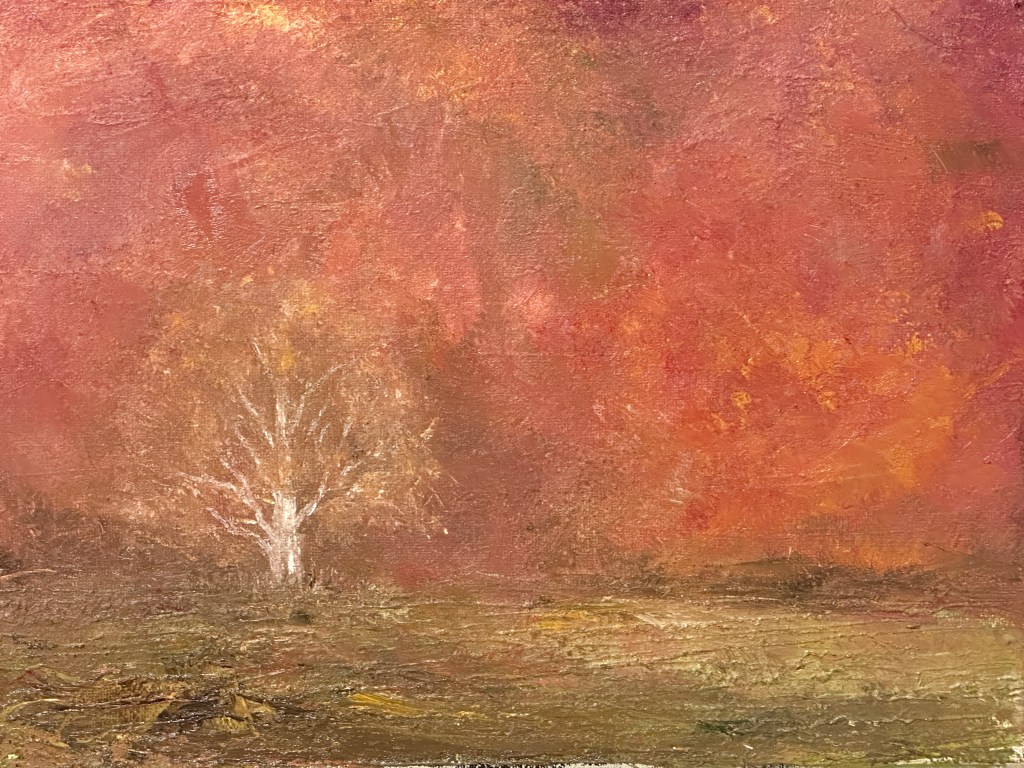
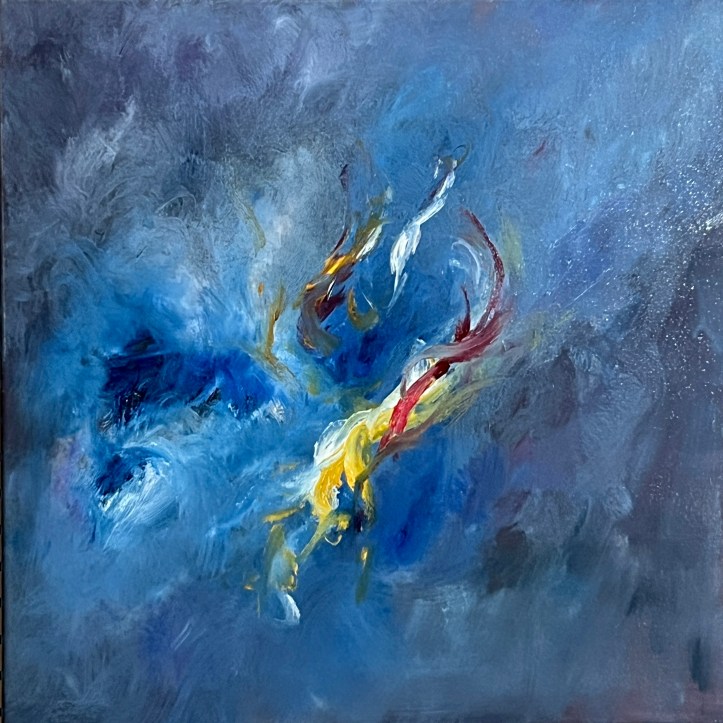
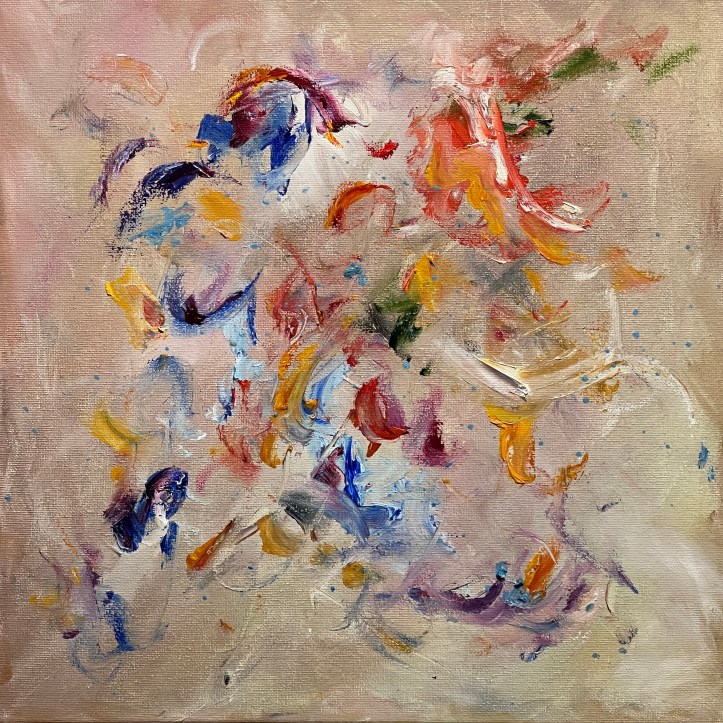
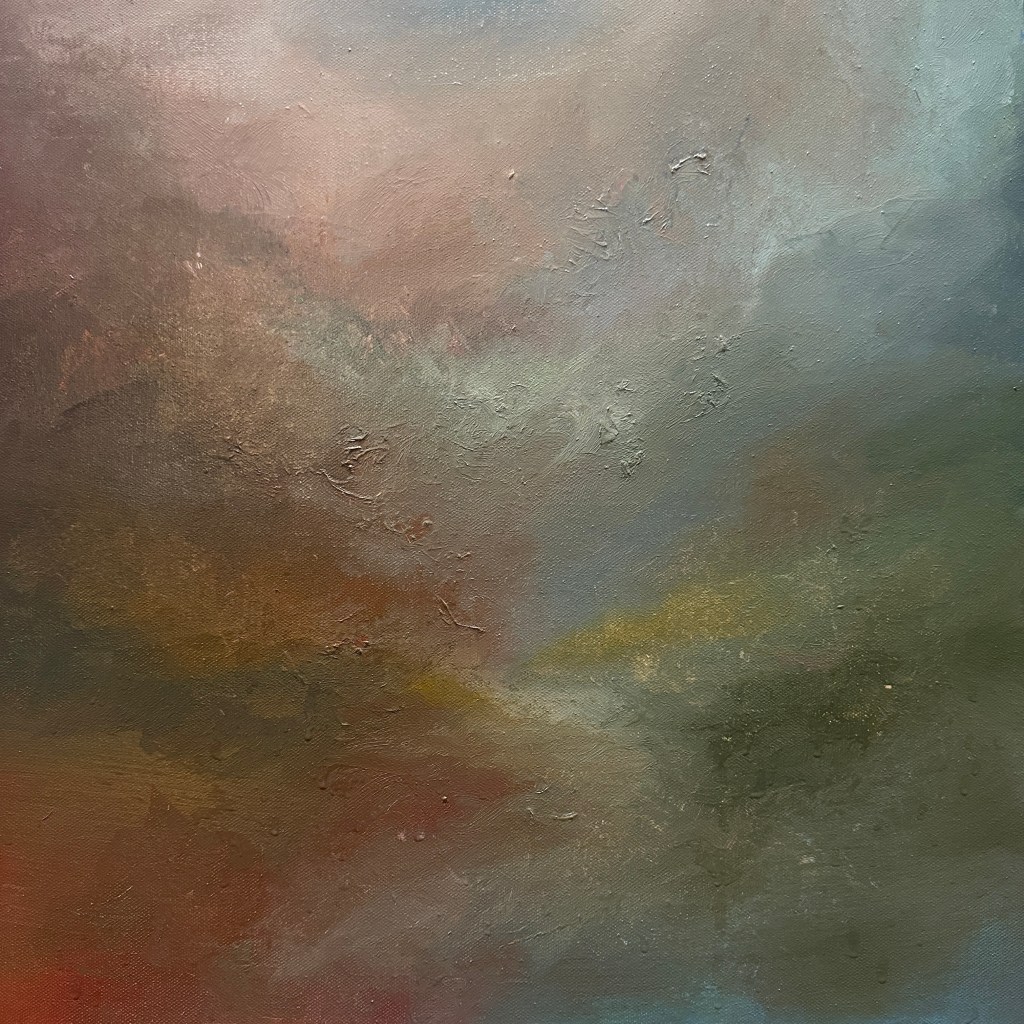
“Creativity takes courage,” I blurted out, knowing that, in recent weeks, I had been ignoring the words of Henri Matisse, retreating to realism out of fear that people who have bought my art in the past won’t like my abstract work. I knew my response was trite. 

I could have told Thing2 about coworkers who started with creative careers that took them in unpredictable directions and different fields where their creative natures and backgrounds were integral to the successes.

At that moment, however, I wanted more than anything for him to to understand, at the age of 17, the big and improbable dreams are just as important as the practical ones. He needed to understand the value of his art in his life and the difference it could make in others’. He needed, especially as adult life gets closer, to be willing to take that leap of faith in himself.

We were still talking as we sat in the drive thru waiting for a coffee order. 

“I won’t give up on abstract if you don’t give up on your music,” I said. 

“Okay,” he said as he extracted a promise to have first pick on paintings he likes.

We shook on it, and I gave him a music writing assignment inspired by my painting teacher. 

Our new bargain is way more better deal that others I’ve made with them over the last few months (a Faustian bargain to give up my favorite diet soda, for example). It’s also the most important deal I’ve ever made with him. 

It reminded me of the first rule of teaching, which is that we teach what we model, sometimes, without even knowing it. And now at this crucial time in this wonderful kids life, it’s more important than ever that I start to practice what he needs me to teach.

No Regrets

North

With one of my kids, recently grown and flown (Thing1), and the other, starting to contemplate his life outside the nest (Thing2), I find myself thinking more about what might have been if I made different choices.

I used to wish I had made different choices — better choices. 

I am not naïve enough to think of my life is anything other than a journey filled with missteps, redirections, and spectacular mistakes of my own making. Some of those mistakes were due to circumstances I couldn’t control for a long time, but others were simply bad choices.

When I was Thing2’s age and going for college visits, I desperately wanted to go to art school. I let a tough but fair portfolio critique and well-meaning but off-target input from my parents derail further attempts for art school or even a fine art major at a college. 

Even now, however, a conversation with one of the art professors at the school I did briefly attend for another major rings in my head. “You should do this only if you need to paint,“ he said. I needed to paint then and still do. 

If I had been stronger or braver, I would have done more of the type of drawing that would’ve led to getting into those schools. If I had been more sure of myself, and willing to confront my bipolar disorder, (or even realize what it was) I had a younger age, I might have stood my ground and picked the fine art major.

But even as I think about those mistakes, I don’t have regrets. Those mistakes inform the advice I give my kids.

My mistakes eventually brought me back to art. They brought me to teaching, which is one of the most fulfilling experiences of my life even as it is shaped by, and then informed by creativity. Mistakes they brought me to these conversations with my chicks as they are leaving the nest.

Without my mistakes, I wouldn’t have the big guy I married. I wouldn’t have an adult child, who comes home to geek out with me over the latest happenings in Tech. I wouldn’t have a soulful, introspective Thing2 who is a sounding board for his friends, and art critic at large.

It makes me realize that the best advice I can give to my kids is to start making their mistakes as they find and live their truths. 

Hat Season

Color is Coming, 8”x10”, Oil on Canvas

Monday, less than a week after I got my studio back and functioning, I put on my student hat again as my fall courses started. Tonight, I am putting on my teacher hat to get ready for the in-service days that precede the arrival of middle schoolers into our building. They fit over my flamboyant, feathery artist hat (which sits over a tightly-fitted tinfoil hat that I wear for my mom job), and, as I do with the beginning of every school year or text season in the past, I wonder what will happen to my feathers over the next few months.

Part of getting my studio back was an effort to keep momentum of a year-long painting mentorship. The other part was to create a tangible space in my life for creativity. 

I know that the feathers on my artist hat are long and flexible. They will find their way through the cracks between my teacher and student hats. Even the most tenacious tendrils, however, need air and fluffing on a regular basis. This year – the busiest year yet -makes it even more important to strike a balance between carving out time dedicated to unscripted inspiration and simply integrating it into the other parts of my life. 

Integrating creativity into daily life is vital. It alters your perspective about learning and living. Sometimes that perspective simply helps you find the magic in the mundane and opportunities instead of problems. 

Fusing creative approaches into daily life, however, doesn’t take the place of keeping a sacred space for creating for its own sake. For me, honing in on painting or drawing or writing  — making for the sake of making – is about refining skills, but it’s about something more. It is about meditating on and then escaping from the worries of the day. It is about nurturing something divine that lives in each of us.

Finding the balance between fusing creativity into the everyday and dedicating time and space to making is the foundation of creating and re-creating oneself in to keep up with the job of being fully human. It means finding a way to make all the hats fit and still let the feathers breathe.

Too Soon

Please contact me if you would like this painting to live on your wall.

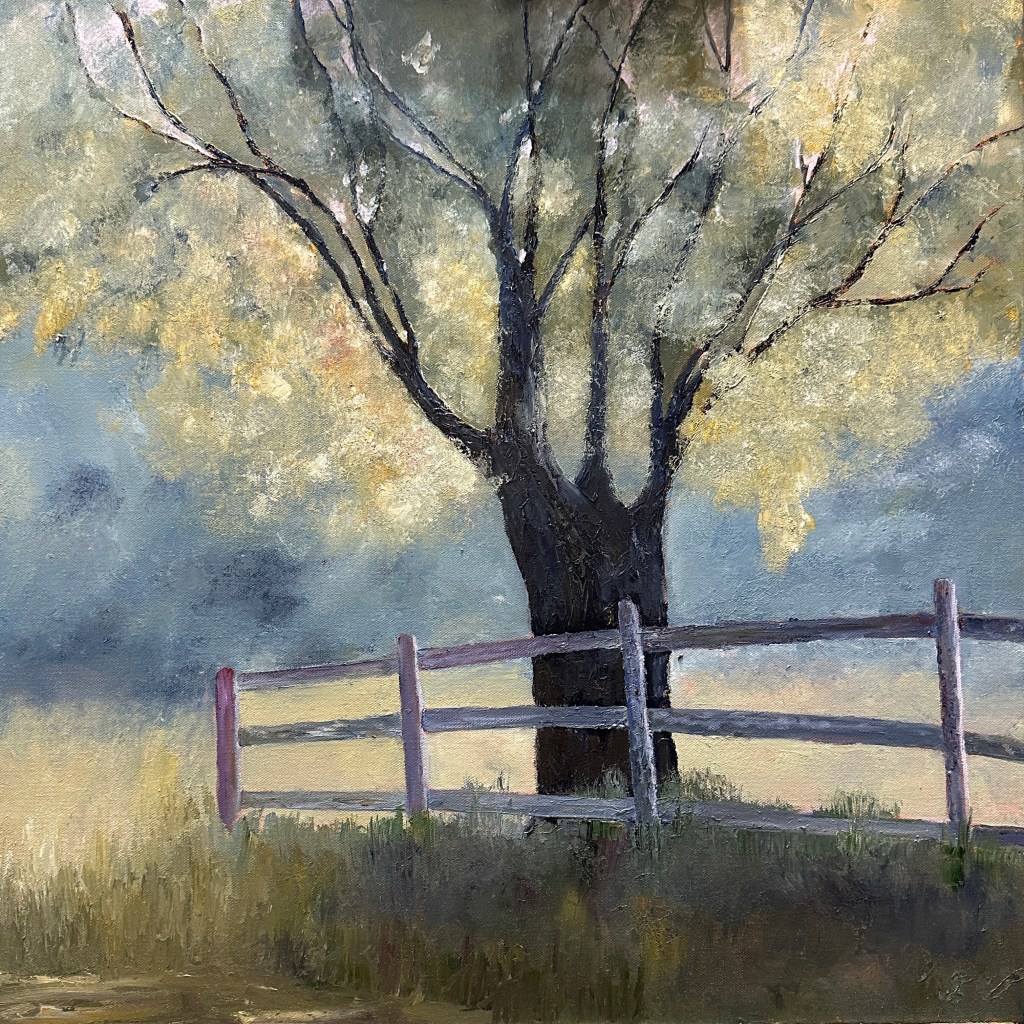
Too much rain has brought out the fall colors far too soon. They are just starting to peek through, and it would only have been noticed on a day like today when the sun makes an all too rare appearance for the summer.

The first spots of red and orange always seem to be signs telling us to enjoy time outside and carefree days while we can.

Hill Climb

Please contact me if you would like this painting to live on your wall.

This past weekend Manchester/Sunderland, hosted the annual hill climb — a bottom to top tour of the Equinox mountain in Manchester, Vermont. The hitch is that all of the cars doing the climbing are classics, and none of them are equipped with the all wheel drive that is emblematic of most vehicles in our brave little state.

I passed by the classic car convention a few times this weekend, every once in a while, wishing we could take an hour or two to drive to the top (Thing1 climbed it by himself on foot on his 17th birthday). It was a perfect day to be at the top of a 5000+ foot mountain. Puffy, clouds, and the sky is a deep saturated blue these days.

Missing Michigan

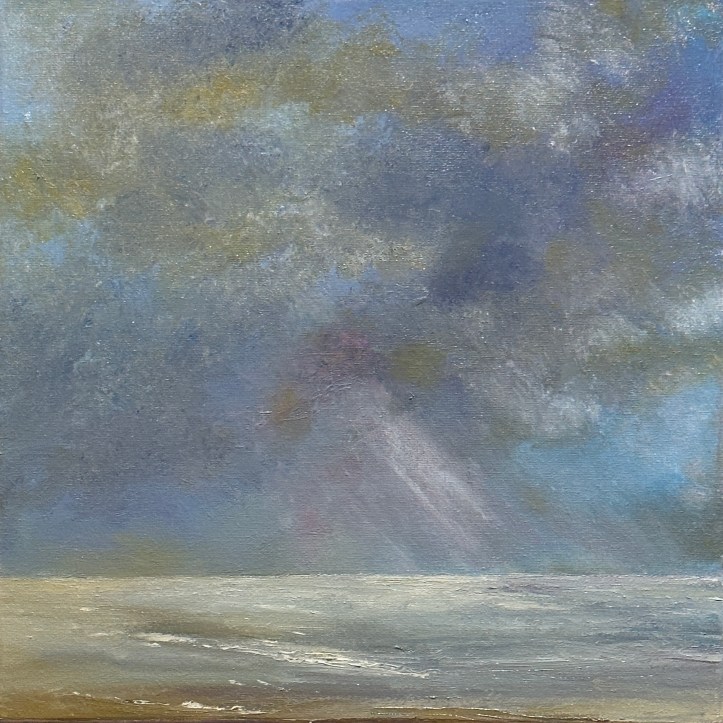
Too many things came up this summer, and we are missing seeing our family along the banks of Lake Michigan. I anticipated missing seeing parents and siblings, but I’m always surprised when I actually miss the violent storms that are a fact of life up there these days.

Increasingly, south western Michigan sees storms coming off the lake that morph into tornadoes. It’s always scary when it happens or is being reported, but it’s also more than a little exciting.

I don’t wish for death the way I did when I was younger. I even fear it a little now, and when the storms come, sometimes threatening life and property and getting hearts pounding with the wind, they are powerful reminders of just how alive we actually are.

What Compels You?

At the Point, 14″ x 14″, Oil on Canvas
Click Here if you would like this painting to live on your wall.

I tried to paint a different spot in that creek the night before, with no success. I knew instantly why it hadn’t worked. I was trying to paint everything all at once, and everything at all at once doesn’t work in any part of my life.

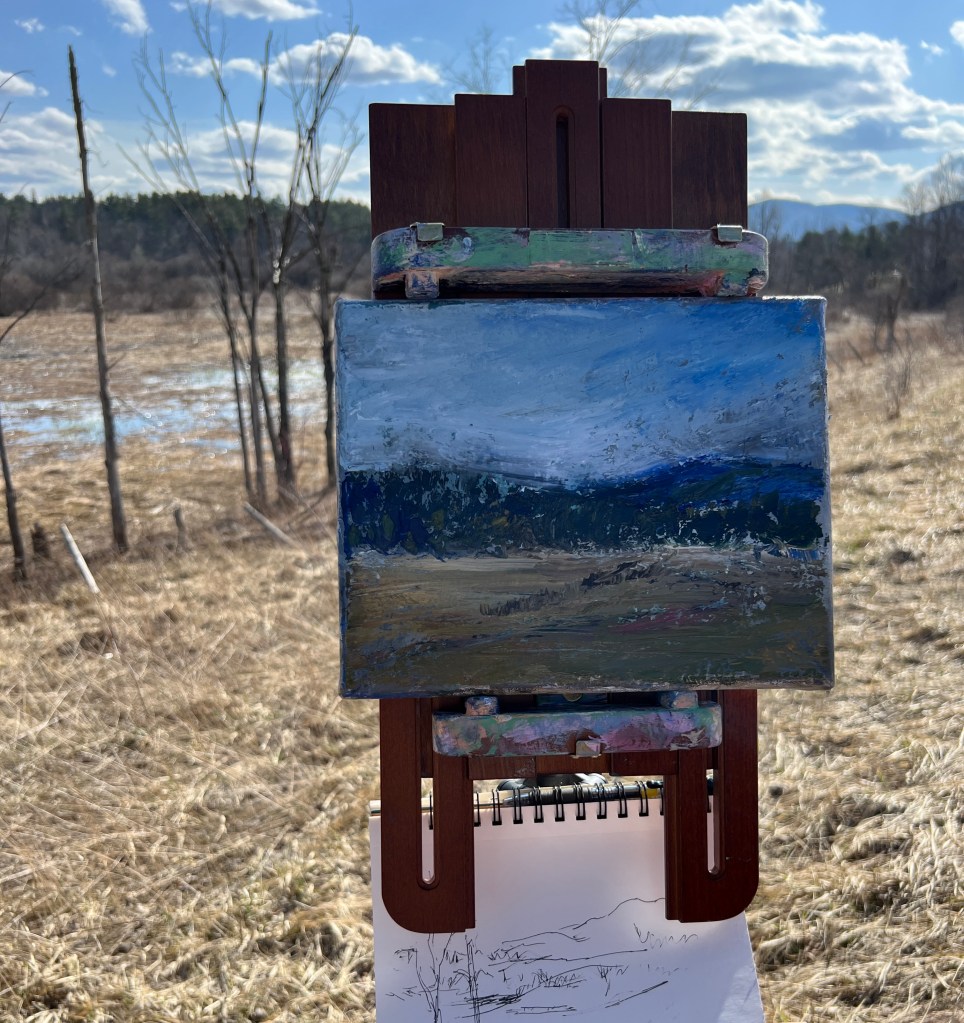
Saturday had been an incredible day of painting in the Pennsylvania countryside with my mentor. Work and an upcoming ear procedure had receded to become a blurry part of another background. I had meditated with the trees and the past their prime daffodils as the clouds chased the sun, and an occasional mist called me off.

Saturday had been a success, because I had stopped to meditate on the trees, intertwining with each other, and taking the time to answer the question, “what compels you?” What part of this part of the natural world compels you to simply stand and exist in the moment, without making plans or replaying conversations where you wish you had said some thing else?

What compels you to just let go?

That was the question.

Sunday morning I struggled to find that focus. The upcoming procedure was closer, and that evening reality would creep in with homework and budgets.

Now, my mentor and I stood on the rocky shore of the creek, watching a group of horseback riders waiting for their mounts to drink and splash. It was a magical moment teeming with characters and details.

I turned away from the charming story playing out in the creek, and something that looked like a heron standing on a jagged shore further down caught my eye. The rocks around him gleamed in the sunlight, and the water quietly eddied around the larger stones that fortified his peninsula. My mentor and I stared in its direction for a while, a different element, capturing each of us.

“I don’t think that’s a heron,“ she said.

I tried to zoom in with my camera, but it was no more accurate than my eyes. For a minute I thought of that scene in Harold and Maude, when Maude insisted that a remembered, flock of seagulls would always be glorious birds to her. I decided that even if that glimmer of light on the shore was a carefully hung T-shirt, or a spiky stump, I would let it remain a glorious bird that had first drawn my eye to a sliver of sunlight in the middle of the river and got ready to paint.

I knew what compelled me about that scene, and it wasn’t the possibility of a glorious bird. It was bright clarity of simplicity emerging from the murkiness of “everything all at once.”

Back to the Land

An interrupted meditation by the Battenkill

I’m having a lot of conversations with spring in my work these days. Some days spring is popping; others it’s buried under a fresh dumping of snow. Likewise, some days I paint the conversation with reckless abandon and no image in mind, but as my head turns, outdoors again, I find myself going back to the land to absorb and paint it as I feel it in the moment.

The natural world feeds my soul.

A few months ago, I worried that returning to representational landscapes was simply a fear of being brave enough to paint abstract. Now I realize that the mountains and changing seasons are not only integral to feeding my soul, they breathe new life into creativity.

Going back to the land doesn’t become a choice between abstraction and reality. It is the way to connect the visible world to the abstraction that lives in the soul.

Talking to Spring

Talking to Spring, 20″ x 20″, Oil on Canvas
Click Here if you would like this painting to live on your wall.

It’s been in the 40s and 50s the last couple of days, and even though there are some sizable snowbanks left, it feels like Mother Nature is ready to keep her annual promise.

The light is changing. it lasts longer every day. It seems as if there are even more critters crawling around in the dark outside. 

Suddenly, the forest that seemed populated only by the wind a few weeks ago, is teaming with life again.

How Do You Do?

Once upon a time I saw myself as (primarily) a writer, and I did my morning pages every day for work without fail.

Nowadays my job starts earlier, and there is no time for morning pages or sketches. Sometimes that disconnects me from art like a bird not flying for a day, and then two, and then ten.

I know if you’re reading this blog, you’re probably a creator too, so my question to the zeitgeist on this rainy afternoon is, when do you make your morning pages happen?

Conscious Detachment

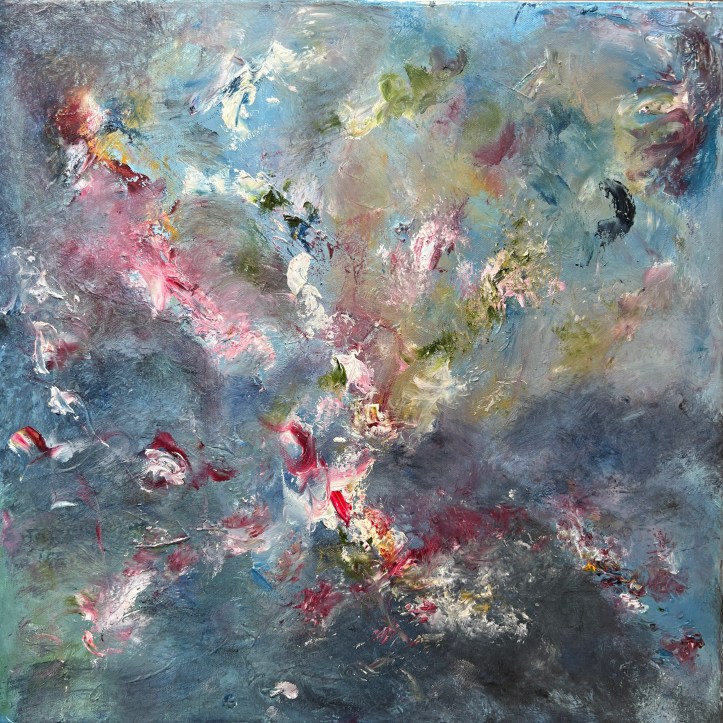
I’m doing a very different set of paintings right now. Winter seems to be losing its grip, the light is glorious as the angle of the sun shifts, but I am still stuck in my inner world. It’s the one I find myself painting recently because, for the first time ever, I have found the perfect medium for it.

My inner world could only be called abstract. The stories in my head could only be sketched as  chaos — documented fodder for a future commitment hearing. Giving into that world when I am in front of an easel, however, casts new light on the value of retreating from the world.

Everyday I work to help kids who are not neurotypical manage stereotypical behaviors that are barriers to educational and social development — not always but still too often because of a world that fears any behavior that isn’t “normal”. As a special educator and a doctoral student studying behavior, I understand the importance of helping children interact with their surroundings and with society. As someone who has lived with her own atypical her behaviors, however, I sometimes feel like a hypocrite.

My own inner world is vast and complex. I am always mindful not to wade into the undertow, but, as I’m dancing in front of the easel to a random playlist, splashing my feet in the foamy fantasy, tension from the last few weeks dissolves. I stop worrying about being too fat, about endless to-do lists, and budgets. 

Conscious detachment from the “real“ world, aided by brush and paint, soothes body and brain. It leaves me alone with my frailties but also my strengths. Problems become manageable, and the same behavior that sometimes has me and the world holding each other at arm’s length becomes a secret weapon. 

And I remember why so many children with behavioral issues revert inward in the first place.

I know my job is to help kids self soothe with intention rather than isolation and possibly perseverate on an issue. It’s an important concept to master for anyone, but it makes me wonder if our societal worship of “normal“ and of being constantly entertained and occupied, is training us out of the ability to be alone with ourselves, and to be calmed by that.