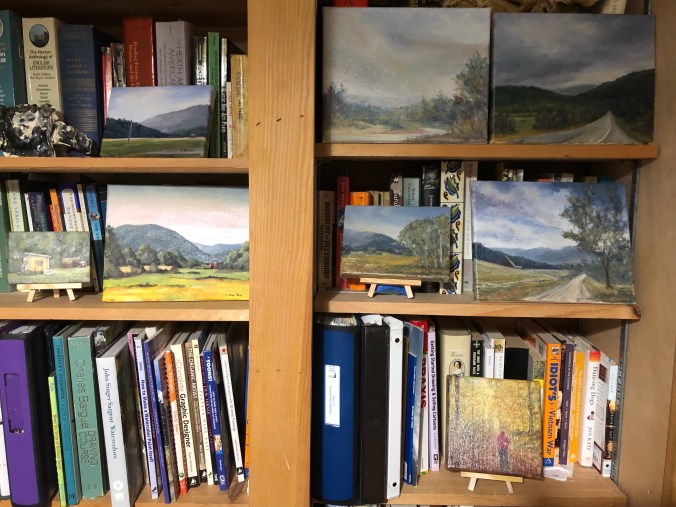
The Itty-Bitty (crowded) Bookshelf Gallery

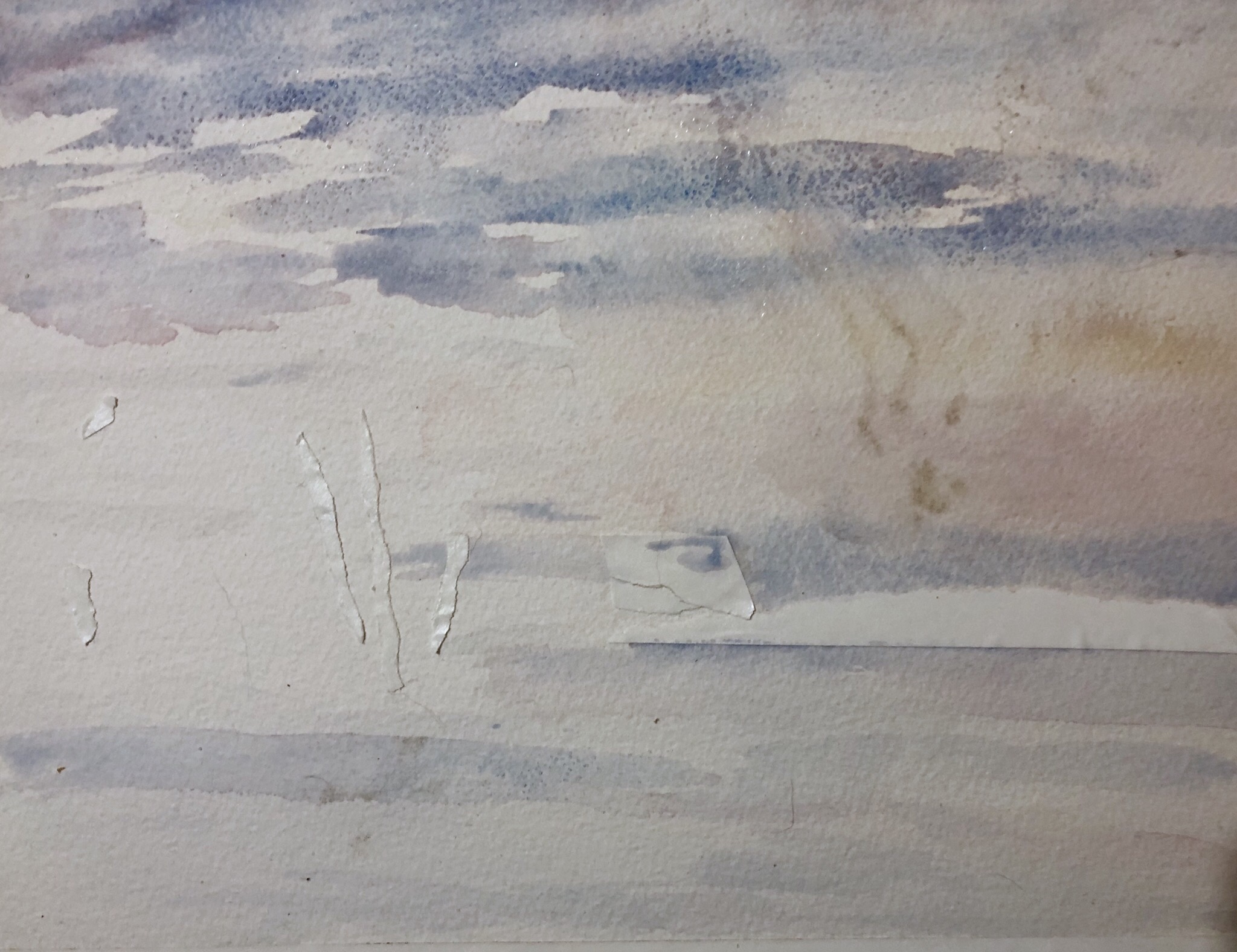
The dry and ready to post on Etsy paintings are now sharing space on the bookshelf gallery with the new not quite dry and too dangerous to post paintings.

There’s an open house and an exhibition in Bennington coming up, so the smallest gallery in America could get pretty packed for a few weeks. So far, however, the oils have been pretty accommodating about finding new homes in good order.

Did Someone Say Pumpkin Spice?

‘‘Tis the Season, Oil, 6″x6″ – SOLD

So, I know it’s almost midnight and still over 70° in Vermont and the first week of September (when it’s supposed to be 70 during the day), but somebody at the country store said the magic words, “Pumpkin Spice,” and it was time to take a whack at painting some foliage.

Prints can be purchased on Etsy here.. 

Running Over

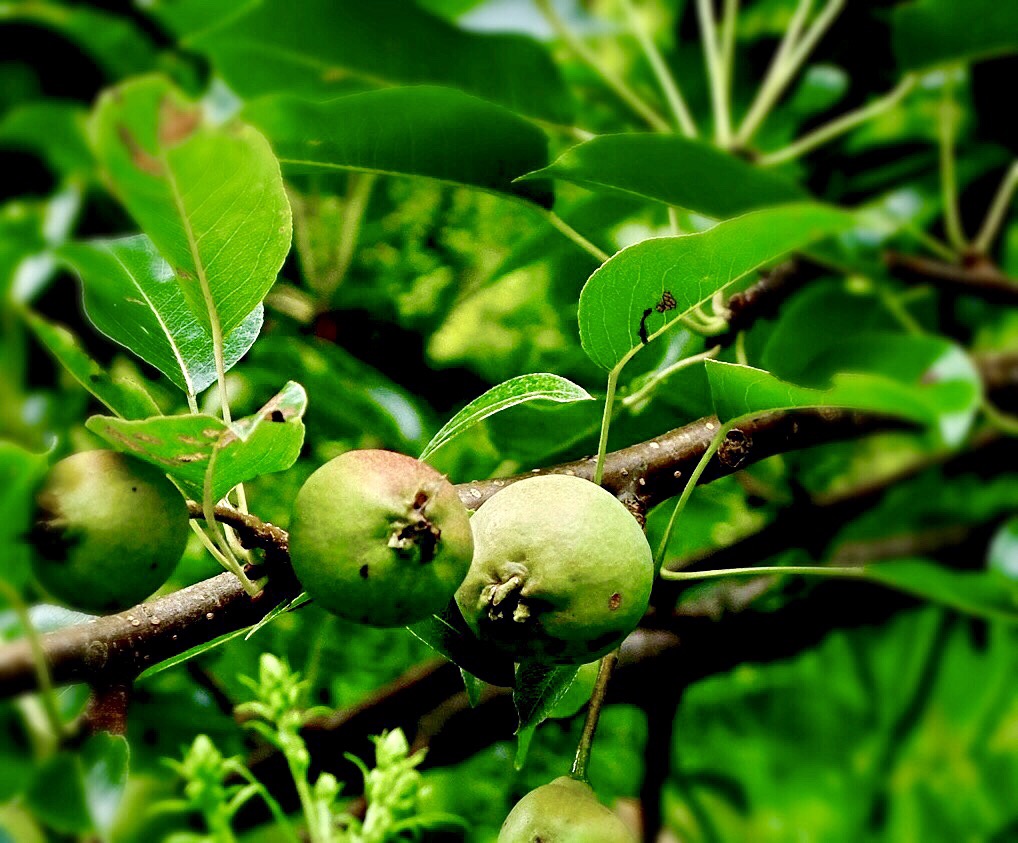
I planted this pear tree about three years ago, and a monster thunderstorm promptly bent its slender limbs to the ground, turning it into an arch. I thought we would never get any fruit from it, but this year our little survivor is bowing even lower as baby pears appear along its branches.

The babies are the same color green as a pair of earrings bearing an Arab proverb my sister brought me from Egypt this spring. The proverb goes, “Patience is the key to prosperity.”

The little surprises growing on our survivor reminded me patience isn’t just about toughing it out when things get rough, it’s about being patient and understanding of others during their tough times. In the end, the patience will bear fruit.


Zoom Out

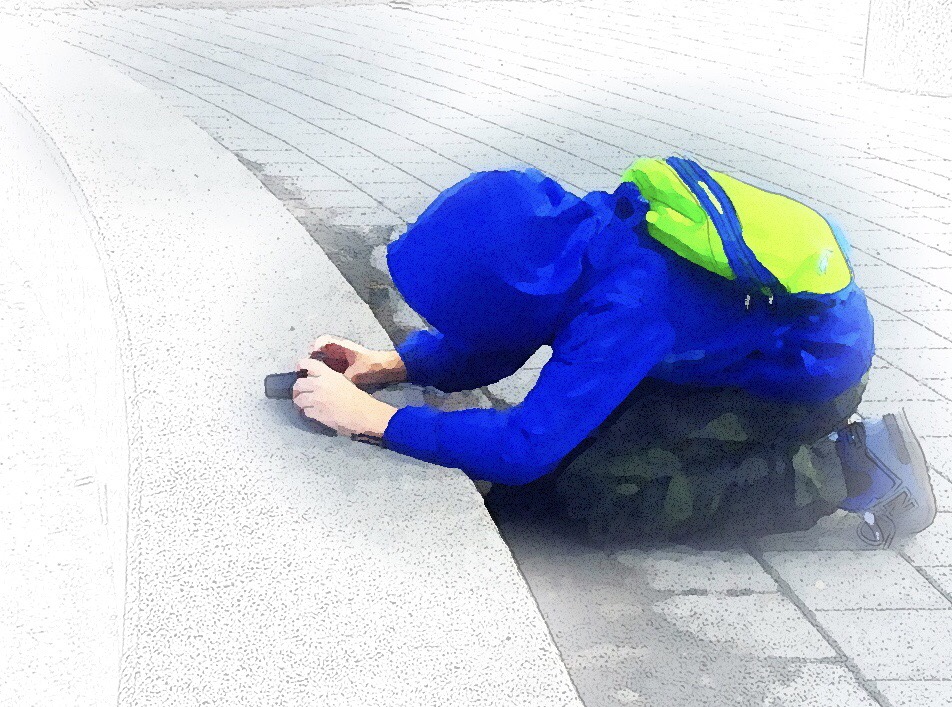
Portrait of an Artist as a Young Man,Undeterred


For most of the almost 6 years that I’ve been writing this blog, almost every single post has been accompanied by an illustration. started to change about a week ago when my stack of unillustrated but otherwise just finished posts started getting that musty, too-long-in-the-drawer smell.

I don’t have anything against photography. I actually shot weddings and portraits for almost 5 years when Thing1 was little. Thing2 came on the scene, and suddenly I needed both my hands to focus on him, on a new work-at-Home-mom role, on everything except focusing lenses and clicking a shutter. 

I traded a DSLR for a point-and-shoot, and then the point-and-shoot for whatever camera happened to me on my cell phone, operating on the theory that the best camera for Snapchat‘s of the kids was the one I kept with me all the time. 

I thought art was secondary.

I still scribbled my notebooks. When we took the kids to the art museum, I sketched my sketchbook pretending I might one day a great artist. It wasn’t until I started my blog as part of writing class, that I began drawing again in earnest.

The funny thing was that the drawing was not about art – or so I thought. It was something to add to the writing on the blog. It was stock illustration I didn’t have to buy and images I didn’t have to wait until the kids were occupied during daylight hours to make. 

It was utilitarian. And then it became something more, it reminded me it had always been something more. The drawing took on a life of its own, enabling but also becoming an integral part of the blog.

I will never stop drawing again.

Just as drawing became a tool to enable the blog, however, an old creative outlet, photography – altered and not, is starting to re-emerge as a facilitator. I doubt I will purchase another expensive DSLR, but I have reclaimed a mirrorless camera I traded to the Big Guy before our trip to Iceland. 

Right now the photography is a tool. It helps writing progress without letting the creative and meditative but time-consuming task of illustrating slow it down. It helps make sure nothing gets in the way of responding to inspiration.

I’ve been at this a few years now. In that time I’ve learned that the art is never secondary; only the tools are, and allowing yourself to zoom out, to pick up a new one, can become a source of inspiration all on its own.

Authentically Unconflicted

You’re It, Watercolor, 9×12 – SOLD

Prints can be purchased on Etsy here.

I started this blog about 6 years ago as an assignment for a writing workshop. It started as a way to share writing and drawings and evolved into a search for an authentic life that still continues.

I spend the majority of my time working at home. Most days, the only people I see are the Big Guy and 17-year-old Thing1 and 11-year-old Thing2. Our family conversations are hardly devoid of any meaning, but tend to focus on “what’s for dinner?“ and “can you pick up the kids?“

The only other regular conversation I have is with my blog. It has helped me deal honestly with bipolar disorder and embrace the dinner table stories that I once pooh-poohed. Over the years, however, that conversation has also led me to question if I was living in my truth and how to get to a place where I could.

One of the truths I discovered over the last few years is that I need to write and draw. When my life gets too congested to allow for a regular time for art, I have resented it.

Last fall, I reorganized my life to carve out time for creativity while building a new career that served the greater good. I started working weekends so I could go back to school, temporarily bowing out of a weekend writing class that had helped keep the spark lit for several years.

Murphy’s Law, however, is still in effect. My precise work schedule surrendered to the chaos of the holiday shopping season. And the bottom dropped out for Thing1.

Thing1 was diagnosed with an auto-immune disorder a year earlier. Despite promising early results with medication and severe diet changes, Thing1’s body began shutting down a few days after Christmas. It was barely a week into winter when, knowing which battle mattered most, I withdrew from classes.

Thing1 was hospitalized near the end of January for assessment and treatment. As he lay in recovery after a procedure, I struggled not to cry as his doctor told us that his illness was quite severe and laid out his options. Some required injections or infusions. All of them carried a risk of lymphoma, one of them fatal, especially in young men.

When we got him home, we focused on getting him back to ‘normal’ but quickly realized ‘normal’, like much in life, is an ever-moving goal post. We worked with the school to make sure he stayed on track. We worked with doctors to get him through flu season, keeping them on speed dial through nervous nights.

And, when time permitted and sanity demanded, I blogged.

I still get weepy at night in bed when everyone’s asleep or in the car when no one’s around, even though I know we’re incredibly lucky. Every time I pick up a prescription with an $800 copay that’s been covered by my insurance from work, I know we could also be sitting at our round kitchen table trying to find things to sell to pay for each drug or worrying about bankruptcy.

Long before this blog reignited my creative spark, Thing1 was teaching me patience and determination as I had never understood them before. The self-doubting, self-hating person I had once been before his birth was dissolved in the breast milk and tossed out with a meconium-filled diaper, leaving only Thing1’s mom who had happily reorganized her entire life around his needs.

So when my college sent out spring registration notifications, I knew I would not be signing up. I also knew I will be carving out creative time around my current career until I’m sure Thing1 can fully stand on his own and obtain his own sufficient insurance,

And that’s okay because there are two truths in my life. And, as Darth Vader once said to his offspring, “There is no conflict”. Not for me.

My truth is that creativity matters to me. My bigger truth and the key to living an authentic life for me is that without being true to Thing1 (and now Thing2), I don’t know that anything could keep that creative spark lit.
Everybody’s a Critic

Paw Print at Dawn by Jim-Bob Barlow

I was trying to paint last night but Jim-Bob, our orange tabby making a life as a reformed barn cat, decided my time could be better spent. He hopped up on my lap and then crawled up to my neck for insistent snuggle.

“No, kitty,” I said after giving a few scratches and setting them down on the floor.

“I have needs,“ he seemed to purr at me or as he jumped up between the brush bucket and the fish tank, worming his way back onto my lap. He put a paw on the painting table, and I set him down again.

 Katie-the-wonder-dog barked at the door to let me know she was ready to come in, and I pushed the table away from me and padded out to the mudroom to let her in. Jim-Bob, curiously, did not follow, and I should’ve known something was up.

When Katie and I got back to my studio/office, Bob trotted out past us with a swish of his tail, leaving behind only a paw print of disapproval on the still wet painting.

Thing2 has just fallen asleep in the room across the hall so I kept my curses quiet, swearing that was the last that cat would ever see of the inside of my studio. He knew better, however, waiting less than five minutes to nudge open the door with a butt of his head. And as a sucker with a severe case of Stockholm syndrome, when he threaded himself between my legs, I put down my brush and decided to tackle his boundary issues another night.

Some nights in the studio are as much about processing as they are about product.  

Breathing Room

At the beginning of this year, Thing1’s autoimmune disorder hospitalized him with an intense flare up and, not to be left out of the fun, promptly Thing2 contracted Influenza-A that, along with a lymph node inflammation painful enough to prompt two separate diagnoses of appendicitis earned him an overnight ticket to the pediatric ward. As a result, almost every week of our 2018 calendar has been dotted with nights in the ER, overnights at the hospital and follow-ups at various doctor’s offices. Last Thursday marked my first day off in weeks that didn’t include a rush to the ER or a four hour round trip drive across the state to a specialist, and I didn’t know what to make of the unexpected breathing room.

For weeks, the voices in my head that run an internal dialogue about art and literature and school shootings and the homeless population and, you name it have been replaced with instructions. Log when you last gave Tylenol or ibuprofen. Call for the new prescriptions. Did T1 have 32 ounces of water or 16? When did T2 poop? Check his weight. Call the insurance company. Call the doctor. Call the insurance company. I wasn’t numb, but I was a robot. Calculating but not thinking, especially if it meant engaging in worry which is all too natural for me (it could be an Olympic sport).

The robot didn’t have much extra processing power for art or writing, and February was burning away without any pictures to show for it. Even a conversation with a fellow artist about drawing in the down times at waiting rooms didn’t get my pencil or brush moving.

There was breathing room, but for some reason, I was afraid to rake that first breath.

A few nights ago, I decided out the iPad to work on a page for Dweezil’s To-Dos, a book about a little boy with too many projects (don’t ask how I get my inspiration).

Inking and coloring over the scanned drawings is methodical. Robotic. It’s not particularly creative a lot of the time. It’s basically just drawing lines – filling in the space between points.

It’s not creative, but it is meditative.

In the meditation, however, the robot slowed down. I inked and colored page 6 six different ways, and the machine started to power down. My eyelids felt heavy, and the iPad fell from my hand. The thud of the Otterbox on the floor jolted me awake again, and, rebooting, I took in a gulp of air and opened a file to start page 7.

Progressions

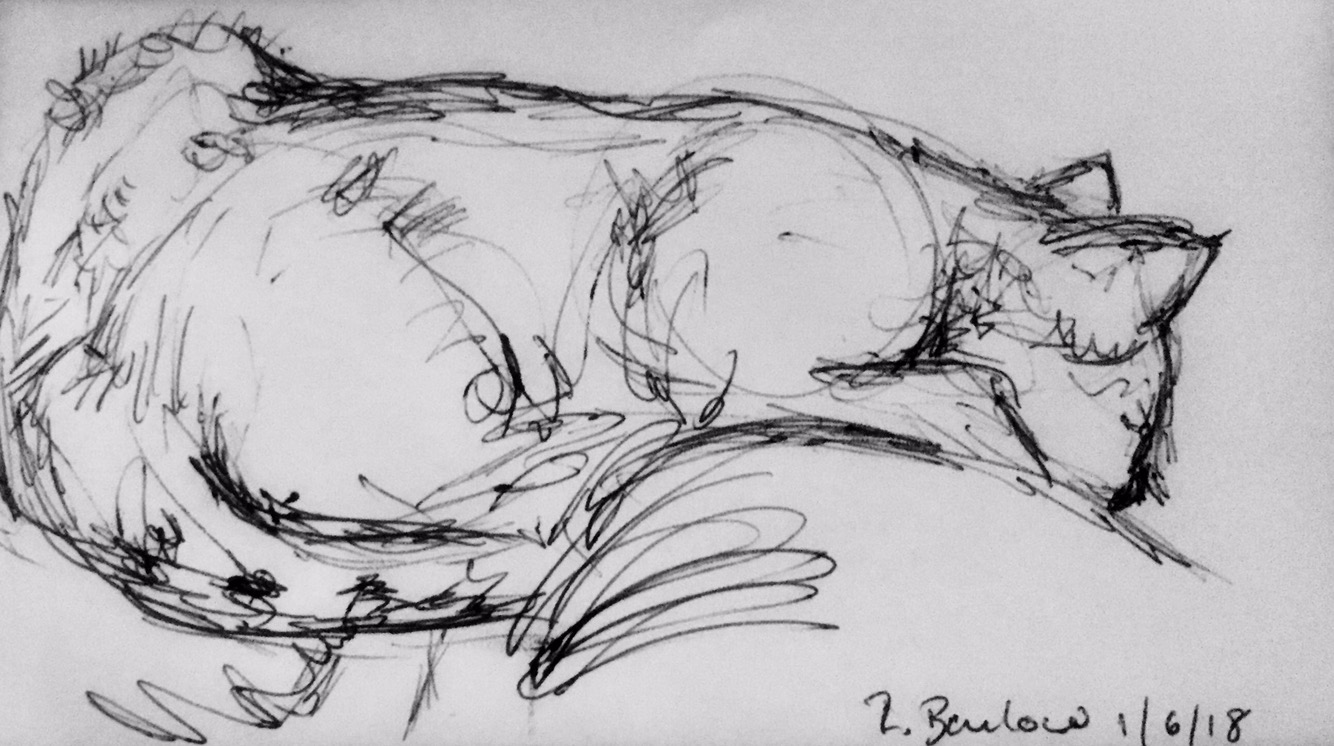
A Winters Nap

Learning to draw on the iPad has been easier than I thought. It’s just different sensation from drawing on paper but no more different a sensation than painting.
I spent the first few weeks experimenting with the first page of a book I’ve been working on over the last six months. I still sense this new tool will ultimately speed up my workflow, but as I tried different variations, I’ve noticed an unpleasant quirk creeping back into my work.

In the past, whenever my creativity has felt stunted as it was during a very busy autumn, I’ve gone back to basics — a pocket sketchbook and a black pen. The pocket sketchbook reminds me that The only pressure is to get something down on the page. Indelible, ink ensures that corrections are impossible. Mistakes will happen, and the only thing you can do is to move forward. Freeing oneself from any expectation of perfection is like prying the lid off a mason jar filled with fireflies that have been waiting to get out all night. Suddenly you’re in the darkness. The results are irregular and uncontrolled and surprisingly beautiful.

Drawing on the iPad lets you correct mistakes; it lets you anticipate and try to prevent them. Being able to create images with a different layer for every section means being able to edit one section without accidentally disrupting another. It’s a wonderful safety net when digitizing a final version of a rough draft, but it does take some planning. 

That detail is where the devil lurks. You focus on the final image, but instead of letting it flow organically, it’s easy to get caught up in figuring out the steps through the maze and even easier to begin worrying if the image is good enough. Could it be better if you removed this layer and replaced it with that?

I didn’t realize I’ve been doing just that until the second day of my kick starter when I wanted to copy a photo of Thing2 snuggled up with Jim-Bob. Deciding that tracing the photo would be too constricting because of changes I wanted to make, I started a rough sketch with the pencil tool. This is the point in my sketchbook, where I get lost in my subject. On the iPad, however, I was thinking about how I would do the next layer and what style it should be. As I began focusing on potential mistakes instead of just creating, my devilish inner critic stirred, and the firefly light flickered.

I started the second layer, determined to focus on progress, not perfection. The result was something new for me along with the recognition that discovering when not to use each tool in your art kit can the most important thing you’ll learn.

Rules to be Broken


One of the great things about DIY publishing is that you get to break rules when you feel like they need to be broken.

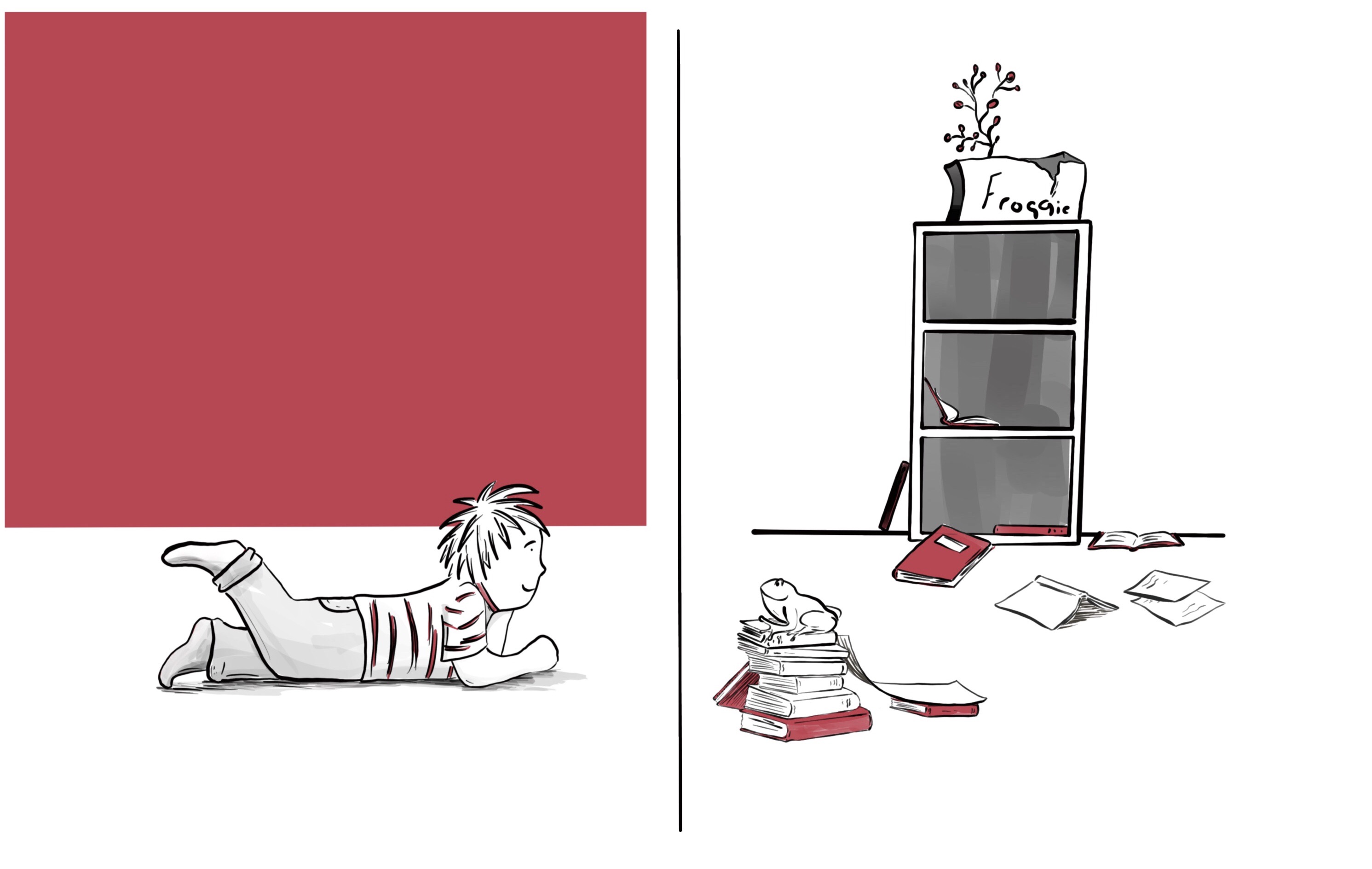
One of the rules in traditional publishing it’s the children’s picture books should be 32 pages. There are a few exceptions, but not many. The irony is that those exceptions often tend to be exceptional.

As I’m perusing books pilfered from Thing2’s bookshelf, some of the most dogeared titles — The Giving Tree, Where The Wild Things Are — break rules with regard to page length. 

As I dig deeper, I also notice that the books that still stand out for us are those that may not have perfect “story book” endings but are somehow still satisfying. They may hint at a darker side of life but enlighten their readers. 

They do something truly exceptional. They trust children.

As I’m whittling words and laying out spreads, I’m keeping in mind that there is at least one rule I don’t want to break – and that’s to trust kids.

Save

Save

Something for Nothing

I had paid my booth fee for the summer so it was free to setup my tent with my notecards at the summer market yesterday.

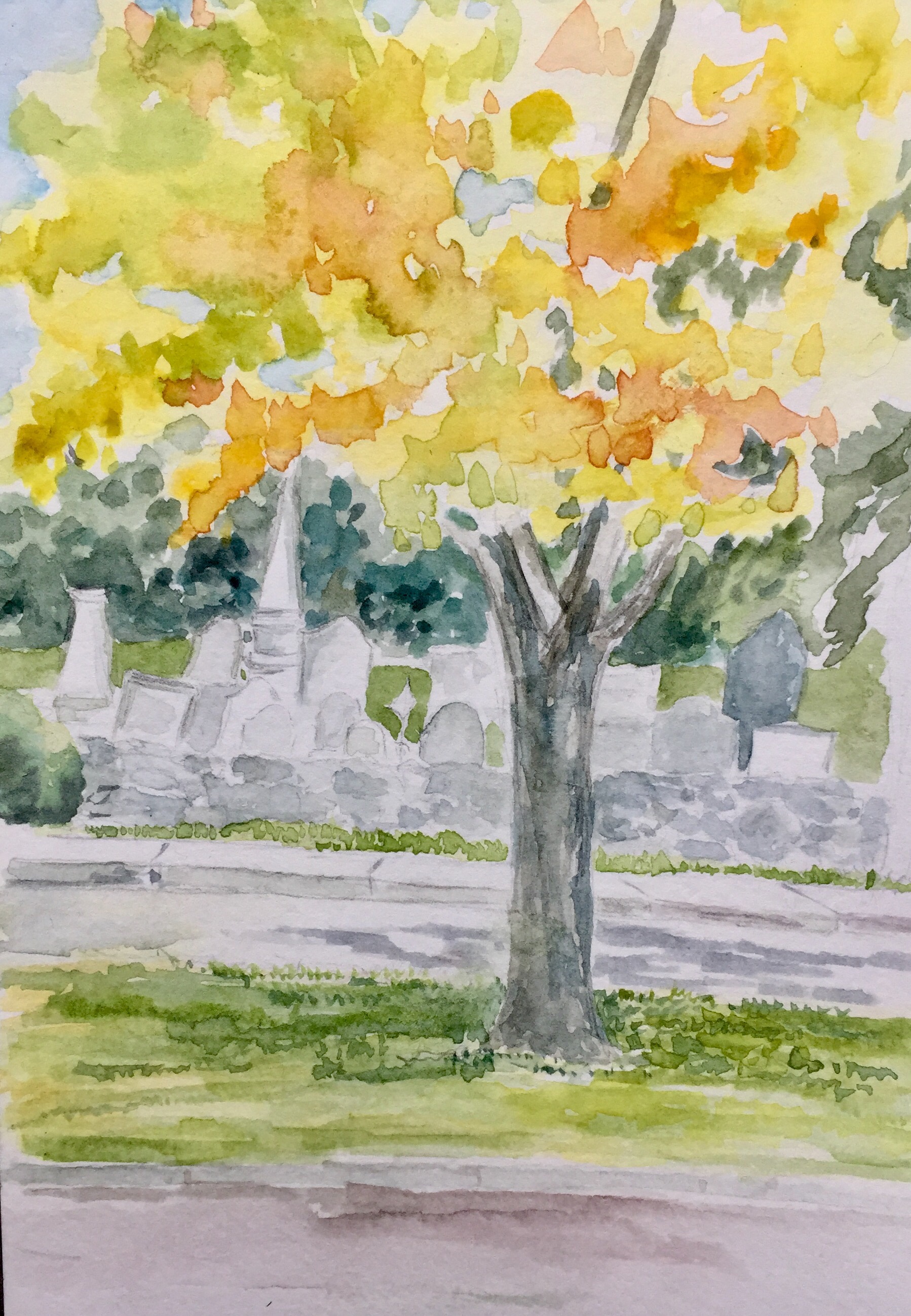
There were a few bigger events in the area so our corner of Vermont was quiet for this stage of the summer tourist season. It wasn’t the most profitable morning, but as I sat across the street from the Episcopal church in Arlington, I was sure I could see the leaves of the maple tree in front of the churchyard cemetery changing color.

It marked the first official day of autumn for me — an unexpected and pleasant little bit of something that cost absolutely nothing.