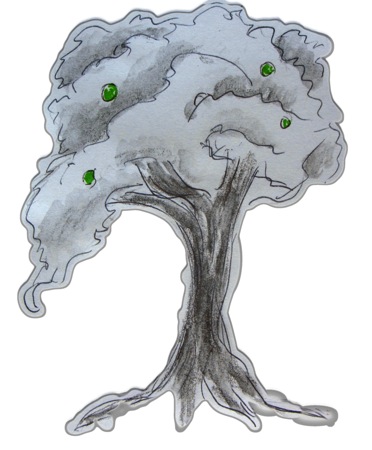
I had the dubious honor of having Margaret* on my list for the evening after only two weeks working at the nursing home. When I think back to my trepidation that night, I’m ashamed. Margaret would give me several gifts, one of which I think each year as we put up the last apples of the season.
Completely bed ridden and saddled with a strict diet, Margaret had little control over her life outside of her morning and bedtime routines. She was notorious for yelling at anyone who failed to deliver her care to her very detailed specifications. I hadn’t met her, but I was terrified of her.
“What are you doing?” she demanded as I first entered her room that night.
“I have your dinner, Mrs. Williams,” I said, determined to be polite, even if she yelled at me.
“I don’t want any,” she said. I didn’t argue and took the tray out of the room. The institution’s policy was not to force people to eat if they didn’t want to. What Margaret could not refuse was minimum basic care that prevented bedsores.
Hoping to avoid conflict, I eschewed suggestions from the nurse manager and asked Margaret how she wanted me to proceed. Apparently unused to being asked what she wanted, her demeanor softened. The snapping ceased, and she quietly explained which gown she wanted and how she wanted her pillows arranged. Before I knew it, we were done.
I continued with my list and was nearly finished when the call-light outside Margaret’s room went on. Another nursing assistant rolled her eyes at me when she saw it.
“Now you’ve done it,” she said. “She’s going to bug you all night.”
When I went to see what she needed, Margaret asked if I was done with my list. I answered not yet. She asked for fresh water which I got before returning to my list.
Second shift at the nursing home was quiet. We did rounds before the graveyard shift started. Most nights between rounds we finished our charts at the nursing station or studied. But this was not most nights.
I had just started my charting when Margaret’s call-light went on again. Again, I went to see what she needed. She requested more water. Then she asked my name. She asked how long I’d been working and where I was from, telling me about herself as we talked. I soon learned she had not only grown-up in our newly-adopted Vermont town but in the red farmhouse that we had just bought. Our property had belonged to her family since the colonial period.
We talked about people we both knew. She told me about our house. She corrected me on a few points of history, mentioning that it had been built in 1761 and not 1790 as we had thought. She told me of an attic beam with the build date carved into it. Suddenly, it was 10:30 PM and time to begin last rounds.
I got home late that night.
Before I went to bed, however, I opened the door to the attic at the back of the bathroom and, armed with a flashlight, found Margaret’s beam. I went to the east end of the attic and, just as she’d promised, found ‘1761’ carved into a rough-hewn beam. Margaret was not as senile or cantankerous and I had been led and only too willing to believe. She was a living connection to the history of our town, our house, and to another way of doing things – a way that we very much trying to emulate.
The next night and the rest of the week Margaret asked to be on my list, and I began looking forward to my shift.
I learned she had moved to another town when she married, losing contact with old friends. I knew one of those friends and asked her if I could let him know that she was here. She said yes and we arranged a meeting. The two octogenarians had attended the town’s remaining one-room schoolhouse together, and had much to share. The meeting didn’t prompt a miracle turnaround of her physical health (I didn’t expect it to) but, following that visit she seemed a little happier.
Her health soon began failing rapidly and her memory with it. Some nights she barely recognized me at all. Even when she didn’t remember my name, though, we enjoyed lively conversations, mostly about her family’s farm.
One night I said mentioned how much I loved the trees on the property. For the first time since I’d been taking care of her she’s snapped at me.
“Those damn hippies let my father’s fields grow over,” she growled. She told me of how hard her grandfather had worked to keep them clear for their livestock. She told me how father had changed the very shape of our road by planting grapevines as roadblocks. Then she told me of an apple orchard her grandfather started nearly 70 years ago. The wooded hills were hiding dozens of apple trees.
Margaret died a few weeks later. I didn’t know or care if it was professional to do so, but I cried.
About that time, the Big Guy and I decided to build a new house on our property, dividing and selling part of the land to help pay for the construction of the new house. The land near the old house wouldn’t perk for a conventional septic, so we began hiking through our forest, looking for a better build site.
Cluttered with Rosie Bush, it was easy to get lost even on 10 acres. We did notice that some of the craggy plants looked like trees. When April dotted the trees with apple-scented blossoms, I realized Margaret had been entirely lucid that night.
We had no intention of trying to restore a neglected 70-year-old orchard, but we did need a building site. I asked our excavator guy if he could keep an eye out for the apple trees while clearing. He doubted there would be any and warned me that any he found would not be productive given their age. I’m not superstitious, but I was sure our discovery was a gift from Margaret, and I asked him to humor me.
When the clearing was done there were three apple trees in our yard. And the excavator guy was right. For the first year or two none of them produced anything bigger than a walnut.
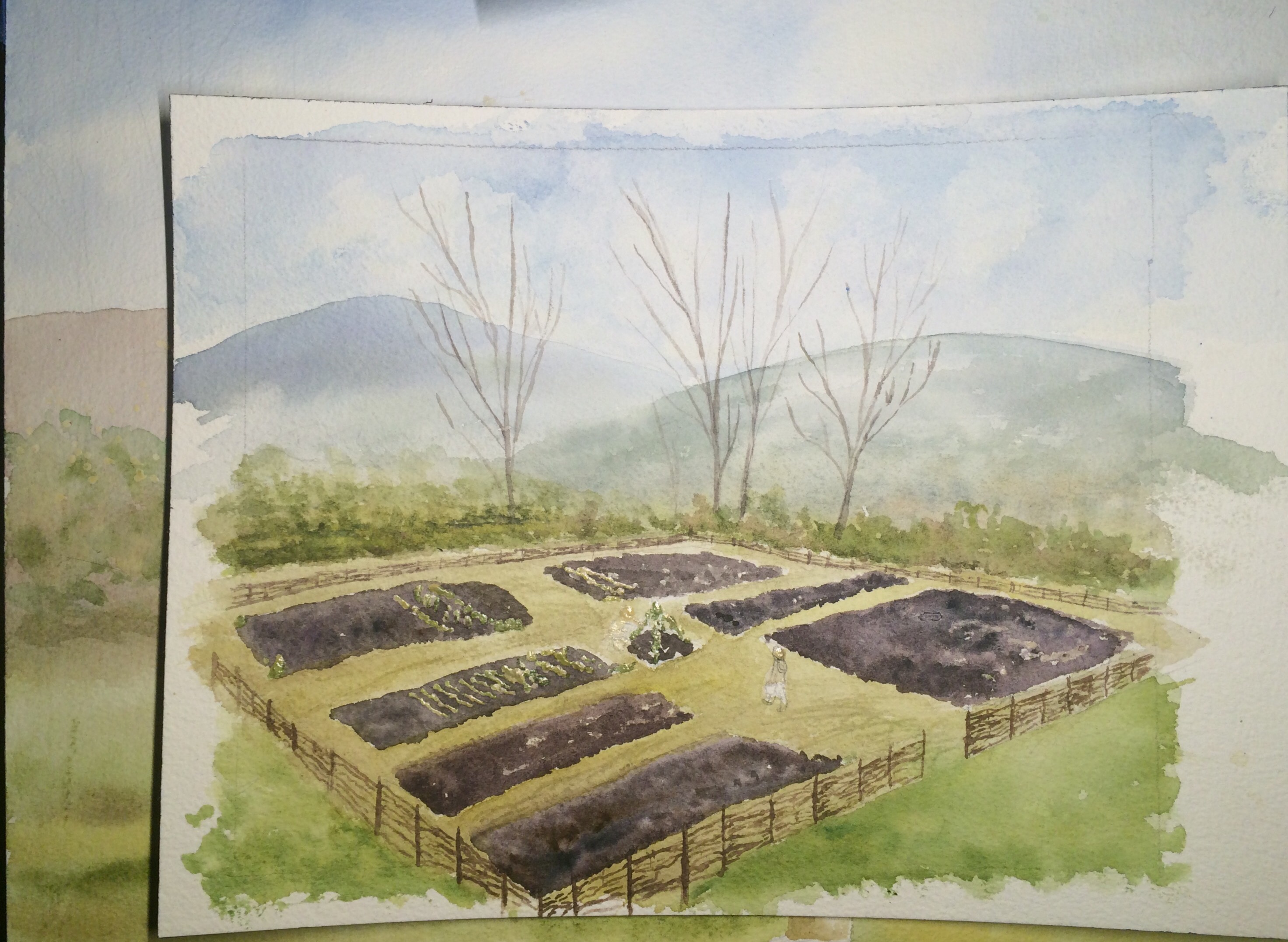
After a few paltry harvests and wanting to expand my vegetable garden, I contemplated cutting the trees down. Sentimentality ruled. The apple blossoms were beautiful in spring, and the shade from the trees didn’t hit the garden until very late in the afternoon, so they were spared.
The next year, the Big Guy asked a tree-expert friend for help. When I asked if the trees were too old to produce, he answered honestly that he didn’t know. The trees were so old even he couldn’t identify the variety. He charged us $20 for a pruning. Then we waited.
The spring blossoms came and went as they had the first four years. Then the walnut-sized fruit began to form. This year, however, they grew almost as big as tennis balls. We had apples.
Everyone on our road seems to grow red apples whose rosy color clearly indicates when they’re ready to pick. Our trees consistently give yellow-green fruit. We decided to rely on cues from the local farms, watching for their billboards inviting passersby to the harvest.
When it was time to pick, our apples weren’t pretty. We discarded any that had been attacked by worms. However, knowing even scarred apples could be made into pie or applesauce, we filled several 5 gallon paint buckets. We were so excited we didn’t think to taste any. When we finally did, our harvest was very starchy and not sweet. We assumed we had picked too early.
The next year we picked later, but the harvest still failed to give us sweet apples. Another year an early frost killed the blossoms. We began to wonder if the pruning and picking was a lost cause.
Once, again, I wondered if we should cut one down. Something about chopping down a given tree, however, seemed like breaking a commandment. I decided to extend my garden another direction and Margaret’s trees remained another year.
Last winter we pruned again, knowing we would get one or two heavily-sugared $20 pies.
Before we knew it apple picking season had come and gone. Margaret’s trees had gone untouched. The first frost hit, and still only a few apples lay on the ground. We had not picked a single one. The nights mostly stayed warm until Halloween week, and then temperatures dipped into the 20s. The apples began to fall.
The Big Guy has a healthy sense of adventure and had the first bite of the year.
“Wow,” he exclaimed. He took another bite and handed it to me. “That is the sweetest apple I’ve ever tasted.”
I tried it and agreed. We began picking and then shaking trunk of the tree to loosen riper fruit. We quickly filled our 5 gallon bucket with candy-sweet treasure. I made a pie and a crisp and another pie. We got the kids to work shaking and picking and gathering.
Now as we peel and core and put up the last of the harvest, I think about Margaret’s gifts. They’re not just in the apple trees or even the history that only she could tell us. They’re in learning to look deeper.
Her exacting standards were not just about controlling her shrinking universe – they were about forcing the people in it to see her as a whole person, regardless of her age or physical condition. I’m ashamed to admit that I when first met her, I was thinking of her list of demands and not her need for human connection and to feel valued.
This winter our tree guy will come and tend our trees, and they may or may not give a good harvest again. But if they don’t, they will still have a place in our lives because, like Margaret, what they have to give is still valuable, even if we don’t recognize it right away.
*Margaret’s name has been changed.
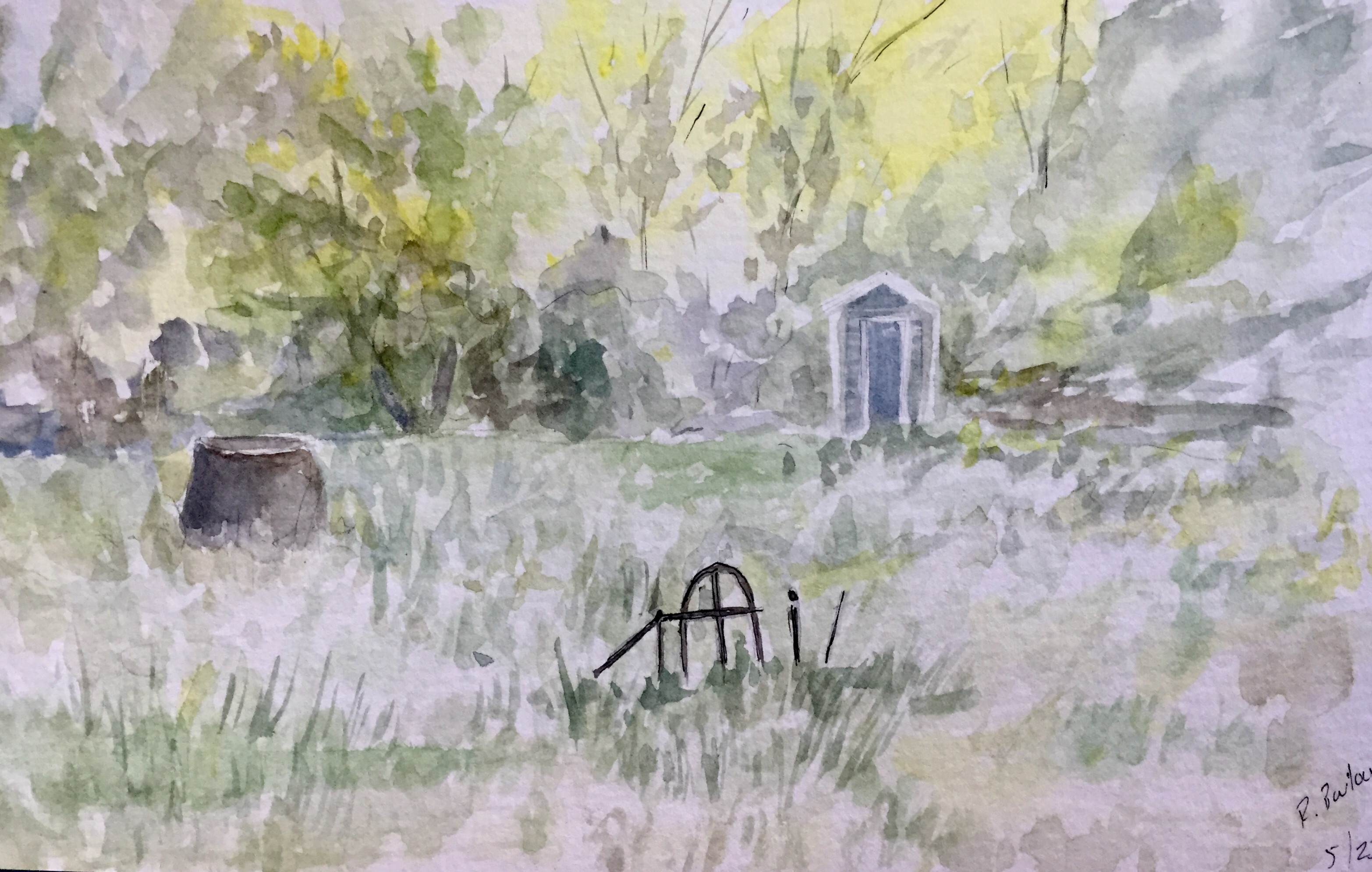 No, you’re not looking at a painting of a suggested location for the remake of the Munsters or the Addams family, down-home version. That overgrown patch of weeds and meadow is going to be my garden this summer.











 Picking My Battles