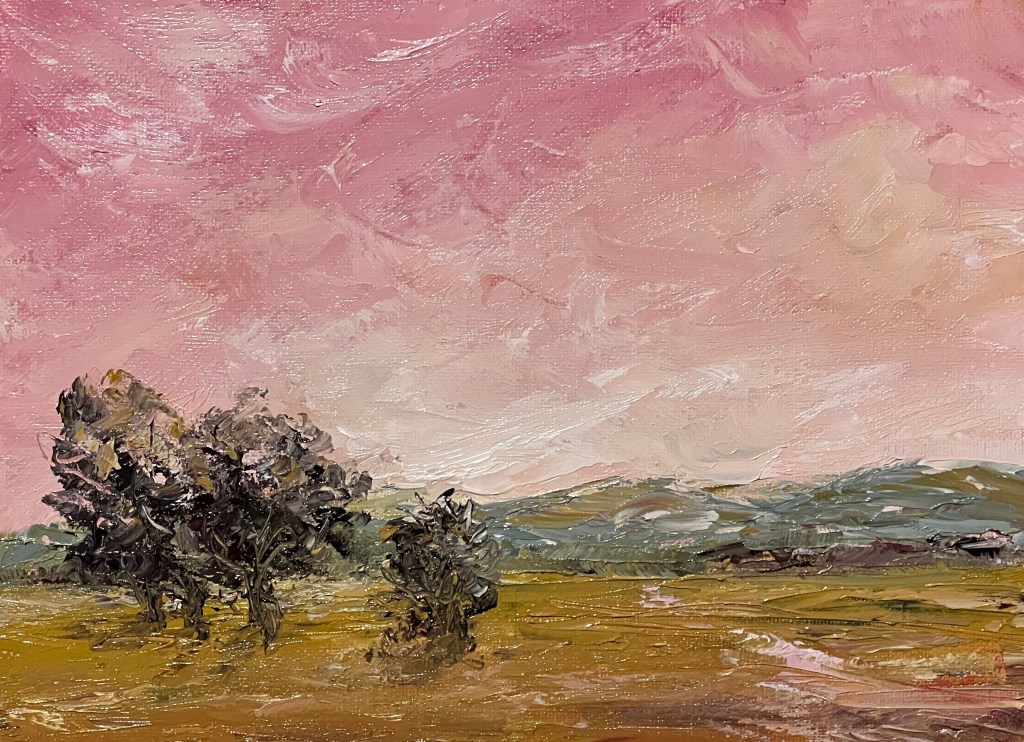
Incubation

I used to think about December as the beginning of hibernation. Creative output always seems to slow down as the days get shorter, and work seems far more intrusive than it does in the crackling light of autumn.

For last last few weeks my output has followed the same trend. It took me a while to recognize the pattern because I initially blamed the slowdown the Ménière’s disease that’s been with me in earnest for a year now. Yesterday, though, as I drove down the mountain and had to stop and catch my breath as fast moving clouds dusted with powdered sugar the top of a mountain across the river, I realized that this time of year is not solely about hibernating.

To catch that moment, you would’ve had to be in the exact spot at the exact time with me. The peak of the mountain is almost hidden by two others that “overlap“ each other in the view that is only seen when coming down the road from our remote town to a “main“ route. The moment sparked attempts to repeats – something that shouldn’t be too difficult in Southwestern vermont in the winter – but it was the only one that day. The moment and the search germinated hours of wonder and reading and discovery.

What do I want to capture when I paint or draw? Moments of breathlessness? Revelations of the grit that lies at the foot of these mountains? Or appreciation of one the few places humans haven’t tamed?

Tonight will be occupied with the work of work, but in the back of my brain, the next painting session is germinating. It occurred to me that every racing thought, every quiet space that arrives with the dark of winter is not about hibernating through depression. Instead that darkness may just be the needed incubation for what will come next.

Connecting to Inspiration

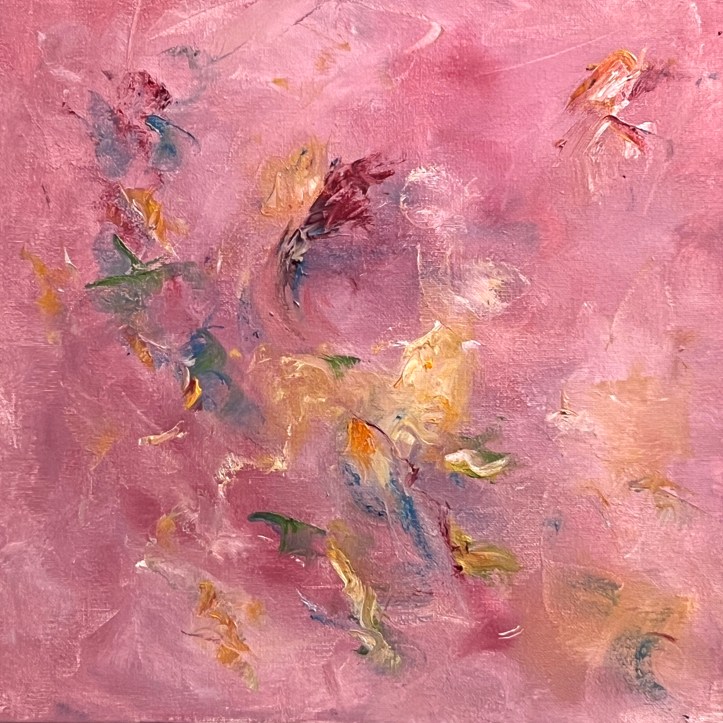
Last Dance, 14″ x 14″, Oil on Canvas, Click Here if you would like this painting to live on your wall.

Several days into break, I was still having trouble mentally disconnecting from work and reconnecting with family and creative life. Our family had chosen to skip the bacchanalia of presents under the tree, filling each others’ stockings with small items instead. We had all enjoyed shifting focus away from obsessive shopping, but, even as we enjoyed a low-key day and prepared for a lovely family meal in Columbus, Ohio, I was in limbo.

But my present was about to arrive.

My parents had invited friends — a professor and an artist – to join us for Christmas dinner. We had known of each other for years, and the two sets of strangers were friends by the time coats were hung. The professor chatted with the rest of the family in the kitchen, while the artist and I brought hors d’oeuvres over to the living room.

The artist is also a professor, and, through my parents, knew that I painted and drew. We had barely traded cheese and crackers before she asked about my work. I had seen some of her work and, knowing she was a serious and classically-trained artist, was a bit nervous showing photos of some of my work. Like most of the committed artists I’ve known, however, she was genuinely interested in seeing others’ work.

“I’m getting away from landscapes,” I said as she scrolled through images of mountains and trees and then through abstract images. I explained a desire to make art that was more than decorative. “I connect with nature when I paint them in real life, but it still inspires the abstract,” I told her.

“I love landscapes,” she said. “I don’t paint them very much.” She told me about her work painting portraits before teaching and creating more abstract pieces. We talked more about creating work with meaning, and then she said, “I like nature, but I don’t really connect with it. It doesn’t inspire me.”

She told me about her recent work painting flowers using a more academic approach and how her search for castoffs from grocery florists had added a new facet to her project. As she talked about mountains of plastic and dying flowers that were thrown away each week, it occurred to me that her project was as much an investigation and revelation as it was the result of inspiration.

My brain was suddenly churning, and, for the first time in weeks, it was from enthusiasm rather than apprehension. Dinner preparations and the gathering of other guests in the living room were about to redirect the conversation, and we dug in deeper for a last few intimate moments of art talk. We talked about giants of art like William and Elaine de Kooning, Pollack and Krasner, who had found inspiration but also frustration in nature, and I began to think of how much of art emanated not from waiting for an impulse from something beautiful but from seeking and investigating.

The Big Guy and Thing1 and 2 and I continued talking about the ways a creative spark is fanned as we drove back to our hotel after dinner. We were still talking about it when we drove home from Ohio a few days later.

As we plodded through miles of shopping malls to get from our hotel to the highway, I realized how difficult it might be to pack up a plein air kit and connect with the natural world there. In a landscape of strip malls, an artist has to create their own vision.

Years of being surrounded by mountains and woods have made made connecting with inspiration easy for me, and I wondered if it had made me lazy as well. Waiting for it to hit, rather than seeking out revelation also made it easier for anxiety to settle in where creativity should have been raging during the downtime.

My mom’s friend had inadvertently given me the best Christmas gift any artist could give another. She had opened a window to a new way to connect with creativity.

Discovery

In the months since we visited the Turner exhibit at the Boston MFA, my art practice has undergone a revolution.

Turner’s sketchbooks and studies in watercolor and oil pointed the way to constant, blissfully imperfect practice. Another exhibit and then a new mentor confirmed that, even in a modern era when we are saturated with expression in all forms, for the artist, practice still makes progress.

The result has been nonstop but also the transformation of my sketchbook from the collection of drawing exercises to a journal of my life and our summer role in 1-2 minute sketches.

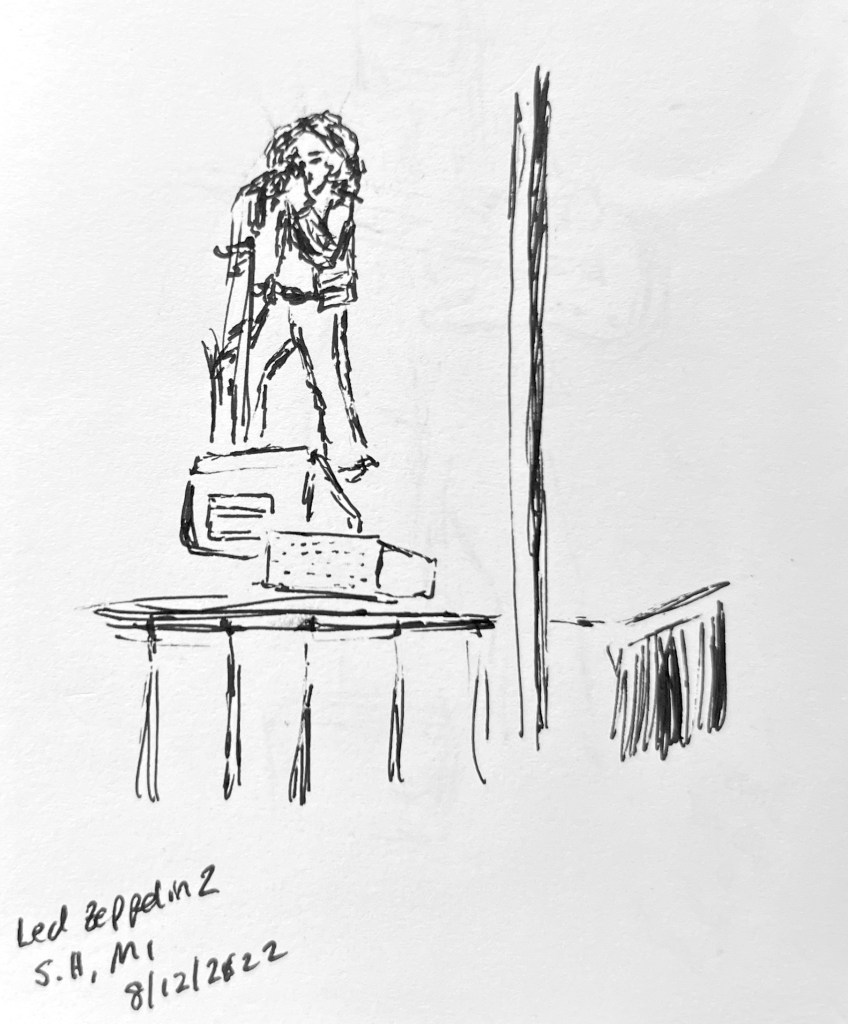
#LedZeppelin2 live

The pages are filled with concerts with family, swimming kids, and views of America seen at 70 miles an hour. In the drawings connect me with people and events in a ways that photos simply can’t because they demand that the drawer be fully present. 

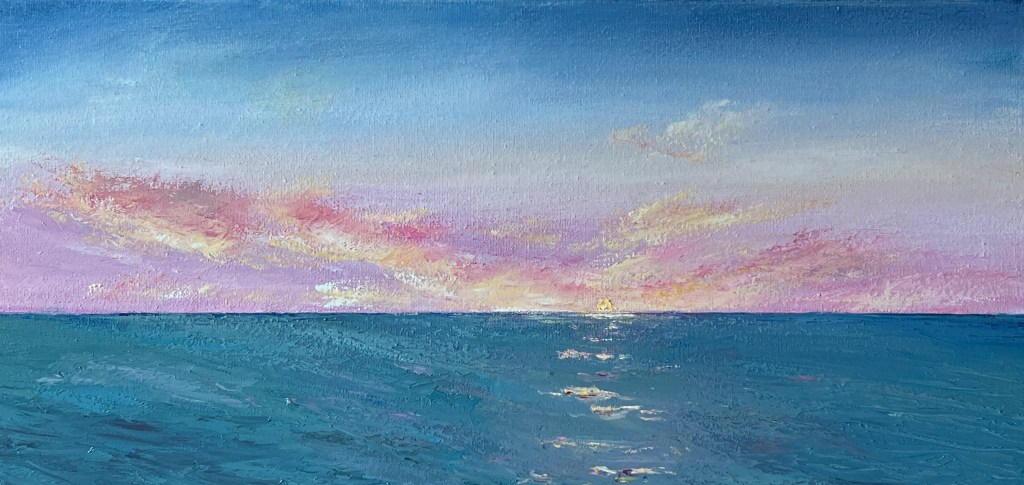
Sometimes drawings find their way onto canvas, and I am discovering that being present for an event like a sunset burns the colors more accurately into my brain than simply recording them through an electronic rectangle that often gets it wrong.

Sunsets

There are times when, wanting to stay connected to my family, I’ve ignore the inch to retreat to my studio to work. This summer of discovery, however, has made clear that making the time to practice — pursuing progress at every opportunity- only makes the connections with life stronger.

Where Paintings Go to Die

I knew the lighthouse would be the most difficult thing to paint. I usually take only palette knives when I do plein air, and my hand has been shaking for the last few months because of my Ménière’s.

Still, the beach and dune and lighthouse in Southhaven Michigan are almost obligatory subjects, and I knew, if I didn’t at least attempt to paint them, I would have them nagging at me for the rest of the week as I tried to capture other scenes around southwestern Michigan. So I got out of the house early in the morning and set up my easel in a shady spot with a good vantage point, determined not to let any inner critics make the scene more challenging than it would be.

I like painting mountains and fields. I know them, and I can focus on the feeling and not the fundamentals. Painting the lake should be easy (I’ve been here every year since I was a fetus). I haven’t, however, practiced enough with that spot where the water meets the sand on a calm day or the crash of the waves. Seeing was going to be a challenge without perfectionism getting in the way.

The sky and horizon went in pretty easily. I’d done a rough sketch of where the lighthouse and trees in the foreground should go. Even the blues of the lake seemed to be dropping in pretty easily.

Then came the time to draw the rigid lines of the pier that connects the lighthouse to the shore. I’d loaded my palette knife with dark gray to scratch a thin dark line across the middle of the lake when a woman asked if she could take a peek. I always say yes to be friendly even if I’m not happy with the work and don’t want someone to see it. We chatted about where we were from and our connections to South Haven.

“I’ve always wanted to paint,“ she said, “but I’m not really an artist.“

“Everyone’s an artist,“ I said. “You should paint it.“

She mentioned having gone to paint and sips and how frustrated she’d been worrying over details and the painting that weren’t turning out the way she wanted. I said I liked the paint and sip idea because it got people to create.

“But,” I said, “perfectionism is where paintings go to die.“ I was saying it as much for myself as for her, as I knew the lighthouse would begin as soon as our conversation ended.

We chatted for a few more minutes and then she let me get back to my painting and, using my wrist to balance, I started to drop in the pier. The line was mercifully straight, but now it was time to drop in a tiny red, vertical dash to represent the lighthouse.

My hand shook as I tried to pop the tiny red line in, and I ended up with a little squiggle. I scraped out that part of the lake put it back in, put in the line for the pier and tried the lighthouse again.

It still wasn’t right.

Scrape. Paint. Scrape. Paint.

I finally decided that the next iteration of pier and lighthouse would be the last. I popped them in and put the painting in the back of the car, went home, and scraped the canvas clean.

Later that day I was reading about the painter Elaine de Kooning and her husband and artist Willem de Kooning. Bill had a habit of scraping paintings with he disliked, much to the dismay of his wife who often loved the destroyed pieces.

I realized that, however bad I thought the painting was (and it really was), scraping the canvas was the extreme end of letting nitpicking and perfectionism kill the work.

This morning I returned to the same spot, determined to let the mood of the morning guide the work. Almost as if some creative collective was ensuring the lesson was learned, I easily found a shady spot to park and set up. Another couples set up their chairs to read in the shade and listen to the waves. I’d forgotten my iPod, but, as soon as I had my colors arranged on the palette, a pair of folk musicians started playing nearby.

This time the pieces came together easily. I loaded the knife and the pier appeared as I slid the edge on the canvas. The lighthouse was far from perfect, but, at the end of the season, there was only one incarnation as the imperfect but finished painting got packed to go home.

Re-creation

I’ve recently started a painting mentorship with the aim of finding and clarifying my voice and improving my technique.

The first few weeks have focused on killing my inner critic (for the moment) and painting with “reckless abandon.” They also came with a recommendation to temporary stop selling work (aside from a fair in September) to discourage the temptation of painting or an imagined “audience“ rather than just painting.

When Thing2 dragged us to see Maverick earlier this summer, I ridiculed Tom Cruise’s oft repeated mantra of “don’t think, just do.” The advice to a younger pilot seemed to be a larger philosophy discouraging critical thought.

As I drove into early exercises, however, I giggled as I co-opted and adapted the motto to “Don’t Think, Just Paint.”

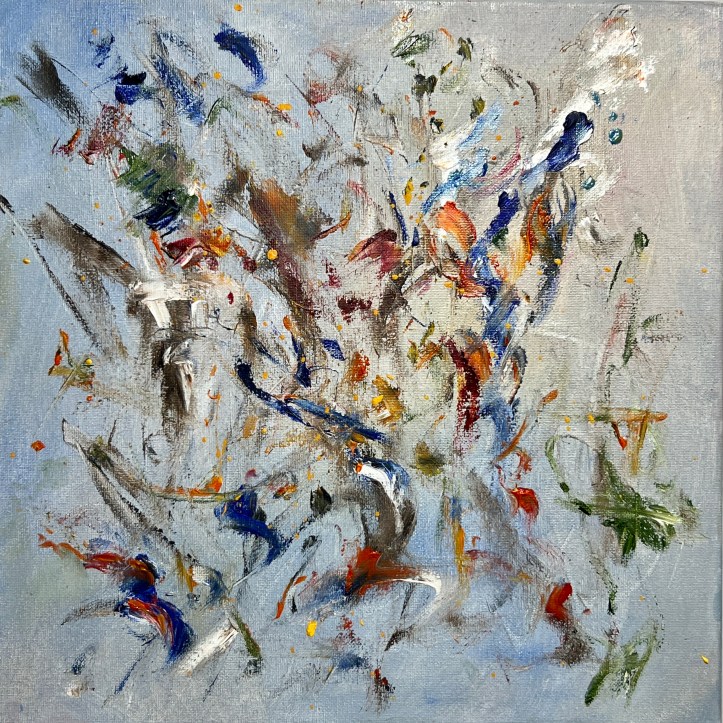
One result was a collection of paintings too numerous to post, let alone hang in my office/studio. Another one was a reignited compulsion to draw anything, anytime, everywhere. The main result, however, was a vacation from my own head and the endless inner debate about what or even if to paint.

Critical analysis will happen down the road, but part of vacation — of re-creation — is disconnecting from doubt and engaging with life with reckless abandon.

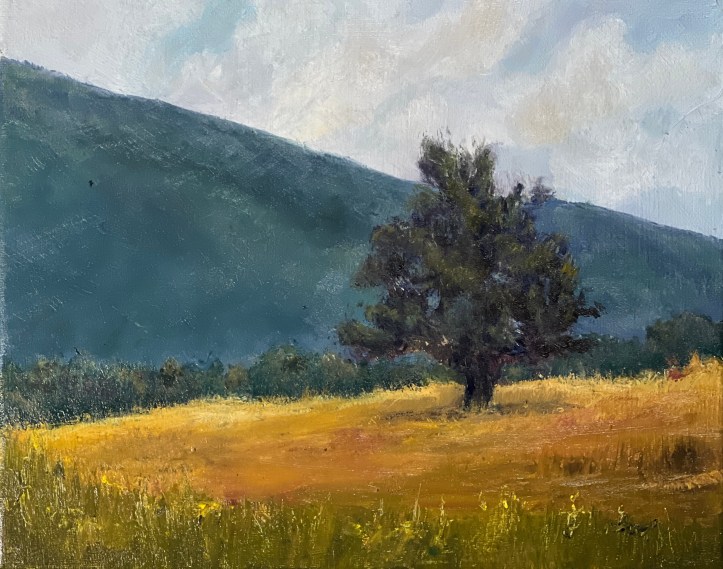
Where the Taconics Meet the Greens

12 x 12, oil on canvas

I see this particular view every time we come back from and the Equinox that I have to go back to again and again because I can’t get them out of my head and they never the same two days in a row. This is another one of those spots.

The difference is I have to remember this one because there’s no good place to park and draw or take pictures, so, each time we round this particular corner at the crest of this foothill in the Taconics, I try to commit another part of this view to memory.

Don’t Think, Just do

The assignment was to put the intellect on hold for a whopping 10 minutes and just paint from the heart. Disconnect the critical and turbocharge the emotional.

I’ve done it several times tonight, and even been happy with the results once or even twice. But as soon as that timer goes off, as soon as I step back to inspect, the intellect — the critic – sees a spot that could be just a bit better and moves in with a finger or knife or brush and turns any sparkle to mud.

Showing Up

Harry Rich has been showing up at his studio (every day) for 71 years,” read the first line of the article, reprinted from a 2021 issue of Art New England Magazine that I’d picked up at the gallery entrance.

I browsed through the rooms of the gallery, having the same reaction I always have with wonderful art. The world and its chaos faded away, and, for a few moments, there was only peace and color and light. By the end of our visit, however, there was something else just as wonderful and completely unexpected.

I’ve known Harry Rich for many years. I’ve been friends with his wife, Mallory, also an artist. Visiting their house and viewing her expressive landscapes on one wall and his large square, colorful abstracts on the living room walls is like discovering a secret world. Seeing his luminous paintings in a gallery, however, was like getting free admission to an art museum in a major city. 

This gallery is not in a major city. It is in Arlington, Vermont at a community center called the Arlington Commons. Housed in a former Catholic church and rectory, the Commons is new community gathering place and gallery space.  

Last night, this town of 2500 had a new pizza place open (a major event), and, as the Big Guy and I headed over to sample the vittles, we passed the new community center and a sign announcing Harry’s art show. We knew an after dinner visit was mandatory to complete the perfect date night. By the time we got to the art show, a quorum of friends and neighbors had had the same idea.

As we walked to the entrance, we waved at people we haven’t seen outside of Facebook since before Covid. For reasons passing understanding, I was suddenly shy about seeing people I’ve known for 20 years or more. I wasn’t sure what to say or for the first few minutes, but just asking how people were or about their kids, opened the floodgates. We mingled through the crowd of 30 or so people, and I felt like I was returning to something. The looks on the faces of other guests suggested at least a few people felt the same way.

We finally walked into the gallery with 45 minutes to spare before the opening was over. We spent a good part of the time wandering through the space, sometimes talking stopping to talk to a friend or neighbor. I read through Harry’s unofficial bio several times as I took in the paintings.  

In his interview with Art New England, he spoke of himself as a poet as much as a painter, and his  description was perfect. It leaves out a few things, however. I read the line about showing up, absorbing the implications as each new painting opened gateways into Harry’s imagination. 

At the end of the walk-through, I returned to the entrance where Harry and Mallory were talking with other guests. The Big Guy and I gushed over his paintings as the four of us caught up for a few minutes. I told Harry how much I loved the insight into his work the article provided. I loved learning about him “showing up“ and continuing to paint even when he thought “the paint had won.“ 

I thought of the times I’ve hung up my apron when I couldn’t solve a problem in a painting, swearing to the sky that I forgotten everything I know. As if our minds were meeting, Mallory voiced the same sentiment. 

Harry overheard that part of our conversation and looked at his wife and then at me and the Big Guy. With a mischievous look in his eye said, “That’s bullshit.”

He wasn’t telling anybody how talented they were, he was telling any artist who was listening to get off their butts and get to work. He was telling us all to show up. He had given us the gift of his creativity, reconnecting his community with each other and, in several cases, connecting people with art in a completely new way. 

I’ve been guilty of not showing up for so many things over this last year. I haven’t reported to my studio with any consistency. I’ve been reluctant to rejoin community even as Covid restrictions recede.

Last night as we finished reconnecting, we both decided that we would be back for future get togethers. Harry’s work had been a tangible reminder that we need show up regularly for the little bit vital things in our lives and our community. After all, showing up did more than produce a few rooms full of his paintings. It made him a master. It made him an inspiration.


Harry Rich: “The Vermont Years, So Far…” exhibit

is on view until September 6, 2022

The Arlington Common hours are

Thursdays 5-7 & Saturdays 10-3

3938 Historic RTE 7A , Arlington, VT 05250