Are You Our Mama?

It was almost uncomfortably warm on Saturday so we let the chicks into the chicken tractor to play while they’re current enclosure was cleaned. It was a good chance for them to really meet Jim, Princess Jane, and Katie.

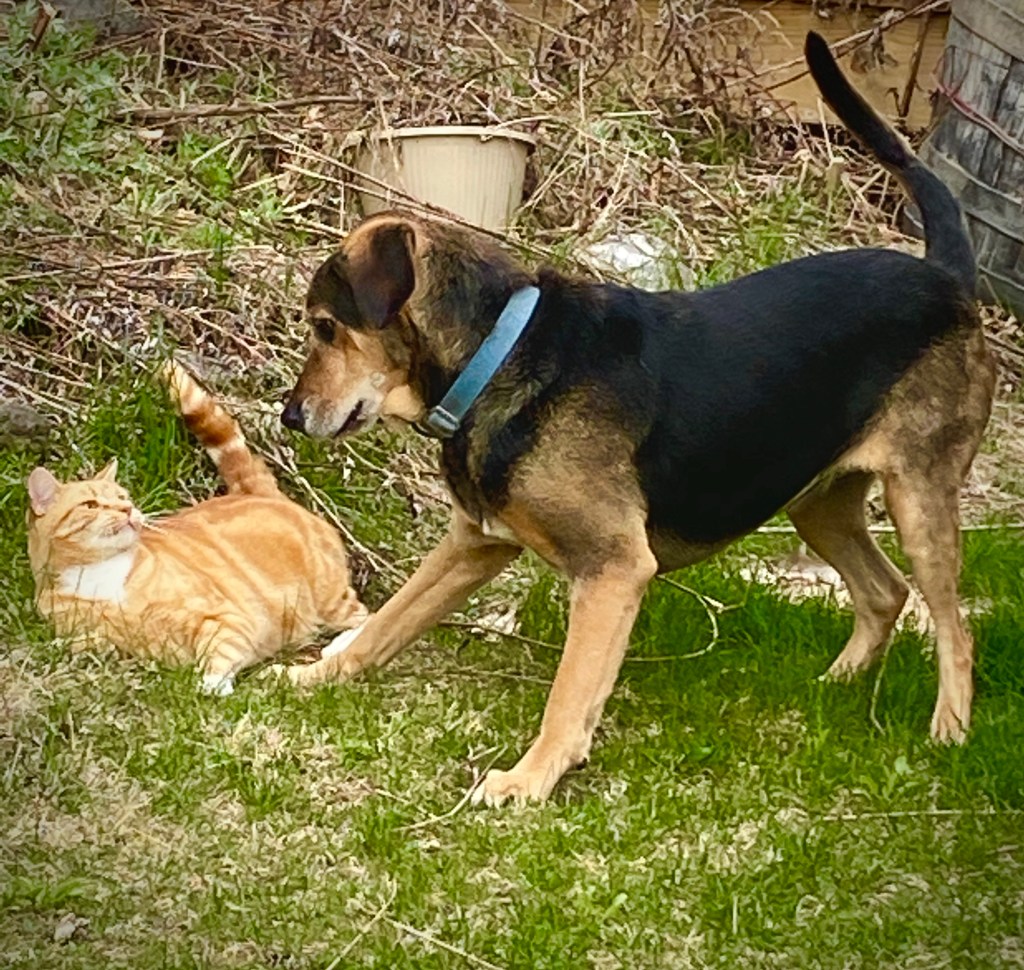
Jane and Jim inspected the chirping babies and, discovering that the tractor was secured by wiremesh at all sides, spent most of the day feigning interest in a chipmunk hunt.

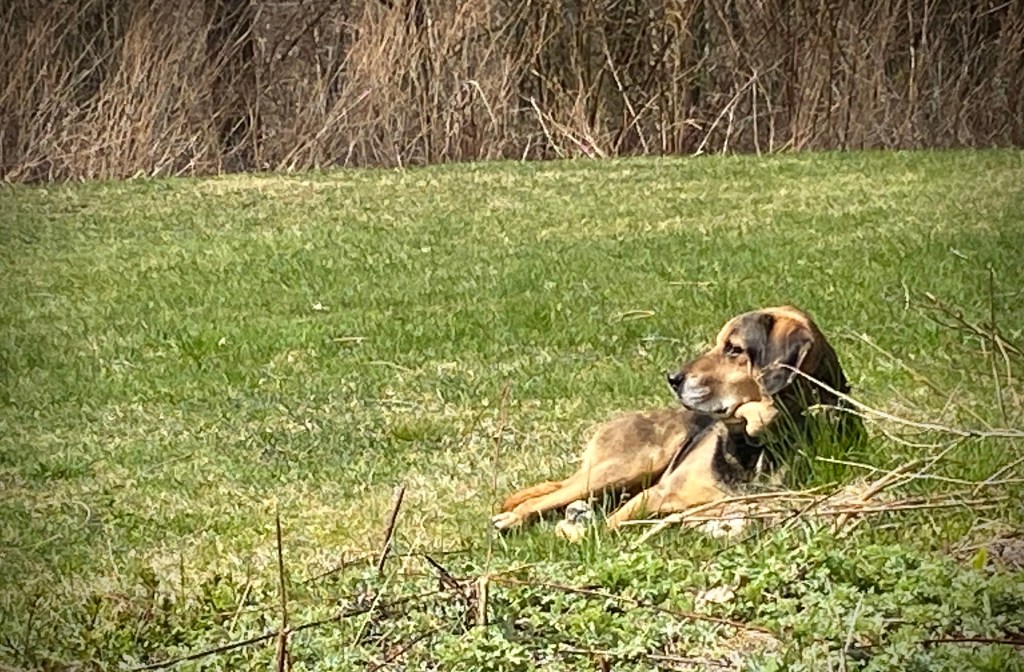
I sat with the chicks for a while, cleaning some garden implements and getting them used to the idea of me as Mother Hen. Eternally loyal, Katie sat with me. As she moved, the chicks often moved with her. She would sniff at them and wag her tail a little as they chirped at her.

The chicks came out of their eggs at the feed store, so the only “mamas“ they’ve ever known are a heat lamp and the changing hands that feed them. Katie was abandoned to a kill shelter as a puppy, and I doubt she had much contact with her mama.

Something in her past or her nature, however, made her loyal and gentle, more than a little bit of a pushover, and, when she has to be, brave. It seemed fitting that, for the moment, they saw her as the “Mother Hen.“

A Homesteader’s Dozen

It took less than a week of staying home to realize that, even with Thing1 home, we were saving piles of money by not eating out, not driving, not buying anything except what was on the grocery list. It took less than two weeks to remember that we could brush off our gardening skills and, without sending Thing1 to the Army (who wouldn’t take him and his malfunctioning immune system anyway), have some fun and make a sizable dent in that bill as well.

So the garden plan was drawn up. Seeds were started. And chicks were ordered.

We’ve had chickens in the past, and they’ve always been fun and educational . From the ladies, we’ve learned that it’s never too early or late to enjoy a good meal. From the roosters, our kids learned more about the facts of life than we were ready to explain. We learned a few unpleasant facts of life from the foxes, and the roosters learned the hard way not to pick on my chicks.

This time around we ordered pullets instead of a straight pick. We only need 6 but, wanting a few different breeds, we ordered the minimum 6 each of Rhode Island Reds and Americaunas from the feed store. Our chicken tractor will hold six comfortably (comfy chickens lay better eggs – seriously), so when they get bigger, we’ll give half of the flock to neighbors who want home grown eggs.

I’m calling it the Homesteader’s Dozen.

Peas and Carrots

Peas and carrots are coming up in our straw bale garden. Carrots always seem to take a little while to germinate and don’t try my patience, but I confess, it never seems like spring until the first pea shoots appear.

This is the first year I’ve tried Strawbale Garden. Devised by a garden writer by the name of Joel Karsten, and it involves buying and arranging bales of, you guessed it, straw. You “condition” the bales by watering and feeding with organic fertilizer for a couple weeks before planting. then plant right in the bells, sometimes adding growing mix depending on the type of plant.

Health issues this year limited how much lifting and digging I had energy for, so ordering and arranging the straw bales was easy (especially with Thing1 doing most of the arranging). I’m always a little gun shy about ordering straw; you never know if you’ll get hay and weed seeds in there.

But this year, I’m game for an experiment.

I recycled weed barrier from the paths to cover the entire garden before bringing in bales. It’ll give it the summer to smother any weeds. We’ve gone scorched earth on the raspberry canes that were invading the area, and I’m planning to mulch the heck out of the space in the summer.

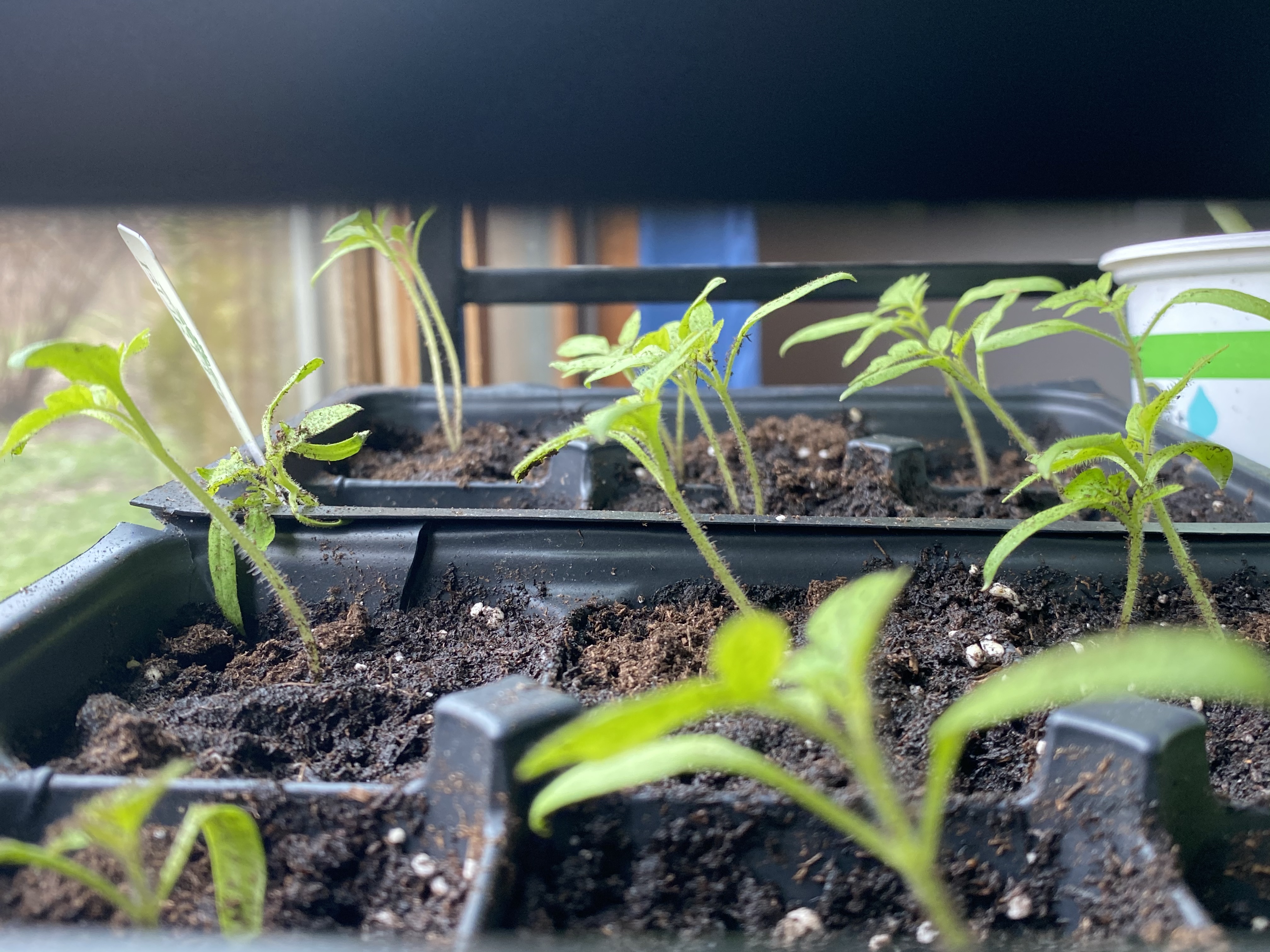
The appearance of peas and carrots in two of the bales gives me some hope. We’re putting in other greens today, the first truly warm day of spring. Peppers and tomatoes and other warm season vegetables are still under the lights in my office, And I feel like somebody just yelled, “Ladies, start your engines!“

Green Victorious

When I was a kid my parents and some friends rented a community garden plot in Baltimore. Our yard was mostly gravel and shade, and I remember the first summer my dad carrying on about the victory garden his parents had when he was a kid and the experience he wanted to replicate. We got a few salad and more zucchini then we could eat in 10 summers, and then we moved to a house with a big yard in the Midwest where, ironically, we grew only lawns and flowers. I’ve let my gardens lapse here and there, but this year, I have a hankering for victory.

I had my first back to the land epiphany when we moved to Vermont and wanted to make the most out of space. Every power outage and snowstorm that socked us in, every trip up our rutty road in mud season made me more determined to have my grocery store growing in my backyard, feeding my freezer through the summer.  Whenever I dig in, however, I get a lot more than just groceries out of the dirt and my sweat.

My ongoing pulmonary issues and Thing1’s compromised immune system prompted us to initiate a ‘stay home’ protocol well before the governor issued one for everyone in our state. My body has limited how much heavy work I can do right now, but as long as I have the strength to whisper the words “I have an idea” to my husband (and now kids) the resurrection of a big garden was inevitable.

This year I’m experimenting with Straw-bale gardening, laying ground work for no-dig sheet mulching in the fall. So far the weather has been too cold to allow more than a few pea shoots to establish themselves in the conditioned bales, and trays of seedlings and propagated cuttings add welcome green to my office window.  

The current experiment is much less work and may produce slightly fewer jars of tomato sauce. As long as there’s something green and hopeful flourishing, however, I’m calling this garden victorious.

The Song Can’t Remain the Same

I expected some savings during the quarantine from not driving, going out to restaurants or ordering takeout. I expected an equally big bump in our grocery bill when Thing1 returned to the nest, but, even with two giants to feed (13-year-old Thing2 hit the six foot mark this week), thrift, apparently, is part of our new normal. It’s one of the few welcome surprises this month.

I thought about it as I came across a video about propagating root vegetables from cuttings from store-bought veggies. Always a sucker for a recycling project, I knew I’d need a place to keep my cuttings safe from cats looking to knock things over. Before the pandemic I might’ve stopped at the garden center on my way home from work. With every project and new recipe lately, however, I find myself going shopping in my attic or the recycle bin with an eye on repurposing items that might’ve been forgotten or even tossed.

Last year I, along with a plethora of other Americans got swept up in decluttering — removing things from the house that didn’t spark joy. I quit when I got to the book stage (might as well declutter cats or kids), but I was already fumbling during the closet clean-out. I was never going to get that perfect pink size 6 dress on again, and I’m sure it found a better home with a more dedicated dieter. There were plenty of items, however, that went to donation bins whose goals of redistributing old clothing, I later learned, may be doing more harm than good.

For environmental and economic reasons, we were off grid for over a decade. We obsessed over every watt we consumed, but this sparkling solitude has made me question my own material consumption.

A few days ago I stumbled on a wonderful movie on Netflix called “The Boy Who Harnessed The Wind“. I highly recommend for anyone with kids — I even ordered bought the book for my middle schoolers for fall. The story takes place just at the time of the 9-11 attacks and follows a high schooler in Malawi named William along with his family as they endure flooding, drought and subsequent crop failures. The change in family fortunes force them to count every grain in every meal. For William, a born tinkerer who loves fixing things, the changes mean the end of school, but, consumed with a vision of wind-powered irrigation for the village, he sneaks into the library to conduct research on his own.

There are so many powerful themes throughout the movie — strength, family in all its complexity, perseverance, and the power of education – but, as I watched William rummage through the village landfill for scrap metal and used electronics to build his turbine, another, smaller, theme emerged. Education, not merely necessity, was the mother of William’s inspiration, but it was thrift and ingenuity that helped him use whatever was on hand to bring together his turbine and save the village.

Now, a year after my failed purges, I am rethinking every purchase and every creation in terms of its embodied energy and its impact on our budget. The purge got me thinking about what happens to those things when we’re ‘done’ with them. Watching a determined teenager cobble together a life-saving machine with recycled parts, however, provided a sober — and inspiring – new perspective that will make me consider much more carefully exactly when I’m ‘done’ with something and when it still has another life left in it.

Portrait of a Real Pussycat

Anyone who has watched Princess Jane on the prowl, pouncing on helpless mice and chipmunks, would question the use of the word “pussycat” to describe a laidback or gentle personality. Then they’d look at her brother, Jim, cautiously peering out the window to make sure all the snow has melted before stepping outside the slider and five seconds later deciding it’s too dang cold to be anywhere but a on bed or a lap today.

Vagabond Jim and the Humble Heroine

Katy the wonder dog tolerates a fair amount of teasing about her wimpiness. Some of it she earns. She lets the cats have the first bite at the food bowl, and they regularly bully her out of her own bed. But as the beneficiary of her undying and unfounded loyalty over the last decade, I know that, even though it sometimes smells like chicken scraps, her heart is as big as a lion’s.  

Early this morning, Jim-Bob got to see Katy’s lion heart.

Yesterday morning Jim went out. He’s normally snuggled in my arms or stretched out on the bed most of the morning, so we all assumed he’d be back in five minutes (he and Princess Jane had been playing their favorite game of making us open the window every 8 minutes). 

Jane went out for her morning constitutional and returned to nap on the fuzzy blue chair. The snow stopped. Katy committed to a full day nap in my office. Jim was still out.

At five the family gathered for our daily walk, agreeing to dedicate part of it to calling for the orange man. 

We got nothing.

My gut started to churn. Jim is a committed homebody, I thought. Only a tangle with a fisher would keep him from responding to the sound of the food bucket opening (which he can hear through double-paned glass and 10-inch concrete walls). Even Princess Jane and Katy seemed to understand that this was not normal.

There was no sign of him after the second lap or even walking up the 900’ driveway. Katy stopped when we stopped and sniffed the forest as if she knew someone was missing. With no one to chase her, Jane stood on her hind legs to rub up against Katy’s neck.

The Big Guy and I went inside to watch TV and do some stress baking. The boys stayed out to play frisbee and call Jim. By the time I had dinner ready, we were taking turns going out to call for him. I was trying not to cry as I remembered the wolves that had visited our yard a few months ago, prompting a rigid routine of keeping the animals in at night. 

We went to bed by midnight, hoping we’d hear his paws on our bedroom slider soon. Katy wandered onto her pad in our room, and Princess Jane snuggled on Katy’s pad in the office.

Katy, at ten years old, has the leaky version of what Professor Farnsworth on Futurama called “wandering bladder syndrome” and rarely makes it through the night without a potty break. If she wakes me up at 2am, I take her out on the leash and stand on the deck shivering in my nighty so she can find a spot for a tinkle. If she wakes up at 4am, I’ll open the sliders, she’ll do her business, investigate the family of deer that takes its morning constitutional in the pasture beyond our woods and then come back for her morning nap.

Last night was a 4am morning with a twist. 

Katy has different barks. She has a happy bark when she’s trying to ‘play’ with the deer (I’ve watched her try to frolic with a young buck by the pear tree who, I swear, was raising an eyebrow as if to ask, “Are you serious right now?”). She has a sharp ‘I’m ready to come in and sleep by the wood stove bark’, and, once in a very great while – like last night – her growl-tinged bark warns, “I’m your worst nightmare!”

So I let her out, thinking there might be something worth scaring off, and, even if the something was just a funny shaped twig, the bark might be a beacon to bring our wayward tabby home. 

I listened as she moved around the yard and then close to the house, growling as she pursued some critter who had broken our quarantine. She raced into the forest again, and I heard a few growl barks. I could hear tromping on dead leaves near the woods. Suddenly there was a thunk, thunk on the window. 

I sat up in bed and shined my flashlight at the glass, hoping I saw a Jim-shaped shadow just outside. He saw my movement and putting both paws on the window, pantomimed a meow. 

I cracked the slider so Jane, now by my side watching the drama unfold, didn’t try to ‘help,’ and Jim scampered in, making a beeline for the food dish. 

I followed him to the kitchen, switching on the light to check for injuries. His tail, momentarily puffy and confirming that there had, indeed, been an unauthorized critter out there, relaxed as he emptied the food bowl. 

Katy appeared at the window ten minutes later. She settled on her pad in watch-dog position, occasionally growling to assure us she was still on duty.

Jim and Jane joined us, Jim on my legs and Jane on the dresser where there’s more stuff to knock off. Jim washed, seeming to have a little trouble settling down, but, like a teenager returning home after a bender, he soon passed out and did not move from the bed until I did hours later. 

I pulled on my sweatpants and t-shirt and subjected Jim to a little petting and head scratching. As I put on my ankle brace, he hopped down off the bed and padded over to Katy. 

Katy and Jane are BFFs, but Katy is suspicious of Jim whenever he approaches her bed. The first time they met, he swatted her on the nose. He goes out of his way to bully her out of food and sleeping spots. But this morning, still hung over from his wandering, he just sniffed. Then he butted the soft part of his head against her face and hopped back on the bed. 

He turned three times and curled up in a ball at the foot of the bed where he is still snoring. 

Jim is not known for learning lessons, so I expect that, by the time he wakes up this afternoon, he and Katy will be back to their established pecking order. But, for a few minutes last night, our humble little heroine reminded all who were awake never to confuse a gentle temper with a faint heart.

April In Spite of Everything

Winter in Vermont doesn’t really end in March. That happens sometime in mid-May after a last coating of snow, but in April, just when cabin fever seems like it’s getting critical, we do get signs of hope.

Most years, our first sign of hope has been the email from the Little League coach announcing the first practice schedule. There’s the tipped over composter as hungry bears wake and begin their neighborhood prowls. There are the signs for announcing community Spring cleanup‘s and Sunday brunches.

Our composter was upside down when we went out to the garden at the beginning of April, but, even if our kids were still playing, there will be no Little League this year. There will be no Easter or Mother’s Day brunches or, possibly, even a Green Up day – Vermont’s statewide, community spring clean up.

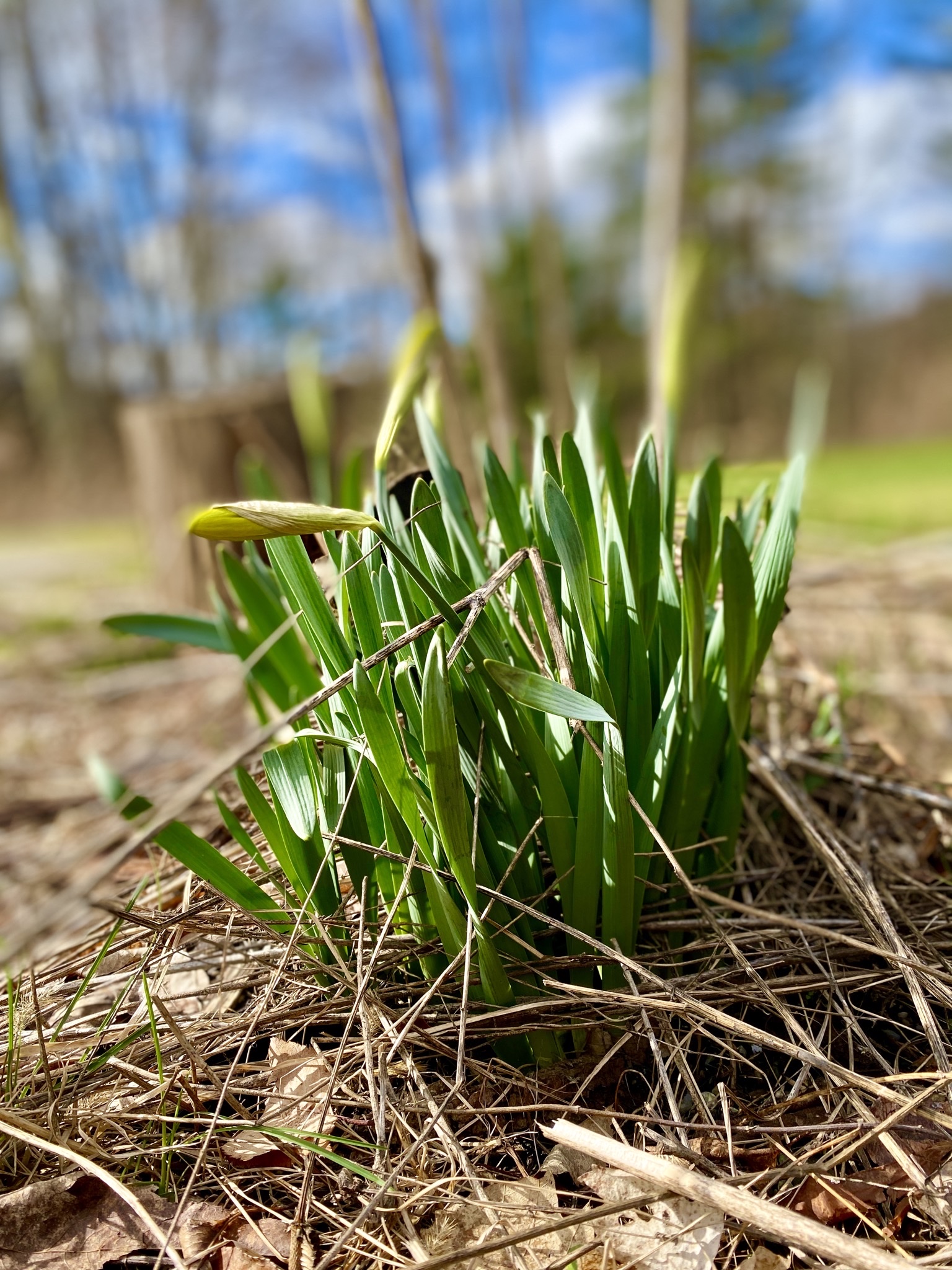
This cool, sunny morning, on the day before Easter, however, I went out to the garden inspect my peas and was greeted by vibrant yellow buds about to become daffodils. I’d been waiting for them to appear for weeks and had almost given up hope that they had survived another winter.

In spite of everything, the sun is still shining longer every single day, Mother Nature is still working her daily miracles, the daffodils will still come up, and winter will end.

Make Do

I’ve been making out my list of grocery items to order from the local country store to last the next few weeks and noticing the dwindling availability of of luxury, prepackaged foods like microwave popcorn and cake mixes, as well as staples like rice or pasta. The recognition that this pandemic could lead to shortages of some food as well as higher prices is changing my list but not necessarily for the worse.

When we first moved to the country, I wanted to learn how to do everything. I wanted to make a quilt from scratch. I wanted to make our own bread. I want to grow all our own food.

I worked full-time and, eventually, learned to pick the battles that mattered for our little homestead. I learned how to make a garden. We learned how to raise chickens. The Big Guy makes a mean sandwich bread. The quilting supplies and a pair of half-finished quilted are still in the linen closet, waiting for backings.

Now, some of those skills are getting a revisit. As grocery stores empty their supplies of spaghetti, I begin thinking about how we could make our own pasta again (some thing we did when we were first married). We know we can get flour from the country store, eggs from the neighbors and soon from our yard. We’re taking a look at what vegetables we can grow and, especially, what we should preserve in the fall.

Instead of thinking about where to buy things or how things are made, we’re thinking about how we can make them.

I’ve seen a meme circulating recently suggesting that, when all of “this“ is over, we consider to which parts of normal we want to return. Like so many people, I’m sitting on the sidelines right now, wondering when that will be. Whether that new normal is a time of scarcity or plenty, I do know that, when it arrives, I want to preserve those old-fashioned, farmed-out maker and saver skills that are going to get us through the spring and summer.

And I never want to take anything for granted again.

Faking It

I am able to walk an extra lap around the house or drag a few branches out of the garden these days, but my real skill these days is corralling the boys into believing that all of the work they’re doing to get our house ready for summer is fun.

This morning I got Thing2 to believe planting 125 seeds was fun. Later, after catching up on some homework, I got him to believe that seeing the weed pile slowly vanish was a good reason for a high five. And when Thing1 came out to try out the new blade on the trimmer and clear away some stubborn raspberry canes, the Big Guy and I swore we heard him say, “This is a good way to spend the day.”

Score one for the parents.

Wasting Not

When I was a kid, my parents moved to Peru for a couple years. My father researched infant nutrition and worked with a clinic there that served malnourished children. There was a glut under-nourished children there, and, while my parents were never wasteful before, experience left our family, especially my father, with a strong aversion to wasting even the smallest amount of food. I’ve been thinking about that experience a lot this week each time I survey my larder.

Ever since hurricane Irene, I’ve made it a point to have cabinets full of shelf stable food just in case. The canned goods and even the stuff in our freezers rarely goes unused, but just because it finds its way into a recipe, doesn’t mean that it doesn’t get wasted. I’m not proud to say that every few months a refrigerator clean out yields fur-covered meat or green spaghetti and meatballs that end up being tossed, and I can imagine my dad’s disappointed face every single time.

When the big guy and I were first married, we didn’t have enough money to throw away food. We’d buy a whole chicken for Sunday night near Boston’s famous Haymarket and have a traditional dinner with stuffing, veggies and potatoes. Monday night we’d make a peasant soup from the leftovers, stretching it out through much of the week.

Back then thrift was more about the benefit to our budget and less about being mindful of our blessings. These days, when I see whole chickens on sale, nostalgia prods me to buy one or two for the deep freeze for a future family Sunday dinner.

Sunday a last blast of winter was on the way, and I decided to dig a chicken out of the freezer for a comfort food meal. The boys tend to make short work of roast chicken, but, in recent years, I’ve gotten away from extracting every last meal from those leftovers.

As social isolation becomes more of a way of life, the Big Guy and I have both become more determined to not throw away food. Sunday as I thought about the blessing of simply having the chicken on hand, then of my dad, and then of the need to ration our larder for the short term, I filled up stock pot to make a peasant stew from whatever would be left.

When dinner was over, I was happy to see enough meat on the bird to make a good soup base. As good as it felt to make that one bird last through several dinners, however, chopping onions for my stew on Monday became an unexpected gift.

I sautéed the onions and celery, thinking how much this reminded me of the first year or two of our marriage. The smell of the spices in that plain old chicken-noodle soup transported me back to our tiny, cozy basement apartment in the city and to the start of a family tradition that started before we even thought about having a family.

It was as if being mindful of the things we have and the importance of not wasting them made it easier to be mindful of the moments in life that have brought and will continue to bring true joy and, ultimately, strength.

Sanity Security

As a recovering nomad, I can’t claim to be a “real Vermonter“ or a real native of any place, but Vermont has been my home for longer than any other place. For the most part, it’s been a pleasant adaptation, especially when it comes to putting up.

Our first summer in our first Vermont house – a 200-year-old tinderbox of a farmhouse — I laid out a 25’ x 25‘ garden. I had a vague idea of what I was going to grow. By August most of the overgrown beds had produced enough freezable casseroles and jars of beans and pickles to get me permanently hooked on gardening. At the time it made a nice dent in our grocery bill. It was also a point of pride to be able to serve homegrown veggies at thanksgivings and Christmases.

Over the years, the content in the garden bed has evolved as has the need for the garden. Paychecks have grown a little and stabilized, and we are not as dependent on our plot.But that patch of dirt gives something every bit as valuable as food.

Every spring I trot out to the garden, still doughy and out of breath from over-indulging in comfort food, too much time by the fire, and not enough at the gym or in the woods. The first hours of digging and moving winter debris produce more sweat than six weeks at the health club. Clearing the plot down to rich, black, promising dirt, however also offers more satisfaction than stepping on a scale and seeing the needle go down.

Mother Nature may upend some harvest plans, but even the worst summer weather has allowed my labors to yield enough fruit and veggies for a few decent meals. In the spring, that knowledge and those imperfectly laid beds, waiting for seeds and veggies starts, offer the peace of mind that comes from knowing I got this.

The last few years, life, in the form of injuries and illnesses and a child moving on, have taken attention away from the 40‘ x 40‘ plot on the east side of our house. Being housebound with 6’3” Thing1 and his monstrous appetite for the last few weeks, however, has highlighted the wisdom of digging back in as soon as the snow melts (Vermont, snow into April). But, as I get ready to go back to work next week (our school is a health care facility and operates in spite of the shut downs), I realize that getting my kitchen garden ready will also be my daily act of hope at home.

It will be the reminder that I — that we — got this.

What are you planning for your garden this spring ?