My Box of Chocolates

Photo

For me, blogging for the last eight months has been an education and at times an exorcism, but it has always been a journey towards becoming a better and, hopefully, working writer.  At first an assignment for a writing workshop offered by author Jon Katz at Hubbard Hall, a community theatre and arts center in Cambridge, NY, the blog has helped each of the workshop members blaze their own trails as we began discovering our voices.  Now many of us are at the crossroads, trying to determine our next steps.

Mine are a play – the culmination of my workshop experience –  and a book (a collection of very short stories).  The second project was conceived as I began making my game plan to make the jump to working writer.  From the moment the idea began to form, however, it has become so much more than a stepping stone.  Each part of the project is yielding its own completely new and unexpected reward as I gain new perspectives on writing and story and as it becomes increasingly evident that a writing life is as much about exploring the world as it is about describing it.  

As a recovering vagabond, I couldn’t ask for anything more.

Laugh, Cry, Diet

Photo 2

It’s the eleventh of February which makes this almost the 41rst first day of my new diet.  

It’s not a fad diet.  I know those don’t work.  The only ‘diet’ that’s ever worked (for me) was keeping a journal on paper or on my iPod and keeping myself accountable.  But the part of dieting I really hate is not the calorie and fiber tracking.  It’s not the preparation – I’m a surprisingly decent cook for someone who’s built a blog around being a bad housekeeper.  It’s not the exercise which can be addicting once you get going (those endorphins are better than prozac).  It’s not even the food itself – a lot of healthy food is actually pretty tasty.  

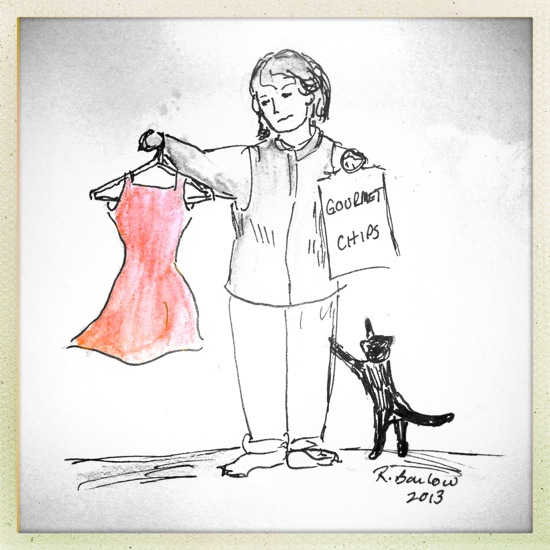
The thing I hate about dieting is that it’s not a diet.  It is recognizing that the bag of sour cream and onion chips I’m having for breakfast really does have to be off the list – forever. (Maybe not for everyone, but for me the salty sweet stuff is like crack to a drug addict.)  It is accepting sensible portions for the long haul.   It really is about making a life change.

My early adult years were characterized by many things, but one of them was not restraint – in any part of my life.  I played. I partied.  I sinned.  And I ate.  I ate anything I wanted.  Food – especially good food – was my drug.  When the Big Guy and I first married, we moved to Boston’s Italian North End, and I denied my palate nothing.  When we travelled, indulging in local flavors was as much a part of the experience as the art and the sights.  In my early twenties, youthful metabolism and a lifestyle centered around dancing and walking helped my body combat the effects of my food lust.  I look at pictures of myself from back then and can’t believe I thought I was fat as a size 6 or 8 (does anyone ever NOT thing they’re too fat).

A few years after we were married, I took an office job that had me driving to and from work for an hour a day.  Not surprisingly, retribution had an easier time catching up with me in a car than when I was walking to work everyday in the city.  But when my jeans got tighter, I didn’t get wise.   I got new jeans.

Now, many years and sizes later, I’m still trying to get my fat butt on the diet wagon and find a way to keep it there.  I know that my issue food is not just about flavor.  It is about fullness, however.  I know that there’s been an empty part me for as long as I can remember, and I am sure I am not the only person who uses food to fill that void – even when my body is crying uncle.  The worst part is, the more you try to fill it, the bigger it gets because you’re also filling it with shame and loathing.

I used to tell myself the big jeans didn’t matter.  Being good at my job matters.  The Big Guy matters.  Thing1 and Thing2 matter.  

But as I watch twelve-year-old Thing1 pour out my Diet Coke when he thinks I’m not looking (don’t let your kids read about all the things that could cause their mother cancer or diabetes), I realize the big jeans do matter.  So far, I’ve dodged the diabetes bullet and a lot of the other ailments that go along with being fat.  What I don’t do, however, is get out on the ice with my kids at skating practice.  I don’t go one walks or take slides down the sledding hill because I’d have to climb back up it.  And worse, I let shame dictate how I interact with the people who interact with my kids, and that does affect them.

Most of my diets start in the morning and are over by dinner.  Today I’m trying something different and clearing out the crap before the family comes home.  Dinner will be on a salad plate, and the kitchen will be closed at 8PM.  And when I’m tempted by the cookie jar, I’m going to get out my journal and write a note to myself that it matters because they matter.  

It wouldn’t be bad to be able to zip up that little number that’s been hanging on the back of my closet door for the last three years either.


224

World Apart

Over the last eight months, I’ve realized that the biggest hurdle to becoming a real writer is not finding an agent or a publisher but, rather, finding the courage to look at your own life honestly.

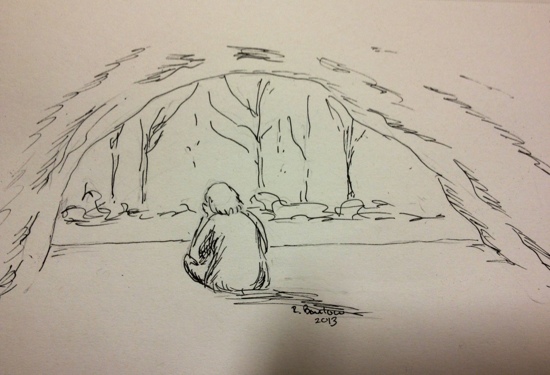
I’ve always thought there was a fine line between courage and crazy.  Mine is a secret door at the back of my brain.  This door leads from the part of my brain that lives in what you and I call the real world to an alternate universe.  If you were to step through the door to this world with me, you would find that it is also very real – bigger than life at times.  It is very much like the ‘real’ world. It has countries and languages, beauty and even danger.  It has problems.  But in this world, the problems are surmountable.  The humans are heroes, and, sometimes, I am one of them.  It is a world I have allowed not only to flourish but to take up a fair amount of real estate in my head.  I’ve been building and populating this universe since I could crawl.

I think this world has existed somewhere in my head since I was old enough to be aware of the physical world.  However, I began maintaining it in earnest soon after my parents moved from Baltimore to Ohio.  Already dealing with then-undiagnosed bipolar disorder (or what they then called manic depression, if it was discussed at all back then), I went from having giddy highs and intense lows that confused both me and my parents, to my first conscious flirtation with suicide when I was thirteen.

The move itself was a huge change.  My sister and I both lost our closest friends.  We went from a small school to a comparatively huge one.  The new city was not the cowtown we’d anticipated, and the kids were surprisingly fashion conscious – something years of uniforms had not prepared either of us for.  I tried, but I never acquired the art of dressing well enough to avoid merciless teasing.  Our old school had been incredibly diverse, but the new one was rigidly homogenous.

I was a typical eighth-grader and would have done (and, at first, tried) anything to fit in.  The first autumn leaves hadn’t hit the ground, however, before I realized it was not going to happen.  For the first time in my life, I heard people (kids) using racial slurs in ‘polite’ company.  The first time I heard it was in homeroom sitting next to a girl who would later become one of my closest friends.  A recent immigrant from Romania, unashamedly intelligent, and the only Jewish girl in a class of several hundred, she was a prime teasing target.  As the weeks wore on, the teasing took on a decidedly xenophobic tone.  I started to wonder if the teacher was deaf as she allowed the other students to make fun of this girl’s accent and clothes and her ‘Jewish’ nose.  Then, one horrible day after our entire class had been introduced to those black-and-white Holocaust movies, one of these boys turned to her and started softly singing, “Kill all the jewish people”.

I couldn’t believe that she didn’t cry.  I was already crying (a lot of us were), but, instead of finding the courage to stand up to these bullies on behalf of my friend, I began trying to find ways to avoid school altogether.  My parents had no way of knowing how bad the teasing was, and my sick-outs became more elaborate as Mom and Dad’s commitment to my education began to clash with my depression that was no longer a small, pulsating lump but a full-blown tumor.

At one point I even went so far as to swallow a half a bottle of Tylenol, in a half-assed attempt to ‘end it all’ – the first, but not last, conscious flirtation with suicide. My ignorance of toxicity didn’t kill me, but it made me vomit enough to keep me home from school for a few days.  My parents saw only the the vomit (it never occurred to me to tell them what had caused it), however, and, when my stomach recovered and my fake outs failed me, it was back to school and deeper into my own world in the cave at the back of my mind.

I made a few very close friends in the new school system, but I also lost a lot interest in being in a in-crowd that continually expressed its xenophobia so gleefully.  I (sometimes willingly) made myself a ripe target over the years, and my cave grew more elaborate and colorful.  At some point, I realized I needed a line of demarcation so no one would discover my fantasy world.

There is a big iron door there now.  Thanks to the intervention of an observant aunt, I ultimately came to terms with my bipolar brain, but I still go to the door more often than I should.  I have tried numerous pharmaceutical therapies for my bipolar, and they work for a time.  But they also have side effects, and I still have the nagging worry that the ‘balance’ they offer is as much an avoidance of my problems as is my door.  Now in my forties, perspective is my therapy, and, when I’m heading into and riding the highs that go with manic depression, it’s sufficient.  But when I’m sliding down the curve and the world begins to be tinged with shadows, I clear the cobwebs from the door and turn the key.

Lately, though, as I’ve been thinking about the writing life I want, I’ve had to take a hard look at the things I can control and the things in and around my life that I can’t.  Sometimes the things I can’t control terrify me, and, even as I write and want to write more, the place at the back of my brain calls out to me like a soothing siren.  For years, my world was an anesthetic when my dark side threatened to overwhelm me, but like any drug, it has side effects.  It is not a performance-enhancing drug, it is more like a mentally-induced coma.  When I’m under, I do manage to meet my day-to-day obligations, but I don’t create.  I don’t engage.  I don’t feel.  I let the ice start to close over my head, and the quiet and control are addicting.

My world is not my depression.  It is not the tumor, but it is just as dangerous.  Even during extended high periods, when cobwebs and briars have grown over the door, something has kept me from throwing away the key or paving over that real estate with something ‘normal’.  I’ve been retreating to it recently, and just yesterday began thinking about its origins.  I began thinking, again, about my friend who, apparently, never needed a door because she was brave.  And, when I sat down to write this morning, I wasn’t sure if confessing my crazy to the world was a brave thing or even a good idea.

It’s probably neither.  People who know me well know, and people who know me a little can probably guess something’s a little off.  But today it’s the first brick in the wall I’m trying to build to seal up that room.

Save
Lost Weekend

Photo 2

Across the state, schools had closed on Friday.  Store shelves were being cleared as people prepared for a day of camping in on Saturday.  I stocked the pantry with chips and dip, the fridge with a massive casserole and whipped cream for hot cocoa.  Thing1 and Thing2 made sure their sleds were ready, and the wood bin was overflowing.

But, Saturday morning, the snow had not materialized.  We were expecting a blizzard and barely got a dusting in our little corner of Vermont (4-6 in Vermont is a dusting).  As we gazed out at the trees already stripped of snow by the howling wind, our entire family felt ripped off by the weather industry.

Everything had been canceled for Saturday already – basketball, breakfast out – and with a still-falling mercury, the Big Guy and I quickly decided to proceed with the camp-in as planned.  We fired up the DVD player and began our day-long homage to sloth.

I set out cereal and cinnamon buns at breakfast, and cheese and crackers and other snacks at lunch.  As soon as one of us got the notion to do something productive the rest of the family would intervene, re-issuing the proclamation that today was about doing nothing.  Computers were shuttered, homework was put away, and the phone was ignored.  The conversation never became more serious than debating whether there are more Monty Python or Tolkien references in Futurama.  Our bodies and our brains were only aware of the red hot stove and the person snuggling on the sofa next to us.

It was pointless.  It was unproductive, and it was glorious.


Expecting Inspiration

Photo 2

For the past few weeks my waking hours have been spent mostly shut off from the world.

I rise before dawn to write and read – forcing myself to shut out the world that beckons from the internet.  At 7 AM, I’ll wake my boys and spend the next 45 minutes getting them dressed, fed, and chauffeured to school.  Then I’ll come home and take care of the few chores I do on a daily basis before sitting down to work until dark again.  I’ll re-emerge from my work area in time to make dinner and start the cycle all over again.  The short winter days ensure that I rarely see daylight, but the thing I have noticed the most as my job demands more from my family life with the waxing tax season, is that spending less time with my family often means that I spend less time with my blog.

I first noticed this one recent weekend when basketball practice inspired another post and a story for an e-book I’m working.  I sat down in the the gym at 8:15 AM on a Saturday, watched Thing1 and  Thing2 finish an argument over something important (like which is the better color – red or green) and, as Thing2 began his basketball dance, I felt the urge to pull out my notebook and pen.  I didn’t stop writing for the entire morning.  Doodles and ideas flowed.

Sunday was equally productive.  The ideas and stories overflowed into Monday, but by Tuesday, I spent most of the previous two days away from my family.  When I put the kids to bed, I realized I had seen them for 2 waking hours.  Simultaneously, the story well seemed to go dry and stay that way for a day or two.

Part of me has been resentful of this new routine.  As great as it is to work at home, it can be really difficult to explain to younger children that, even though you’re home, you’re not available.  And, through the door, I can hear the evening antics and arguments as homework and its tribulations unfold around the kitchen table.  The fairy tale is unfolding without me.

But even as I’m already feeling left out and dreading the seemingly lifeless hours in the day ahead, I’m finding an unexpected story this morning.  This story is about the very light causing the shadows.  It’s about the good fortune to be shut up in a warm room and to have enough food to feed a family at the end of the day.  It’s about not fearing about necessities.  But most of all, this tale is about realizing how fortunate it is to have a reason to feel the absence of the stories happening just on the other side of the study door.

Stopped by Woods


It’s February, and the sledding hill on the west side of town is naked.  The Battenkill River that runs west from the center of Arlington, Vermont to the New York line has been frozen for only a few days this winter.  It’s the second year in a row in which winter hasn’t really felt like winter but more like a long clouding, mud season.  Grey prevails today, lulling us into our individual reveries as we drive about our Saturday routine.

Then as we drive home, turning back onto the road that runs along the Battenkill, the park and adjacent outdoor ice rink come into view.  A shock of white now rises over the river.  As we get closer, we realized the white is ice and snow covering the trees on the river bank.  The ice doesn’t cover everything – it only coated a small clump of trees –  but the covering was so thick and sugary in appearance, that if looked like someone had sculpted it.

The sky is still overcast and grey, but now, roused out of our apathy, the flat light seems to throw everything into stark relief.  A stop by the park has suddenly become an impromptu visit to an art museum, and we continue on home, suddenly aware of the other exhibits around us.

Schooled on a Saturday

20130202-193059.jpg
It’s the first Saturday in February. Thing2’s basketball team has grown to five members. They’ve drafted one of the player’s big sisters to get two teams of three for an impromptu scrimmage. The brother and sister act like a most six- and seven-year-old brothers and sisters would on a basketball court, but most of the competition is friendly and fun.

In a matter of weeks, the coach has turned this mini mob – some of whom could hardly dribble in December – into a team. Thing2’s multi-talented superhero alter ego, Superdude, only occasionally makes appearances when he’s waiting for a ball to come back into play. Mostly, though, our six-
year-old is focused.

The dad-turned-coach has taught them to dribble and pass. He’s taught them to shoot and guard. And most of all, he’s spend his Saturday mornings schooling them on the fine art of fumbling and falling – and even losing – and walking away with a smile.

Going to the Well

20130202-144702.jpg

I’ve been thinking about anger a lot lately. How I don’t write when I’m angry. How when I do, it’s rarely something I can post. How what makes me angry maybe something I can control but only by causing tremendous collateral damage to the people I love most in the world. How sometimes courage is not changing the things you can but, rather, enduring those things for someone else.

Today I’m not feeling any serenity from knowing what I could and couldn’t change. My anger could almost swallow me whole on this cold February morning. I am watching my two little touchstones – Thing1 and Thing2, and most of the time, they have a psychotropic effect on my darkness. I sometimes wonder if they are the remedy or if their antics and exuberance are more anesthetic than answer. I know that in my wondering, I’m tacitly admitting that the remedy is in me somewhere. I’m just don’t know where.

Sometimes I feel guilty and self-indulgent writing about anger or even dwelling on it. For the most part, I try to follow Woody Allen’s advice when he says, through the character of Gertrude Stein in the movie Midnight in Paris that the artist’s job is not to succumb to despair, but to find an antidote to the emptiness of existence. But, nine months ago, when I started this blog, I said to the mentor of a Writer’s Workshop at Hubbard Hall, our local community theatre and art center, that I wanted to become a real writer.

At the time, for me, that meant becoming a published author. That is still high on my priority list, but one of the beauties of writing in this group, has been that it has breathed new meaning into what it meant to become a real writer. It is more than finding a publisher or finishing a first opus. It is about writing – and living – authentically. It is about recognizing the good, the bad and the ugly in my own stories – and, hopefully, finding a new meaning in them.

Crime and Punishment


Thing1 is being punished.  He’s being really punished for the first time in recent memory.

For most of the last twelve years we’ve been pretty lucky.  For most of that time, he’s been good-natured and willing to follow the rules we set down.  Infractions occur of course, but for the most part, they’ve been small enough that an empty, humorous threat to send him to military school puts a stop to restaurant antics or begging.  When we do lay down the law, Thing1 usually plays the part of the gentle giant tolerating a well-meaning but misdirected mother and goes along.  He seems to understand that – even when he thinks we’re totally nuts – we’re on his side.

That all changed today, as the fallout from a less-than-stellar report card caused the first serious fissure in his faith in our good intentions.

All kids have an Achilles heel as individual as their personalities, and Thing1’s is his love of all things computer.  He has begun cracking open code on favorite games and spending hours Skyping with friends, gabbing about hardware and how to improve their favorite video game and which is the best OS for their purposes.  It is a hobby and avocation that could be come a vocation.  Now, however, it is bordering on addiction.  So, fifteen minutes after the Big Guy and I read the report card, we had an intervention and pulled the plug.

Our normally tolerant twelve-year-old reacted like any addict who was being cut off would.  He denied.  Then he rationalized – the report card, that is.  Then he protested.  And finally, grudgingly he accepted the reality that his computer time would be restricted to school work.

Grudging acceptance has now taken the form of the silent treatment.  He still obeys the easy rules without defiance.  Gone, however, is the good-natured demeanor.  Smiles are quickly extinguished when we make eye contact – even if we caused the smile.  From his room, we can occasionally hear muted muttering that tells us we hit that heel with perfect aim.

At first we did pat ourselves on the back for being such clever parents.  We felt guilty for about 10 seconds after we shutdown his favorite hobby, but, contrary to his belief, we’re not enjoying our victory.  I know he needs the consequences, but I hate seeing him unhappy.  I know there are things we can control in our own house and there things we can’t.  This is one of the things we’re supposed to control.  And while it hasn’t lead to happiness, it is giving me a bit of serenity in a way that I would never have thought possible when I was a teenager.

As the bearer of numerous crappy report cards, I was also the recipient of many groundings (pointless and redundant for Thing1 who lives in the middle of the woods) and privilege losses.  I remember the profound sense of betrayal when I lost a favorite social outlet.  Now, walking this mile in my parents’ moccasins, I’m finding yet another new understanding of their perspectives.  There’s no forgiveness, of course – there’s nothing to forgive when someone’s looking out for your future.  Instead, this is one of those moments when my mom and dad are getting a unexplained warm feeling in the back of their necks as their daughter writes that they were right about many things – even when it wasn’t fun to be right.

One Step Forward, One Look Back


Down time in the middle of a weekday is almost unheard of for me, but, thanks to the State of Vermont, I get it once a week for eight weeks every winter.

For the last seven years, Thing1 (and now Thing2) have been getting out of school at noon through most of the winter so that they can enjoy the winter sports that bring so many tourists to our area. The younger kids skate; older kids get to ski, and the ski resorts get to train a new generation of instructors and winter sport ambassadors. It’s popular with parents because it’s a cheap alternative to indoor phys-ed, but it’s also an almost iron-clad excuse to leave work or other responsibilities for a few hours each week.

Siting in the warm room at our local skating rink is social and relaxing. I love to reconnect with people I only wave to in the school parking lot as I watch Thing2 glide from wall to wall more steadily each week. But, as relaxing as it is, every week, it also reminds me that, as firmly planted in the Vermont lifestyle as I have become, I have not completely let go of the city girl that left Boston 13 years ago.

Today the rink is deserted except for the few families from the elementary school. The kids flow in and out of the warm room, eating between lessons as parents, unconcerned about stranger danger watch and read and chatter.

For some reason, however, even surrounded by people I know, I still find myself falling into patterns of behavior that were once obligatory in the city and suburbs. I always keep my purse zipped and wrapped around me. When I go to the snack bar, I close any computers and bring things with me – and I can see the snack bar from my usual spot 15 feet away.

Some of my paranoia is founded in experience. A lack of vigilance at a Boston restaurant led to my wallet being stolen right out of my handbag and my guard being permanently alert from then on. Days like today, however, I have to stop my looking back from making me turn back.

I doubt that I will ever leave my door unlocked like many of our neighbors do, but today, surrounded by parents of schoolmates and kids that I know are (most of the time) well-behaved, I consciously made the decision to take a step forward. Thing1, now four inches taller than his mother (he keeps track) and a bottomless pit came in requesting a top-up for his snack. He had to run to his lesson, and, alone again, I got up. Without a backward glance I sauntered to the snack, leaving my fear on the table with my computer and my bag. As luck would have it, only one thing was missing when I got back, and it wasn’t the bag or the computer.

The Witching Hour

Witching Hour

Sometimes, after wrapping up the end of a day doing tech support while refereeing Thing1 and Thing2 as they try to avoid homework and chores by revving up for World War III, I take off.  It’s only a short escape, and in the summer, it’s still light, and I’ll drive along the Battenkill River, absorbing the sights and smells of Vermont as the pinkish-gold light of evening makes everything magical.  Now it’s winter, and my mini vacations tend to lead me to the local country store for an extended errand.

A few evenings ago I used a forgotten ingredient as my pretext for a quick break.  Most evenings the Mom of the Mom-and-Pop store is there, guiding her crew as they make closing preparations.  Traffic comes in fits and spurts, and I’ll usually grab my purchase and head to the large round, oil-cloth covered table at the back of the store by the deli to peruse one of the magazines strewn about and to chat with Mom who is also a close friend.

Most mornings this Round Table is surrounded by her Knights.  These (mostly) men of the town – retired or on their way to work – convene in shifts for a couple of hours every morning as they solve the world’s problems and discuss the deer population (which is just as heated as the politics).  The other night, however, the circle at the back of the store took on a distinctly less knightly aura.

At my bachelorette party umpteen years ago, an aunt told me, “It’s not the big things that’ll kill a marriage, it’s the little things that drive you crazy that will do it.”  It was one of those little things that had driven me to the store in search of potatoes that night.  It was my second ingredient trip in two hours and the third in two days, and when I sat down I was ready for some commiseration.  My friend took a break from her closing chores, and we began trading our anecdotes of marital merriment and madness.  We had just started to vent when a mutual friend joined us with her own war stories to share.  It wasn’t long before the chatting turned to laughter and the laughter to cackling, and I realized we’d become a coven.

As our laughter rose and my friend’s employees patiently waited out our hysteria till they could ask the boss for guidance, I remembered that gatherings like this might once been subversive enough to spark a witch trial or two.  A casual listener might have heard our conversation and thought we were plotting the downfall of men and marriage.  The reality is that, in seeking company for our momentary miseries, we each left our gathering actually appreciating our situations – married or not.  Our shrieks of laughter had fallen over me like stolen fairy dust, exorcising my exasperation over the little thing that had propelled me out of the house.  It was just the bit of magic I needed to get back and finish dinner with a smile.

Homework

Going Green

It’s 5:00 AM, and I’m just sitting down to work.  It’s going to snow today, so I opened the vents on our big black wood cookstove to get the embers from last night’s fire heating again.  The running of the stove has become a rhythm that’s as comforting as the heat itself, but it getting to this point has been an education.

A friend of mine is the co-owner of one of Vermont’s finest country stores.  On any given weekday morning, a thick circle of pickup trucks and cars surround it as contractors and carpoolers stop in for pastries, beverages and – if they have the time – some steaming hot politics.  Weekends are just as crowded, especially during ski and foliage seasons, and you can always hear the store’s owners giving directions as first time visitors absorb the atmosphere.  They chuckle at the jauntily decorated mannequin by the register and the plastic sign that reads, “If we don’t have it, you don’t need it.”  The owners manage to keep the place constantly smelling off fresh cookies or fried foods, and wide creaking wood floors complete the ambience.

The store’s welcoming atmosphere is why so many tourists, wandering the aisles, find themselves suddenly contemplating a move to Vermont.  They’ll start asking the locals and the proprietress about real estate or schools.  She always answers them honestly and good-naturedly, but she ends every Q&A with the same admonition, “Just do your homework.”

I was lucky enough to join a writing group with this woman and a few of her friends, and she and they became my first close friends in Vermont.  She was one of my many sounding boards as we began considering and then building an earth-sheltered, off-grid house.  She listened to our idea and my excitement, and, after encouraging me, put her hand on my arm and said very solemnly, “Just do your homework.”  So we did.

As we designed and planned and sub-contracted, I got to know every off-grid site on the web.  I acquired a three-foot high stack of magazines and books on everything from ‘High Thermal Mass Construction’ to ‘Heating Your Water with Your Woodstove.’  We had every issue of Back Home Magazine (a periodical for do-it-yourself off-gridders), and every time I met someone who was using solar hot water or solar panels, I ambushed them with a barrage of questions.

Almost a year after we broke ground, we moved in.  The walls were primer-ed and the rudimentary kitchen (which I later added to with tag sale cabinets) had only the bare necessities.  We had a pantry with no shelves, and were sweeping and mopping up dust for the first three weeks.  But the first day in the new house was a glorious, sunny June day, and we were overjoyed to see what we had hoped to see.  Our solar panels were charging the new batteries beautifully – even with our appliances plugged in.  We figured we had made our energy calculations accurately, and hugged each other.  Then the sun went down.

Suddenly the fridge we had brought from our old house made its presence known.  We watched the energy meter numbers plummet from the 30s to the minus 20s.  It didn’t take much calculating to realize that at this rate, our batteries would be sucked dry by morning.   We knew we didn’t want to keep our old fridge, but finances had kept us from buying the ultra-efficient one we wanted right away.  We also knew, however, the key to our success would be keeping our consumption low.  So it was off to the appliance store where we bought the least-consumptive fridge we could find. It was also the smallest fridge that could still be called a fridge, but it did the trick.

Again, we congratulated ourselves on our research and problem-solving, but we had just begun to scale the learning curve – and it was about to get steep.

One of the key components of our winter off-grid plan was our wood cookstove.  We had purchased it from a store that catered to the Amish community in Montana, and our plumber had installed water jackets in it for us.  These jackets would circulate water from our domestic tank to the stove using only the heat in the jacket water to propel it up and around the circuit.  The first day it was cold enough to have a fire without turning the house into a sauna, we lit one.  What we got was not a sauna, but a swimming pool.

About an hour into the first fire, we heard a roar from the back of the stove.  When the my husband (a.k.a the Big Guy) and I recovered from our shock, we went over to see what had happened and, as we stepped in a massive puddle, realized that the stove’s pressure safety valve had gone off, releasing the gallons of water that had heated to the boiling point.

This was not supposed to happen.  We had researched this thoroughly – we thought.  The Big Guy has an engineering background and, working with the plumber, quickly realized that our original calculations missed a variable when deciding where to put the stove.  Several weeks of cold showers later (we had to stop the water flowing to the stove) they re-installed the welded jackets and a small motor to propel the water.  The stove has given us a toasty house and piping hot showers for almost seven winters now.

Over the years, off-grid living has taught us a lot, but mostly it has taught us about ourselves.  Naturally, we have learned – as our friend still advises – to do our homework.  We have learned about the necessity of finding the delicate balance between principle and practicality.  We have learned how to make do and to do without.  We have learned patience.  But we have also learned that  the most fundamental education comes when you take the test, and while Life is pass or fail, as long as you’re still trying, you’re passing.  In any other venue we might be getting a strong C, but it’s a score we’re proud to post on our new super-efficient fridge.